Ski trouser alterations and cleaning in London
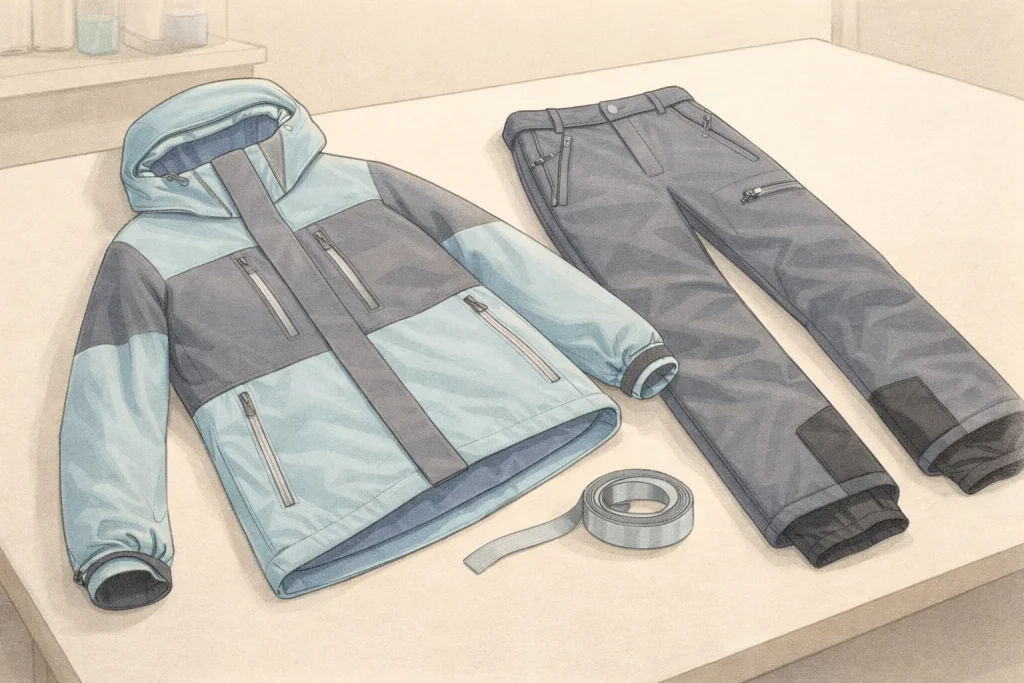
You can spend a fortune on kit and still end up cold and clammy if you get the basics wrong. I see it all the time with ski trouser alterations and “quick” cleaning jobs that quietly wreck performance. This list breaks down what wetting out really is, why everyday detergent is the wrong chemistry, and why hems and waists on ski trousers can’t honestly be priced like normal work trousers.
If you want one takeaway before you read on, it’s this: ski wear doesn’t usually fail because it’s old, it fails because it’s dirty or adjusted like it’s ordinary clothing.
1) Wetting out is usually just dirt
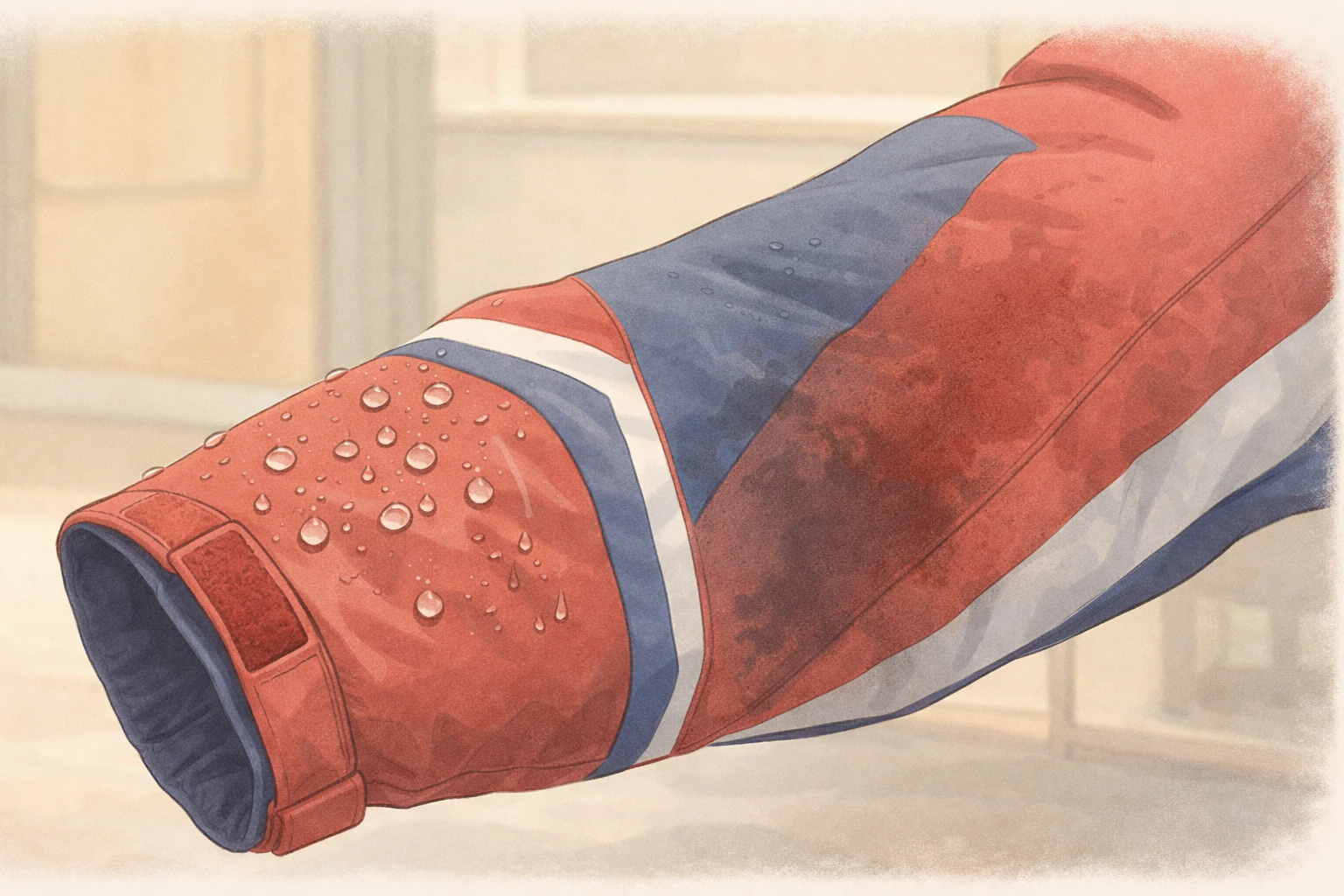
Wetting out looks dramatic. The outer fabric goes dark, water stops beading, and you feel sweaty inside even though the label says “waterproof”. In reality, that’s often grime on the face fabric, not a dead membrane.
Ski wear is basically a sandwich: an outer face fabric, a water-repellent finish on top of that, a breathable waterproof membrane laminated behind it, and then a lining for comfort. Once the face fabric gets clogged with body oils, sunscreen, sweat, and even London street grime from travel days, it starts absorbing water instead of shedding it.
Two timings matter. Do a mid-season refresh if you’ve had a few heavy days (or you’ve been wearing it to and from the slopes). Then do an end-of-season clean before storage, because leaving oils and salts sitting in fabric for months is asking for trouble.
If you are also planning ski trouser alterations, clean the trousers first so any fitter can see the true drape, length and wear points rather than guessing through grime.
2) Membranes need a dry outer layer
Here’s the counterintuitive bit most people miss: the membrane can only “breathe” properly when the outer fabric stays relatively dry. Sweat vapour wants to move from warm, humid air inside your jacket to cooler, drier air outside. If the face fabric is saturated, that transfer slows right down and you feel clammy. If your ski jacket is down filled, see our guide to washing a down jacket safely.
This is why wetting out feels like a leak, even when it isn’t. The membrane can still block liquid water, but you stop getting vapour out.
What really stands out in real life is how much sunscreen and skincare products contribute. If you’ve ever battled oily marks on collars, you’ll know what I mean. We’ve got a practical walkthrough on dealing with that safely in this sunscreen stain piece, and the same “oil clogs fibres” logic applies to technical outer fabrics.
After cleaning, gentle warmth can often help revive water beading, but always follow your care label rather than guessing a temperature.
If you are booking ski trouser alterations at the same time, keeping the outer fabric clean helps the garment breathe properly after the work is done, especially around rebuilt hems and cuffs.
3) Normal detergent is the silent killer
If you only change one habit, make it this: don’t use your usual detergent and don’t add softener. Ordinary detergents are designed to make fabrics wet easily and rinse in a certain way. Many also contain optical brighteners, plus surfactants that can leave residue in fibres.
On technical outerwear, that residue is exactly what you don’t want. It attracts water into the face fabric and undermines the repellent finish, so you wet out faster.
Fabric softener is worse again because it coats fibres and blocks breathability. Bleach can also damage performance fabrics and trims.
Best-practice at home looks like this:
- Use a dedicated technical cleaner made for waterproof garments (a proper ski jacket detergent, not “gentle bio”).
- Run an extra rinse so nothing lingers in the fabric.
- Never use softener, not even “just a splash”.
- Don’t over-stuff the drum, ski wear needs room to move.
If you want the blunt version, softener is a tax you pay twice: you buy it, then you pay again when your kit performs worse. We see the fallout daily in our fabric softener reality check.
Before any ski trouser alterations, washing correctly also reduces the risk of trapped residues affecting seam tapes, coatings, and the way the fabric feeds under a machine.
4) Ski trouser alterations need inspection
A normal trouser hem is usually a straightforward turn-up. Ski trouser hems are a small engineering project.
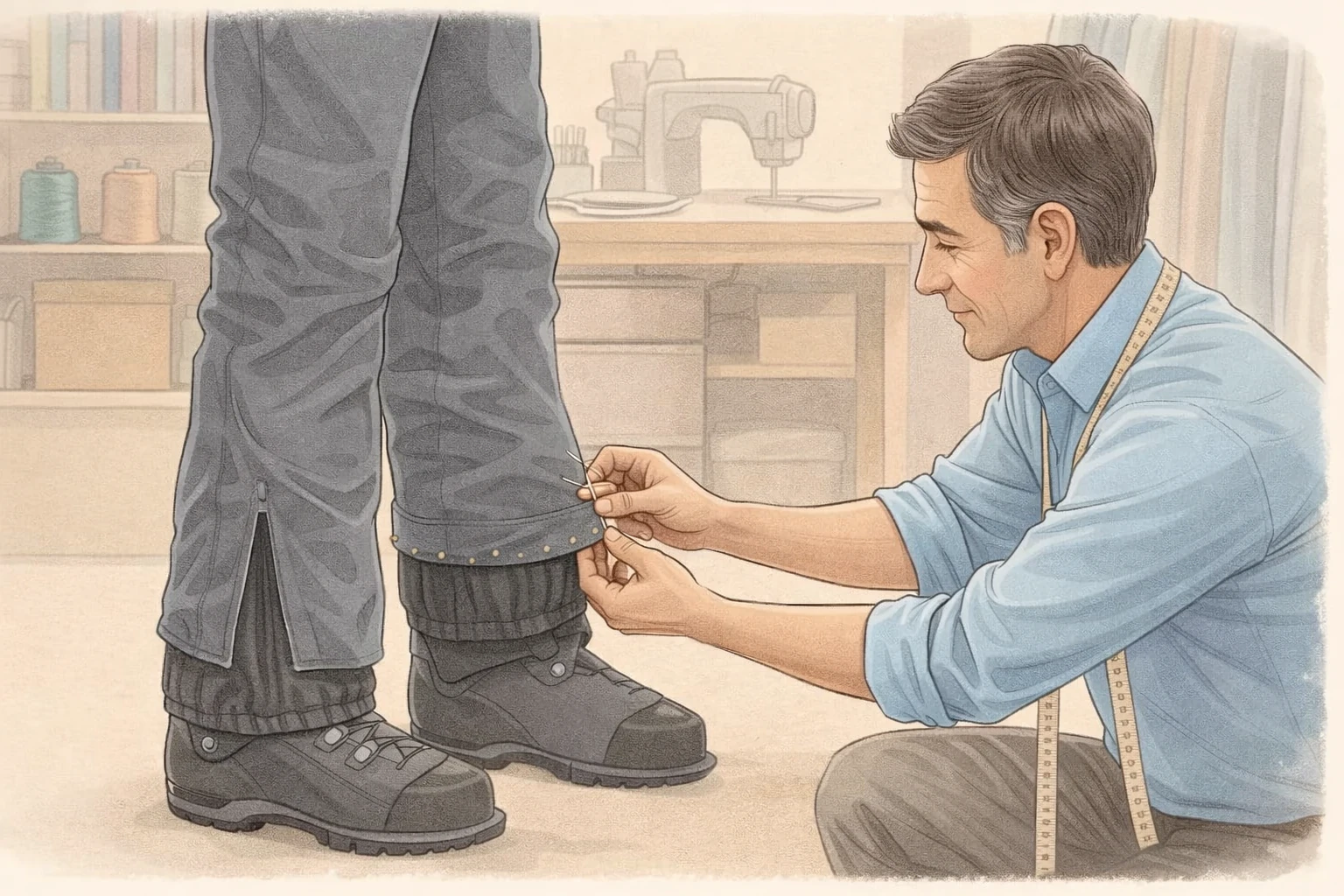
Most pairs have some mix of taped or welded seams, a reinforced scuff or kick guard up the inner ankle, an elasticated inner gaiter (often with a boot hook), and an articulated cut around the knee. If you cut through that carelessly, you don’t just “shorten” them, you break the weatherproof construction.
That’s why these technical trouser adjustments get quoted after we’ve actually seen the garment. Shortening typically means rebuilding the lower leg properly, then re-finishing the seam so it stays weatherproof. The phrase you’ll hear from people who’ve had it done badly is, “They chopped the gaiter,” or “The kick guard sits wrong now.”
A flat phone quote priced like wool work trousers is a red flag. It usually means the person quoting hasn’t understood what they’re holding.
If you want to see where we do this work locally, visit our North Finchley branch page or our Notting Hill branch page.
You can also check our full alterations service page for what we handle day to day.
5) Prices: normal trousers vs ski wear
People compare prices, I get it. Household budgets have been squeezed for years, and services haven’t been immune. According to the Office for National Statistics inflation releases, CPIH has stayed meaningfully above the old 2% “normal” for long stretches since 2021, which feeds into labour, rent, and energy costs for cleaners and tailors.
Still, you deserve clarity. Here are Glint Express’s published alteration prices for an ordinary pair of trousers (for comparison only):
- Shorten trousers: £12.00
- Shorten trousers keeping the original hem: £20.00
- Taper trouser legs: £15.00
- Re-hem both legs: £10.00
- Trousers patch: £10.00
Those numbers help you sanity-check value, but they don’t transfer cleanly to ski kit. With technical trousers, materials, seam finishing, and functional parts (gaiters, guards, zipped cuffs) drive the work.
Understanding ski trouser alterations is essential because pricing depends on construction, not just the number of centimetres taken off.
If you like to check pricing before you visit, there’s more detail in our dry cleaning prices breakdown, plus the live lists for North Finchley pricing and Notting Hill pricing.
6) Waist, braces, and fit aren’t standard
If hems are the obvious trap, waist work is the sneaky one. Ski trousers often come with adjuster tabs, shaped or elasticated waistbands, integrated braces, reinforced belt loops, and sometimes attachment points that need to stay exactly where they are.
So even if you’re “just taking them in”, access can be awkward and the stitching has to hold up to movement, layers underneath, and the stress of bending and booting up.
That’s why there’s no honest shelf price for ski trouser waist changes, and why ski trouser alterations at the waist get quoted after inspection. If anyone promises a fixed waist price over the phone, be sceptical.
To get a useful quote quickly, bring or mention:
- The boots you wear (cuff shape matters).
- Whether you use braces.
- Your usual base layers (bulk changes fit).
7) Zips take the beating
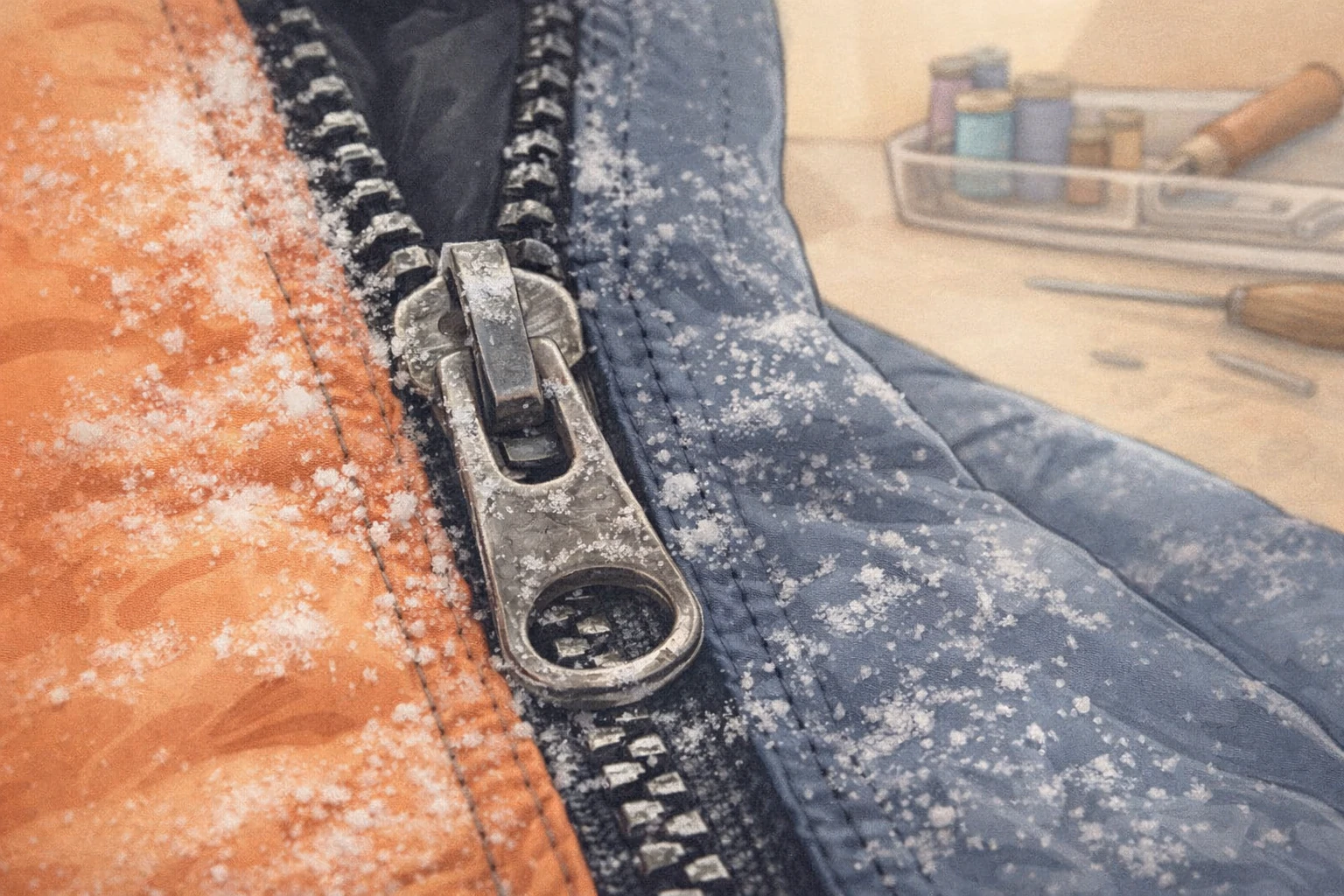
Grit, salt, glove yanks, cold plastic, and constant flexing make zips the most common ski wear repair I see. A zip can look “fine” until it suddenly isn’t, then you’re stuck with a jammed slider the day before a trip.
For ordinary trousers, a new zip is £15.00 at Glint Express. Ski trouser zips, though, get quoted when seen because many are water-resistant, moulded, or integrated into a storm flap and seam system.
If you want to understand what drives zip pricing (and what’s worth fixing), there’s a really practical read on zip replacement costs.
One extra safety note that most people never think about: check cords, toggles, and drawstrings while you’re at it. The European Commission’s Safety Gate alerts regularly flag clothing hazards like unsafe cords, especially in children’s garments. It’s not common in ski wear, but it’s worth a quick look before you hand items in for repair.
If a zip issue is affecting fit or function, mention it during ski trouser alterations so the quote covers the whole system rather than fixing one part and leaving another to fail.
Which option should you pick?
If your kit feels clammy or stops beading, start with cleaning and the right product, not a reproofing guess or a new jacket panic-buy. If the fit is wrong, get a proper inspection before anyone touches the hem or waist.
My personal rule is simple. Anything that affects weatherproof seams, gaiters, kick guards, or zip systems deserves a quote in person. Anything that’s just surface dirt deserves the right cleaner and a thorough rinse.
For ski trouser alterations, that inspection step is what prevents a cheap-looking shorten job from turning into a costly rebuild.
Frequently asked questions
Can you shorten ski trousers without losing the inner gaiter and kick guard?
Yes, but only if the person altering them rebuilds the lower leg properly. A good shorten job keeps the gaiter functional, preserves the kick guard position, and re-finishes seams so they stay weatherproof. That’s exactly why we quote after seeing the construction.
Why does my ski jacket stop beading water even though it says ‘waterproof’?
Most of the time it’s wetting out. Dirt and oils clog the face fabric, it absorbs water, and breathability drops, so you feel damp inside. Clean it with a dedicated technical cleaner, rinse well, dry it fully, then use gentle warmth only if your care label allows it.
Is it OK to wash ski wear with normal detergent if I add an extra rinse?
I wouldn’t. The wrong detergent can still leave water-attracting residues and optical brighteners behind, and softener is a hard no. Use a dedicated technical cleaner and an extra rinse, and don’t cram the drum.
How much do ski trouser alterations cost in London?
It varies because construction varies. For comparison, Glint Express publishes ordinary trouser prices like £12 to shorten and £20 to keep the original hem, but ski trouser tailoring and repairs are quoted individually after inspection. The same applies to other technical outerwear, as covered in our guide to what it costs to dry clean a coat or jacket. If someone offers a flat hem price over the phone, they may not have understood the garment.
Can a dry cleaner replace a ski trouser zip and is it different from a normal zip?
Yes, it’s often possible, but it’s not the same as a standard zip swap. Ski zips can be water-resistant or moulded and may sit inside storm flaps and taped seams, so we quote after seeing it. Ordinary trousers are simpler (and a standard new trouser zip is £15.00).
Conclusion
If your kit “fails” in damp conditions, dirt is usually the culprit, not the membrane. Clean more often than you think, skip normal detergent and softener, and don’t let anyone treat a technical hem like a standard turn-up. That’s the difference between a quick fix and a ruined pair of trousers.
If you want a straight answer on ski trouser alterations or waterproof jacket cleaning, pop in for an inspection and we’ll talk you through the options. Glint Express has branches in North Finchley and Notting Hill, and you can check current pricing before you come in. Book a visit or bring the items in and we’ll quote properly.