Wash Down Jacket Safely: No Clumps, No Smell
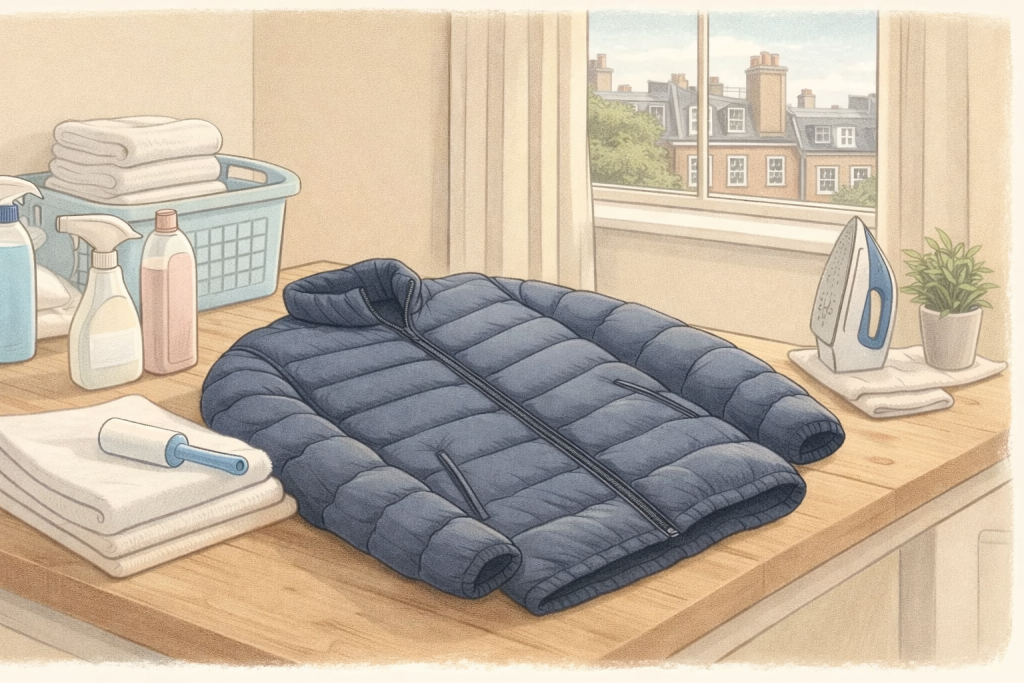
You notice it on the Tube first. Your down jacket looks fine, but it smells a bit “damp dog”, the cuffs are grey, and the collar’s gone shiny. If you’re about to wash down jacket at home, the risk isn’t the wash, it’s what happens to the fill after. Here’s the safest method we recommend in London, plus the exact points where it’s smarter to stop and bring it into North Finchley or Notting Hill.
1) The “do I really need to?” moment
Smell is usually the giveaway, not mud, and it often shows up before you decide to wash down jacket properly. Down holds onto body oils, cooking odours, and pollution film, so you’ll often see grime at the cuffs and collar before the rest looks dirty.
Try a spot clean first if it’s a small mark. A damp microfibre cloth with a tiny amount of gentle soap can shift most surface dirt without soaking the baffles.
Do a 10-second check before anything else: read the care label, then look for loose stitching, torn baffles, or worn seam tape. If you see feathers poking out in multiple places, don’t risk a home wash, wet fabric makes those holes spread.
2) Prep that protects the fill
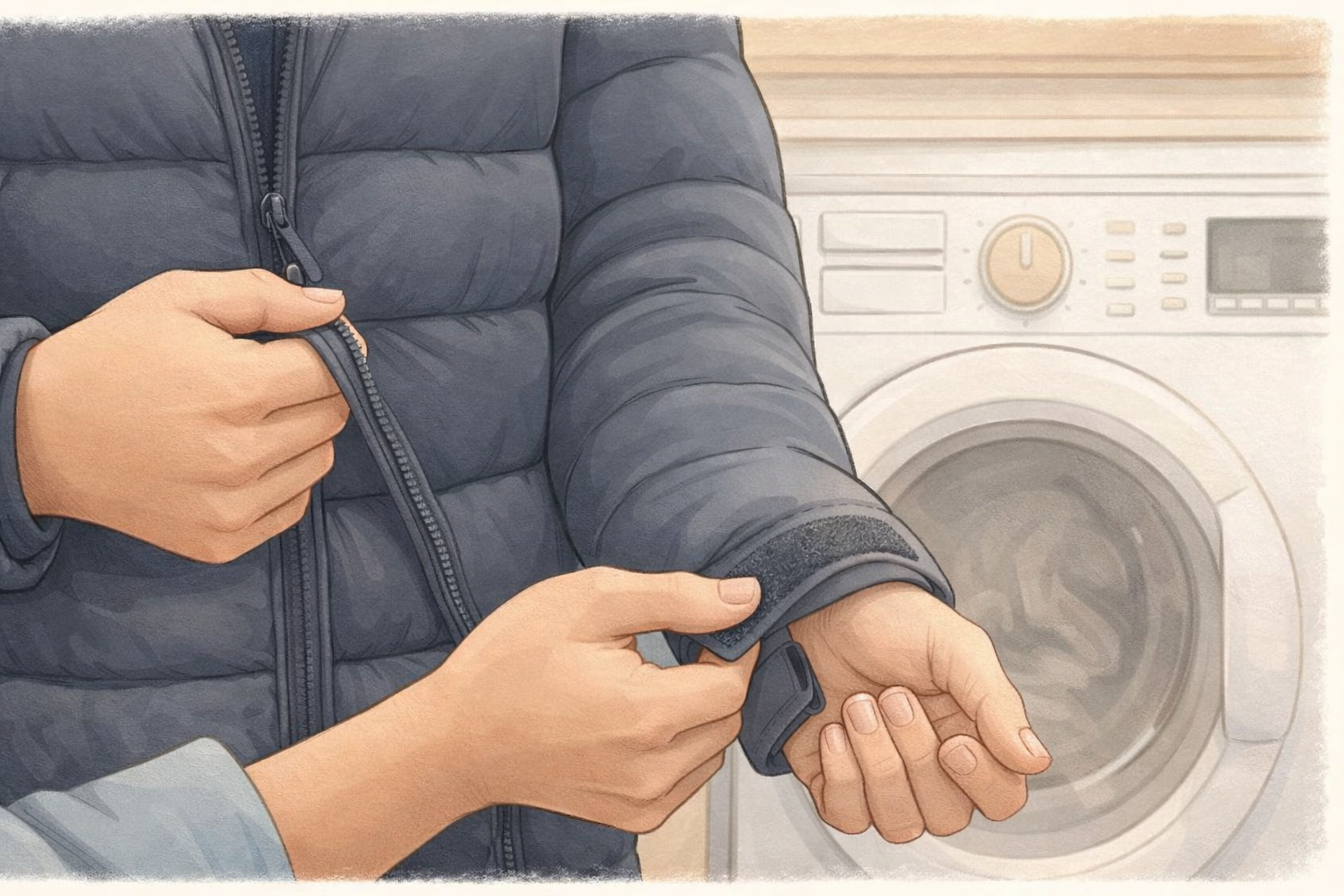
When you wash down jacket at home, most damage happens before the machine even starts. Empty pockets (coins and keys can punch tiny holes), zip everything up, close Velcro, and loosen drawcords so the shell doesn’t crease sharply.
Treat stains gently. Rubbing hard pushes grime deeper and can roughen lightweight nylon, especially on glossy “puffer” shells.
Use this quick pre-treat routine:
- Dab cuffs and collar with diluted gentle detergent or a specialist down detergent.
- Leave it 10 minutes, then blot, don’t scrub.
- If you’ve got ink, fix that first. We’ve seen pen marks set permanently after a warm wash, so follow a proper method like this ink stain removal walkthrough.
Machine choice matters more than people think. A front loader is safer because it tumbles. A top loader with an agitator can twist baffles and stress seams.
3) How to wash down jacket safely (machine)
If the label allows it, a washing machine is usually fine, but the settings need to be boring. To wash down jacket safely, use cool to warm water (follow the label), a gentle cycle, and an extra rinse cycle. That last part is underrated, leftover detergent is a top cause of flat, sticky down.
Detergent rules are strict:
- Use a down-specific wash if you can. According to Nikwax down washing guidance, standard detergents can strip natural oils and affect loft.
- Skip fabric softener, it coats fibres and reduces breathability.
- Avoid bleach, it can weaken shell fabrics and damage coatings.
Wash it alone, or with one similarly weighted item, to keep the drum balanced. If the machine thumps, stop it. A heavy, waterlogged jacket can strain bearings.
4) Hand washing (slow, but safer)
If you’re unsure about the shell or stitching, hand washing can be the safest way to wash down jacket without stressing seams. It makes sense for delicate shells, vintage pieces, or anything with a big tear you’ve temporarily taped.
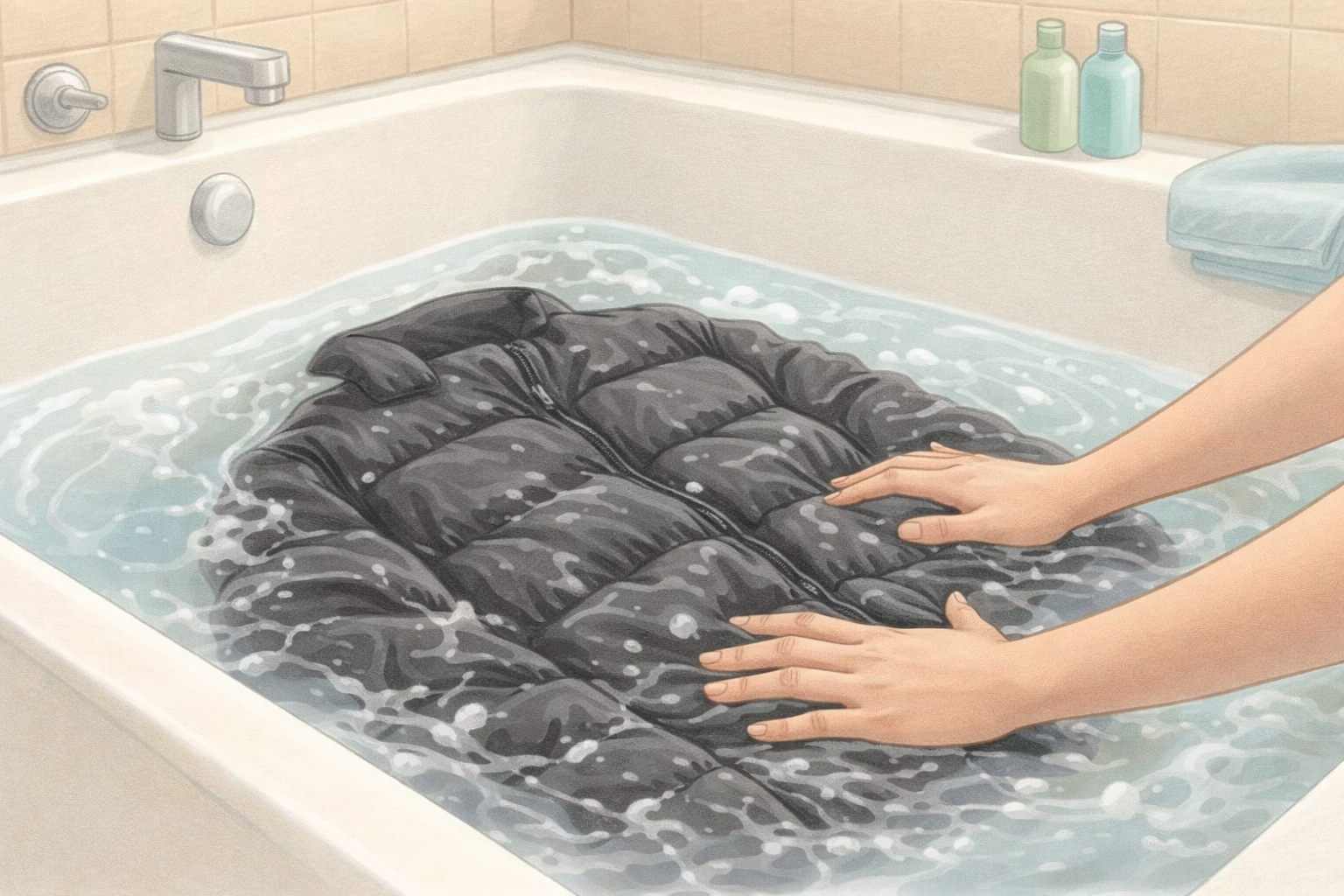
Fill a bath with cool water and dissolve a small amount of down wash first. Lay the jacket in and press it under, then gently squeeze water through the baffles. Don’t twist, wring, or “rope” it, that’s how you pop seams.
Rinsing takes longer than you want it to. Drain, refill, and press again until the water runs clear. If you rush this, detergent residue glues clusters together and you’ll fight down clumping for hours.
Moving it wet is the danger point. Support it like a tray, bundle from underneath, and lift slowly so the weight doesn’t pull on the shoulders.
5) Drying is where most people ruin it
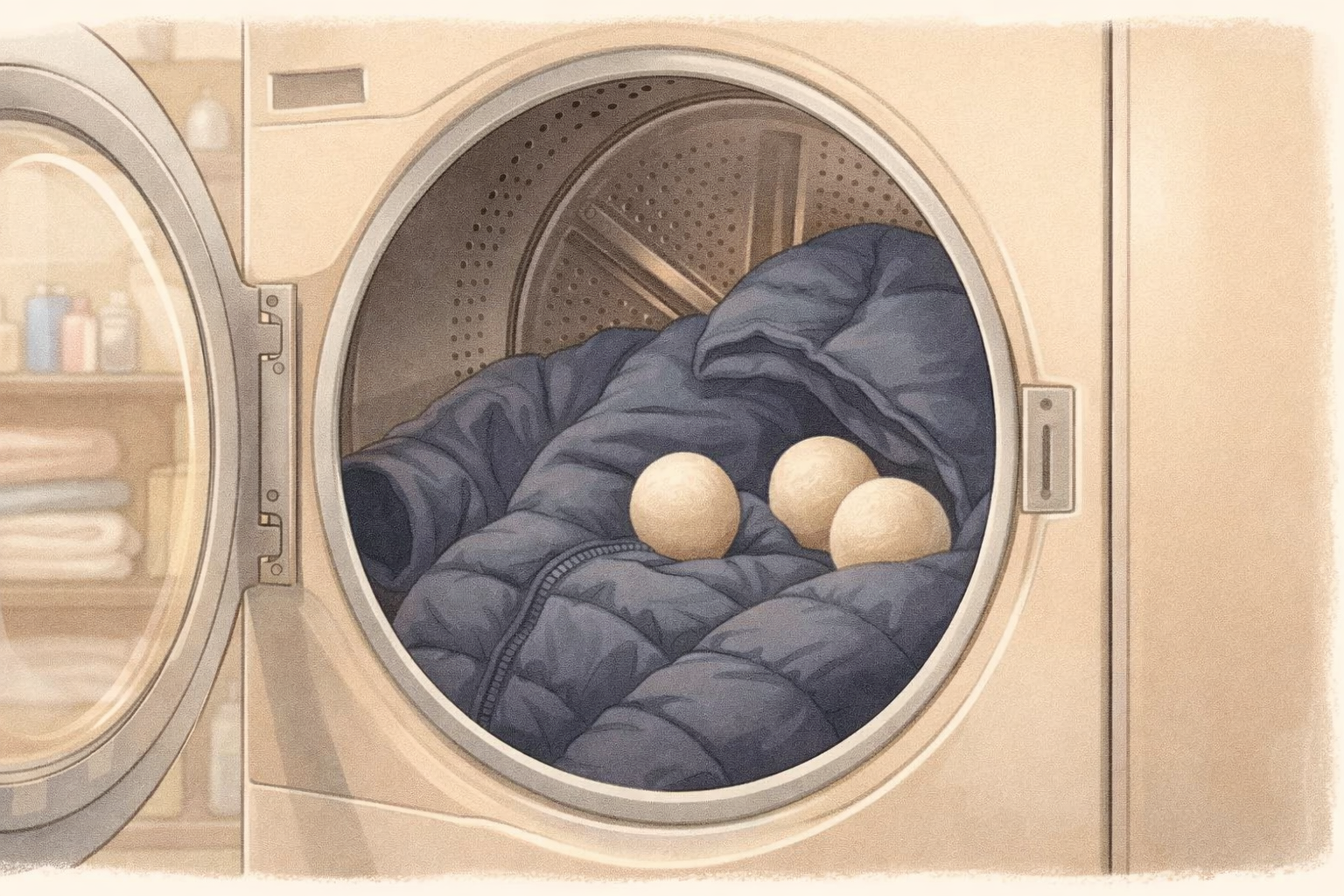
After you clean a down jacket, drying is where most people accidentally do the damage. Hot and fast feels efficient, but it’s the quickest route to scorched fabric and cooked oils. Low and long wins. Set the dryer to tumble dry low, plan for multiple cycles, and check every 20 to 30 minutes.
Use dryer balls or clean tennis balls. They physically break up wet clumps, helping loft return while the jacket dries.
Here’s the test people skip: it must be fully dry all the way through, not just “dry on the outside”. Damp down smells musty because microbes love moisture, and the odour can linger even after it feels dry. Patagonia’s care advice also pushes thorough drying to restore loft and avoid clumps, especially with low heat and patience, according to their down care guidance.
If the shell feels warm but the baffles feel cool or heavy, keep drying.
6) Fix clumps, smells, flat spots
If you wash down jacket and it comes out clumpy, don’t panic, clumps are fixable if you act early. Keep it in the dryer on low heat and pause to manually break up lumps by “pinching” the baffle from the outside. Work methodically, top to bottom, rather than attacking one big clump.
A musty smell usually means one of two things: it never fully dried, or it sat wet too long before drying started. Re-run a rinse and spin, then go straight back to low heat drying. If you need a practical odour plan for other laundry too, the steps in our musty clothes smell fixes piece translate well.
Here’s the stop-and-bring-it-in checkpoint. Get professional help if:
- The jacket is high-value (think £250+), or it’s a technical piece with taped seams.
- You still smell damp after a full dry.
- The down has migrated into hard “sausages” you can’t break up.
According to The North Face product care advice, low heat drying and patience matter, and they warn against high heat that can damage fabrics and trims, as noted in their down care guidance.
7) Keep it cleaner, longer
To wash down jacket less often (and keep it loftier), focus on the contact zones and wash less. You don’t need to fully launder it as often as you think. Most people get better results by cleaning the contact zones and spacing out full washes. Collars and cuffs take the hit, so a weekly wipe-down reduces deep cleans.
Store it uncompressed. Don’t leave it squashed in a stuff sack for months, that trains the down to stay flat. Use a breathable hanger or a loose cotton bag in a dry cupboard.
If rain stops beading and the outer fabric “wets out”, washing won’t fix that. You’re looking at DWR reproofing, which restores the water-repellent finish on many shells. Just make sure the jacket is properly clean first, dirt blocks reproofers from bonding.
This also ties into wash habits more generally. Overloading, too much detergent, and hot cycles fade and wear fabrics faster than people expect. If dark shells bother you, our tips on stopping black clothes fading in London will save you a few costly replacements.
Local option: wash down jacket nearby
If you’re busy, or you’ve had a bad experience with clumping, it’s often cheaper to avoid the risk than to replace a jacket. Plenty of locals in North Finchley and Notting Hill pop in because drying time is the bottleneck, not the wash, especially when they need to wash down jacket safely.
Bring the jacket in and tell us three things: the brand, any stains (especially oil or makeup at the collar), and any odours (smoke, damp, cooking). If there’s damage, point it out before we start.
Turnaround depends on how quickly we can dry it properly. Down can take several hours to dry fully on low heat, and rushing that step is a false economy. If it’s urgent or high-value, call ahead, we’ll tell you honestly what’s realistic.
Now that you’ve got both options, here’s the simple decision rule. If the label allows machine washing, the shell is intact, and you’ve got access to a tumble dryer you trust, home care is usually fine. If you can’t tumble dry low for long enough, or the jacket is expensive or sentimental, professional cleaning is the safer bet.
For related care, you may also want our guide to remove ink stains and our practical checklist for musty clothes smell fixes.
If you want to book in, see our North Finchley dry cleaning service or our Notting Hill dry cleaning service.
Frequently asked questions
Can I wash a down jacket in a washing machine?
Yes, if the care label allows it and you use a gentle cycle plus an extra rinse cycle. Most issues come from detergent residue and poor drying, not the machine itself.
What detergent should I use to wash a down jacket?
Use a specialist down detergent where possible and keep the dose small. According to Nikwax down washing guidance, standard detergents can affect loft by stripping natural oils.
How do I stop down from clumping after washing?
Clumping usually means the down is still wet. Use tumble dry low, add dryer balls or clean tennis balls, and pause to break up lumps by hand. If you still see hard clumps after several low-heat cycles, it’s time to get help.
Can I air dry a down jacket instead of using a tumble dryer?
You can, but it’s risky in a London flat because it dries slowly. Slow drying increases the chance of musty odour and down clumping, so only air dry if you can keep airflow high and regularly break up clumps.
How long does a down jacket take to dry properly?
Plan for 2 to 6 hours on low heat depending on fill, size, and your dryer. It’s fully dry only when the baffles feel light and evenly fluffy, with no cool or heavy patches.
If you want to wash down jacket at home, follow the low-agitation wash and the long, low-heat dry, that’s what protects the fill. If you’re staring at clumps, lingering damp smell, or a pricey jacket you can’t replace, don’t gamble on another cycle. Drop it into Glint Express and we’ll handle it carefully.
North Finchley: Glint Express, 9 Halliwick Court Parade, Woodhouse Road, London N12 0NB. Call 020 3376 2060 or email nfinchley@glintexpress.co.uk.
Notting Hill: Glint Express, 341 Ladbroke Grove, London W10 6HA. Call 0745 030 2088 or email NottingHill@glintexpress.co.uk.