Remove Ink Stains Fast (Biro, Marker, Fountain Pen)
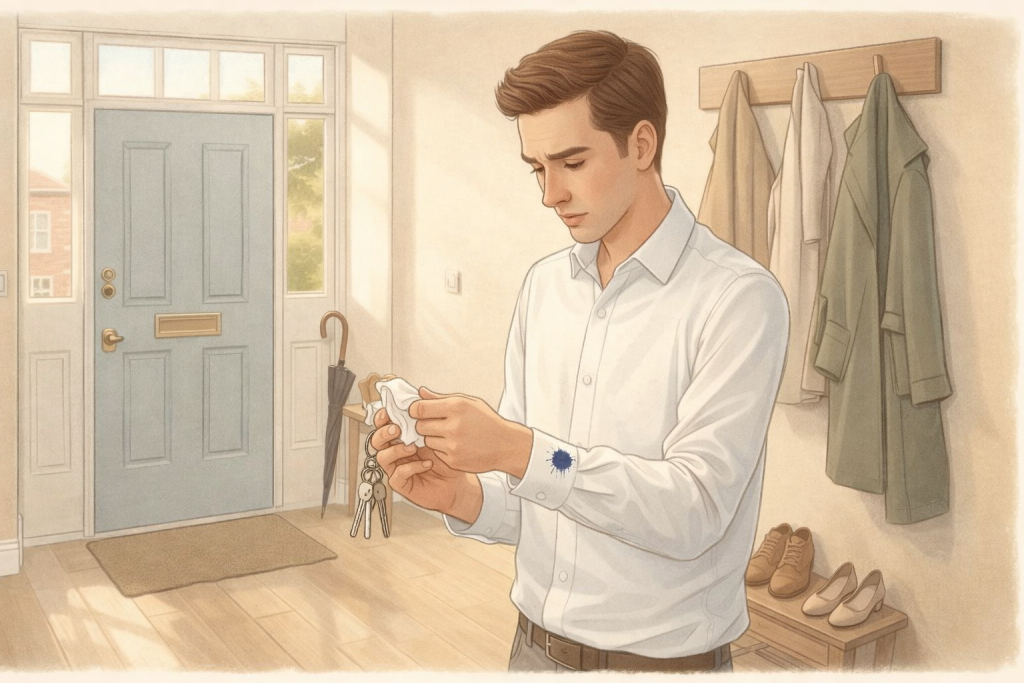
You’re halfway into your shoes, you glance down, and there it is, a fresh biro line across your shirt. If you need to remove ink stains, most people instinctively scrub like mad, and that’s the moment the ink spreads and sets. We see this all the time from neighbours rushing to work in Notting Hill or dashing for the Northern line from North Finchley. The good news is you’ve usually got a five-minute window to make a big difference.
Myth: Scrub it hard
Rubbing feels productive, doesn’t it? On one hand, scrubbing can lift some food stains because you’re breaking up solids. While others argue ink is “just a mark” you can brute-force out, ink behaves more like dye than dirt, so the way you tackle ink marks needs a gentler approach.
The reality
Give yourself 30 seconds and do this instead:
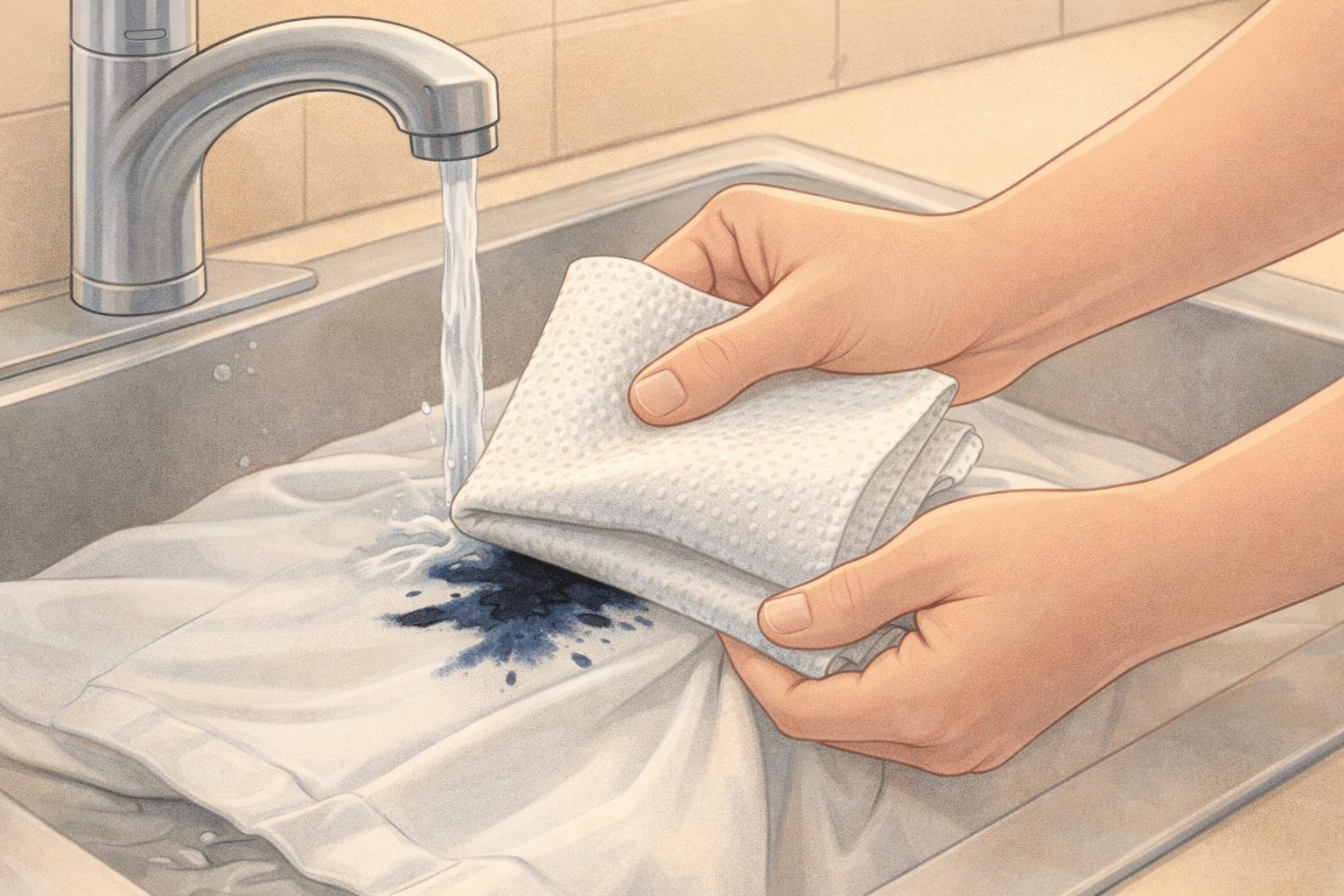
- Blot, don’t rub. Press a clean white tissue or cloth onto the stain.
- Keep it cold. Cold water slows spreading; hot water can help ink bind.
- Support underneath. Put kitchen roll under the fabric so ink transfers down, not sideways.
According to the American Cleaning Institute’s stain removal guidance, blotting and pre-treating before washing, and avoiding heat until the stain is gone, are core best practices for most stains. That “no heat” part matters more than people realise.
Myth: Hot water fixes ink
We get why this one sticks around. Hot water works brilliantly on greasy kitchen mess, so it feels logical for pen marks too. Some people even “lock it in” by ironing the damp patch to dry it quickly, but that is the opposite of what you want when you’re trying to remove ink stains.
The reality
Heat is often the point of no return. Many inks contain dyes that bond more stubbornly once warmed, and tumble drying can bake residue into the fibres.
If you’re dealing with a pen mark on a work shirt right before you leave, cold first aid beats a heroic hot wash every time when you need to lift ink from fabric:
- Rinse the back of the fabric with cold running water for 10 to 20 seconds.
- Blot from the outside edge towards the centre.
- Only then move to a spot treatment (we’ll get to the safest ones).
Myth: Hairspray is the best trick
You’ve probably heard the classic: “Spray hairspray, dab, and it disappears.” On one hand, older hairsprays often contained alcohol, which can help. While others swear by it because it once saved a school shirt in 1998, formulas have changed, so it is not a reliable way to remove ink stains.
The reality
Modern hairspray is unpredictable. Some contain oils, perfumes, and polymers that can leave their own mark, especially on light cotton or silk. If you’ve only got one shot (white blouse, meeting in 20 minutes), choose something you can control.
A better plan is a small bottle of isopropyl alcohol or a high-alcohol hand sanitiser, used carefully. The UK Health and Safety Executive reminds people that solvents and flammable liquids need sensible handling, including ventilation and keeping them away from ignition sources, especially in workplaces and shared spaces, according to HSE guidance.
Myth: DIY works on all fabrics
This is where we see the most expensive mistakes. People treat a “dry clean only” label as a suggestion, then wonder why the colour shifts or the fabric ripples. If you need to remove ink stains, fabric type matters as much as the ink type.
The reality
Some items are simply bad candidates for home chemistry:
- Silk and wool can distort or go patchy with alcohol and vigorous blotting.
- Leather and suede can permanently darken.
- “Dry clean only” often means the dye, finish, or structure hates water.
Here’s our rule of thumb. If it’s a suit jacket, a silk blouse, a wool coat, anything lined, or anything sentimental, stop early. A careful dry clean only stain treatment attempt at home can still leave a tide mark that’s harder for anyone to fix later.
For extra guidance before you start, see our related post on how to dry clean at home safely (especially useful for “dry clean only” labels).
Myth: One product will remove ink stains
People want a single magic bottle. We get it. But biro, permanent marker, and fountain pen ink aren’t the same beast, and the “best” method changes with the ink and the fabric. To remove ink stains consistently, you need a staged approach rather than one miracle product.
The reality
Ink spreads for two main reasons: it wicks through fibres and it dissolves into whatever you apply. That means your job is to control movement and lift it out in stages.
Before you treat anything, do two quick checks:
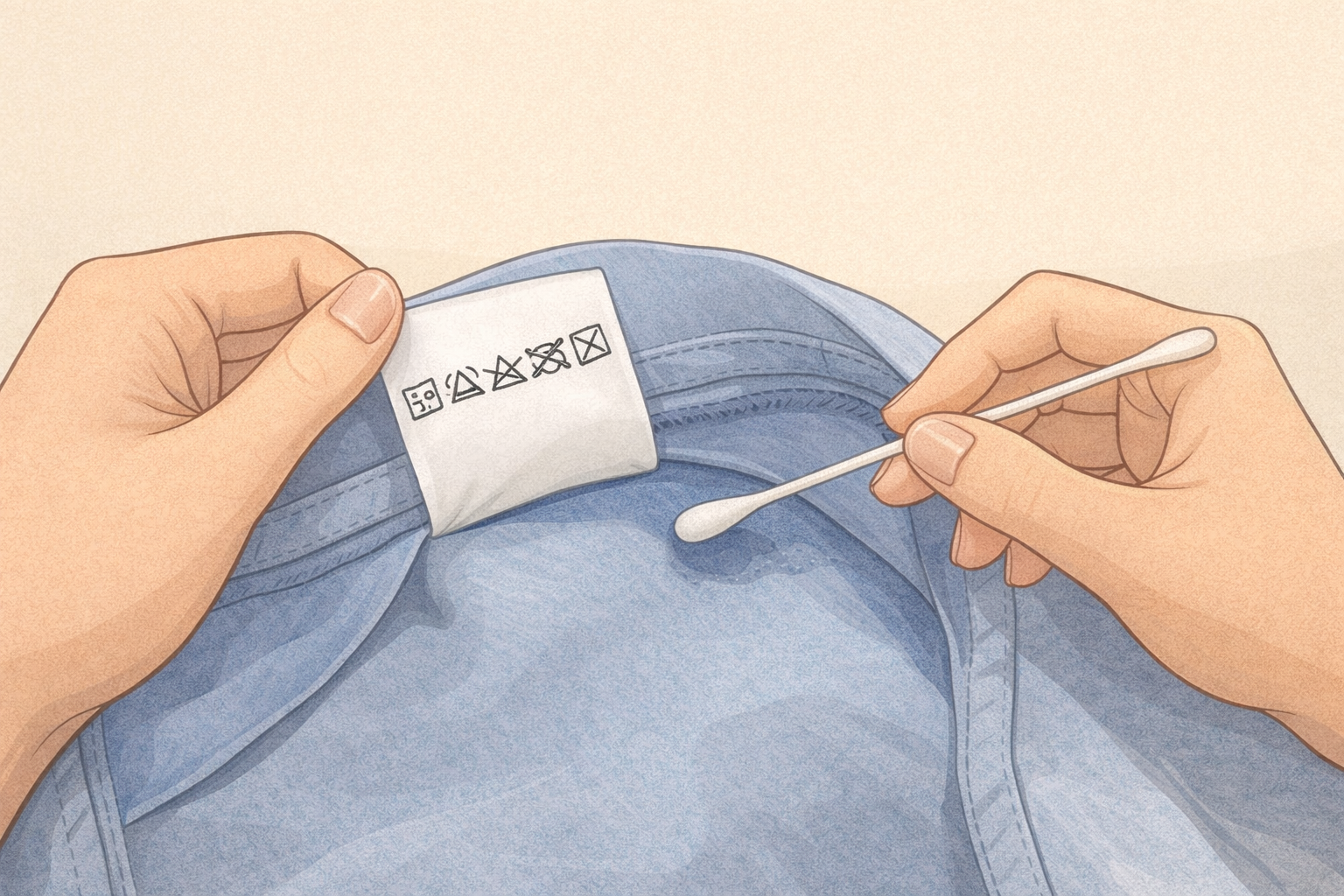
- Read the care label. If it says dry clean only, treat it like a warning label, not a challenge.
- Do a colour test. Dab your chosen product on an inside seam with a cotton bud, wait 60 seconds, then blot with white tissue.
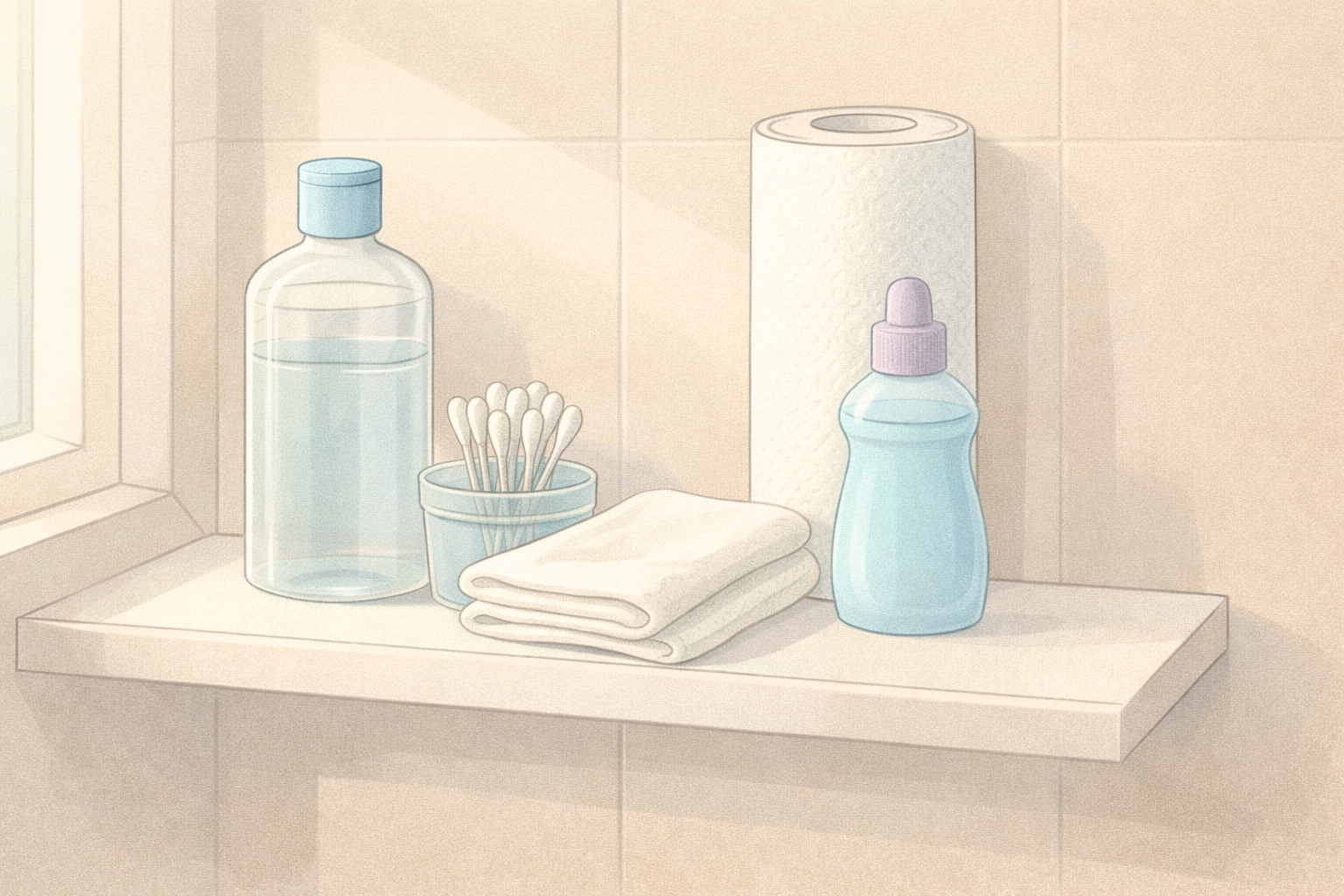
We also keep a tiny “ink kit” in the bathroom or office drawer. It’s boring, but it saves clothes.
What actually works
Most people don’t fail because ink is impossible. They fail because they rush, use heat, or pick the wrong solvent. If you want to remove ink stains with the best odds, follow a simple, repeatable process.
Your 5-minute rescue plan
Kit list (keep it simple): kitchen roll, white cloth, cotton buds, cold water, mild liquid detergent, isopropyl alcohol (70%+), a small bowl.
Biro and ballpoint (best odds):
- Put kitchen roll under the stain.
- Dab (don’t pour) a little alcohol onto a cloth or cotton bud.
- Blot from the outside in, swapping to clean paper as ink transfers.
- Rinse with cold water, then add a drop of detergent and blot again.
This is the classic ballpoint pen stain removal approach, and it works because ballpoint inks often contain oils that alcohol helps break down. If you’re tempted to scrub, don’t. Blotting keeps the ink moving into your paper towel, not into the weave.
Permanent marker (tougher, higher risk):
- Test colourfastness first, especially on darks.
- Use alcohol sparingly and expect multiple cycles.
- If you see dye lifting from the fabric, stop.
Marker inks often contain resins and stronger pigments, which is why a permanent marker stain remover can outperform household products. The trade-off is higher risk on delicate dyes.
Fountain pen (gentler start):
- Flush from the back with cold water first.
- Work in a small amount of detergent and blot.
- Consider oxygen bleach on white cotton only, never on wool or silk.
A fountain pen ink stain is often more water-soluble than marker, so aggressive solvents can be overkill.
Common mistake we see
People “check” the stain by drying it with a hairdryer or popping it in the tumble dryer for 10 minutes. If you want to remove ink stains safely, air-dry and inspect in daylight first. Heat turns a maybe into a permanent souvenir.
If you’ve also got odours from damp storage after the rescue, there’s more practical help in our piece on getting rid of musty clothes smell.
Frequently asked questions
Does hairspray still work for ink stains?
Sometimes, but it’s a gamble. Older hairsprays often relied on alcohol, while many modern ones add conditioners that can leave a new stain. If you’re trying to get ink out of clothes quickly, controlled is better than clever, use isopropyl alcohol with a patch test.
Can I use hand sanitiser to remove biro ink from clothes?
Yes, if it’s high alcohol and you use it like a spotter, not a soak. Put paper towel underneath, apply a small amount to a cloth, then blot. Treat it like rubbing alcohol on fabric, ventilate the room, and keep it away from flames, per HSE advice.
How do you get permanent marker out of a white shirt without ruining it?
Start cold, then alcohol blotting in short cycles, rinsing between rounds. Avoid chlorine bleach unless the care label allows it, and don’t use heat until it’s gone. If the shirt is structured (pleats, fused collar) or the stain has spread, that’s a good moment to stop and bring it in.
What should I do if I’ve already washed and dried the ink stain?
Don’t re-dry it again. Re-treat with alcohol blotting for ballpoint, or a specialist marker remover for permanent marker, then wash on the coolest setting the label allows. Set-in ink can still shift, but it often takes patience and repeated cycles.
Is ink removal safe on silk or ‘dry clean only’ clothing?
Usually not at home. Silk, wool, and “dry clean only” items can watermark or lose dye even if the ink lifts. If you need to remove ink stains from a silk blouse or suit, bring it in and tell us what ink it was and what you tried.
A sensible stop point locally
There’s a bigger question people rarely ask. Is saving ten minutes at home worth risking a £200 jacket? WRAP has repeatedly highlighted that keeping clothing in use for longer cuts waste and reduces the need to buy replacements, and in one widely cited finding, extending the active life of clothing by just nine months can reduce carbon, water, and waste footprints by around 20 to 30%, according to WRAP’s longevity research (confirm the latest 2024 to 2026 update before publishing).
So yes, act fast, but also know when to hand it over if you want to remove ink stains without damaging the garment. Bring it in if:
- The label says dry clean only
- The fabric is silk, wool, leather, or heavily dyed linen
- You’ve tried alcohol and the colour starts lifting
- The item is a suit, wedding guest outfit, or anything lined
Tell your cleaner three things: the ink type (biro, marker, fountain), what you used (sanitiser, alcohol, detergent), and when it happened. That tiny bit of intel can save the garment.
If you’re nearby, we’re easy to reach.
Glint Express North Finchley
9 Halliwick Court Parade, Woodhouse Road, London N12 0NB
020 3376 2060, nfinchley@glintexpress.co.uk
Glint Express Notting Hill
341 Ladbroke Grove, London W10 6HA
0745 030 2088, NottingHill@glintexpress.co.uk
If you care about keeping darks looking sharp after stain work, our tips on preventing black clothes fading in London are worth a quick read.
If you want a second opinion before you do anything risky, pop in with the item. We’ll take a look, tell you honestly if it’s fixable, and help you deal with ink marks without turning one mark into a bigger problem.
You might also find our guide to wedding dress dry cleaning in London helpful if the ink hit something formal or sentimental.
Conclusion
If you act quickly, keep everything cold, and avoid heat, you can often remove ink stains at home on sturdy fabrics. When the label says dry clean only, the fabric is delicate, or the colour starts lifting, stop early and get professional help so you can lift ink marks without damaging the garment.