Sweat stains on white shirts: fast fixes
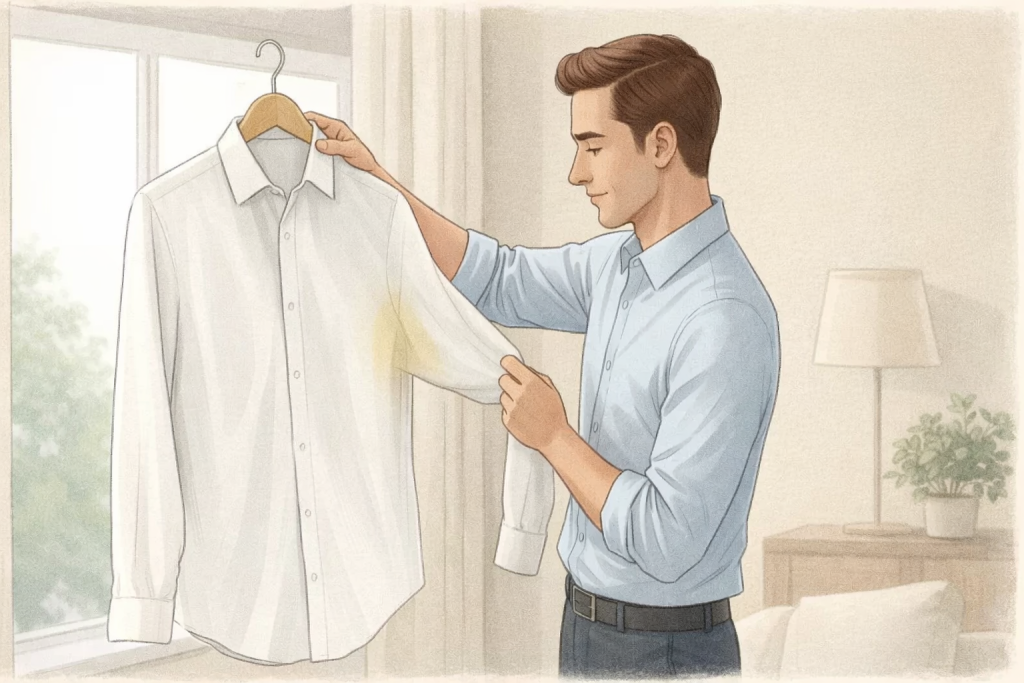
You pull on your favourite white shirt, catch yourself in the hallway mirror, and there it is, that faint yellow halo under the arms. Sweat stains feel unfair because you can wash a shirt “properly” and still lose the battle. If yellow underarm marks keep coming back, it is usually because you are dealing with build-up, not just moisture.
The good news is most yellow marks are fixable, and you don’t need a chemistry degree. Think of it like limescale in a kettle: you’re not just dealing with perspiration, you’re dealing with residue that has layered up over time. Treat first, wash second, and you’ll save the fabric.
The current state
Most people try to fix yellow underarms by washing hotter, scrubbing harder, or reaching for chlorine bleach. That’s usually the exact trio that makes a white shirt look worse, not better, especially when sweat stains are already set into the fibres.
What we’re seeing in Notting Hill and North Finchley is simple: busy weeks mean shirts sit in a basket, then they go through a hot wash or tumble dry, then the mark “sets” like paint left to dry. That’s why the same shirt can look fine on Monday, then look permanently yellow by Friday. This is one of the most common ways underarm yellowing becomes stubborn.
A better approach is faster and gentler. You match the method to two things: fabric type and stain age. Do that, and you’ll get cleaner results with less damage.
That yellow underarm moment
If you’ve got a work shirt that’s gone patchy at the armpits, you’re not alone. We see it all the time on office cottons, school shirts, and white polos that do double duty for commuting and the gym. In most cases, those patches are sweat stains mixed with deodorant residue.
Here’s your 2-minute at-home checklist for tackling underarm yellowing and sweat stains:
- Oxygen bleach (the colour-safe kind, usually sodium percarbonate)
- Bicarbonate of soda
- A gentle liquid detergent or enzyme stain remover
- An old toothbrush or soft nail brush
- A bowl or sink for soaking
One rule saves more shirts than any product: treat the mark first, then wash. If you wash first, you can bake the residue deeper into the fibres, especially if you use heat.
What causes sweat stains
The yellowing isn’t “dirty sweat” in the way people assume. In practice, the worst marks come from a mix of sweat, skin oils, and antiperspirant ingredients, then heat does the locking-in. That combination is exactly why sweat stains can look worse over time even when you wash regularly.
According to the British Skin Foundation, antiperspirants reduce sweating by forming temporary plugs in sweat ducts, and many products use aluminium salts to do that. Those salts can react with sweat and fabric finishes, which is why antiperspirant aluminium stains often look more yellow than you’d expect.
White cotton shows it more for the same reason a white wall shows scuffs. The contrast is brutal, and cotton happily holds onto residue. What makes it worse is tumble drying, ironing over the area, or leaving a worn shirt in a warm basket for days, all of which can set underarm stains.
How to remove sweat stains
Most people get this bit wrong: they pick a method before they decide what they’re dealing with. Think of stain removal like choosing the right key, the lock changes depending on fabric and time. With sweat stains, the right method depends on whether you are dealing with fresh residue or heat-set build-up.
Use this quick decision guide:
- Fresh mark (same day): pre-treat, then wash cool to warm.
- Set-in mark (weeks or heat-dried): soak first, then wash, and repeat if needed.
- 100% cotton, sturdy: oxygen bleach soak is your best all-rounder.
- Delicates (silk, wool, some linings): skip home experiments, bring it in.
Even “white” shirts vary. Some have optical brighteners, some have a cream tint, and many dress shirts have fused interlinings that don’t love long hot soaks. Patch test inside the side seam, and avoid hot water too soon.
At-home fixes for sweat stains
If you want the fastest safe win at home, start with the method that removes build-up, not just surface colour. Which? testing often favours oxygen-based products for whitening and everyday stain removal versus harsher options, especially for regular laundry use, Which?
Below are three reliable options for sweat stains, starting with the most fabric-friendly for most white cotton shirts.
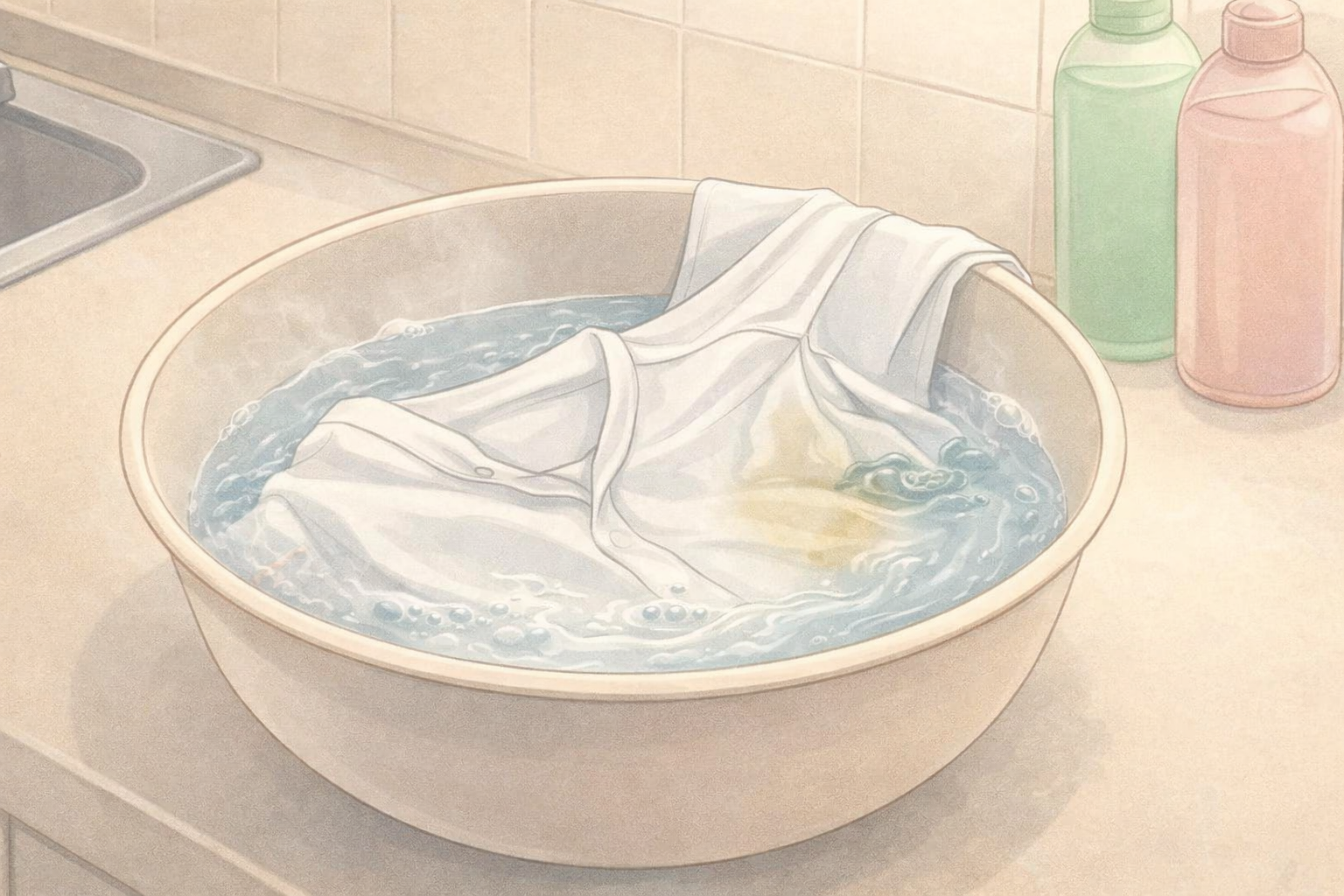
Method 1: Oxygen bleach soak
This is the workhorse for white cotton and a strong first step for sweat stains.
Steps:
- Fill a bowl with warm water (not hot).
- Dissolve oxygen bleach fully (follow the tub, but a common range is 1 tablespoon per 4 to 5 litres).
- Soak the underarm area for 1 to 3 hours.
- Rinse, then wash normally at 30 to 40°C.
If the shirt looks better but not perfect, don’t jump to heat. Air-dry first so you can see what’s left.
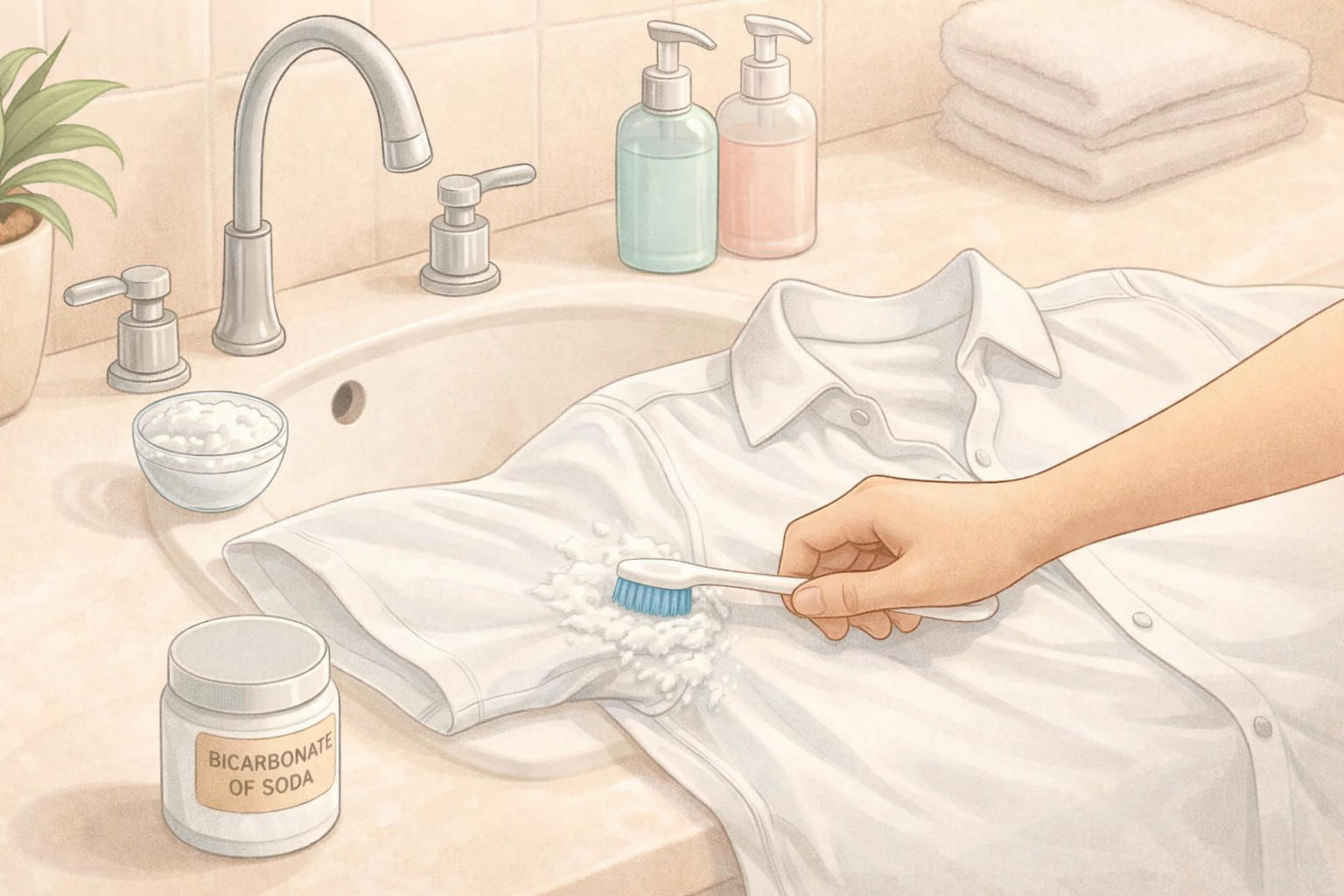
Method 2: Bicarb paste
This works well for deodorant stains on shirts that feel waxy, and it can help loosen underarm discolouration sitting near the surface.
Mix 2 tablespoons bicarbonate of soda with a little water to make a toothpaste-like paste. Work it into the underarm area with a soft brush, leave 20 to 30 minutes, then rinse and wash.
Method 3: Enzyme pre-treat
Enzymes break down the “sticky” bits like body oils, which often sit underneath yellow underarm staining.
Apply an enzyme stain remover to the dry fabric, wait 10 to 15 minutes, then wash. If you’ve got sensitive skin, rinse thoroughly, and consider fragrance-free products.
Stubborn yellow marks
If the shirt has been tumble dried with the stain in place, you can still improve it, but you’ll need patience. Heat acts like an oven: it doesn’t just dry the fabric, it speeds up the reactions that cause yellowing. This is why sweat stains that have been heat-dried take longer to lift.
A long-soak routine that actually works for sweat stains:
- Start with an oxygen bleach soak for 4 to 6 hours in warm water.
- Rinse well.
- Pre-treat the underarm again with enzyme remover.
- Wash at 40°C, then air-dry.
Repeat once more if you see progress. Stop after two rounds if the fabric starts to feel rough or thin, because you’re trading stain removal for fibre damage.
Dress shirts need extra care. Collars, cuffs, and fused interlinings can warp if you soak too hot or wring hard. If you’re chasing a crisp finish after treatment, there’s more on technique in our piece on pressing for crisp shirts.
Prevention that fits London life
Here’s the surprising bit: using more deodorant often creates more visible staining. A thick layer doesn’t dry properly, then it transfers into the fabric like paste, which feeds the build-up behind sweat stains.
What we recommend for commuters and gym-bag shirts to prevent sweat stains:
- Give deodorant 2 to 3 minutes to dry before dressing.
- Use fewer swipes, then top up later if needed.
- If you’re prone to irritation, the British Skin Foundation notes that fragranced products can trigger issues for some people, so consider milder formulas if your skin reacts.
Your wash routine matters too. Don’t “save up” whites for a mega-load if you’re wearing them hard. Separate by soil level, so lightly worn tees don’t get washed with gym tops.
For travel and long days, an undershirt is like a sacrificial layer. It’s cheaper to replace a pack of undershirts than to keep replacing work shirts, especially while prices stay high. The ONS tracks how inflation pushes up household costs over time, and clothing isn’t immune, Office for National Statistics.
If shirts come out clean but smell musty after sitting damp in a bag, we covered quick fixes for that in our musty clothes smell tips.
Bring it in locally
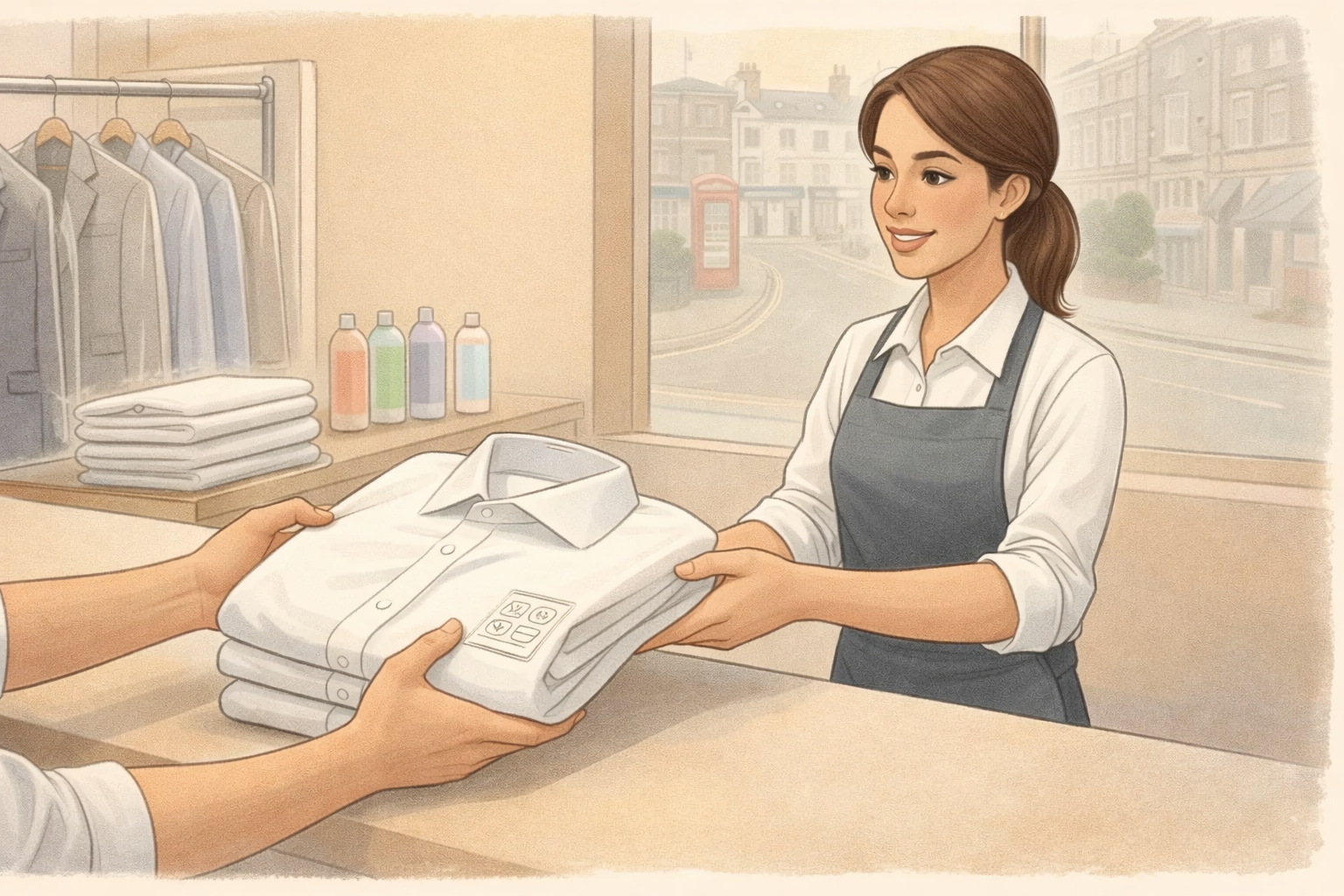
Sometimes the fastest safe fix is not another home experiment. If you’ve tried two rounds and the mark still shadows through, you’ll likely need professional stain treatment, especially on business shirts you want to keep sharp. Professional treatment can be the best option when sweat stains have bonded with deodorant residue and fabric finishes.
Bring the shirt in if:
- The fabric is silk, wool, or a blend you’re unsure about
- The stain is old and has been heat-dried
- You’ve already used bleach or strong DIY mixes
- The shirt has a special finish or structure (fused panels, formal pleats)
Tell us what you used at home, even if it was a “quick splash” of something. That info helps us choose the safest chemistry and avoid setting the residue further.
If you’re weighing up home washing versus professional care, our risk check on washing dry-clean-only items will save you a few nasty surprises.
For a quick overview of what we can do in-store, see our dry cleaning services page.
Practical recommendations
If you want a simple plan you can follow tonight to tackle sweat stains, use this:
Fresh marks: enzyme pre-treat, then wash at 30 to 40°C, air-dry.
Yellowed underarms: oxygen bleach soak 1 to 3 hours, then wash.
Set-in yellow: oxygen bleach soak 4 to 6 hours, enzyme pre-treat, wash, air-dry, repeat once if improving.
Delicates or expensive shirts: skip the trial-and-error and drop it off.
One insider tip from what we see daily: if the underarm area feels stiff, you’re dealing with build-up, not “dirt”. A soak beats scrubbing because it dissolves the residue through the fibres, like soaking a baked-on tray instead of scraping it.
If you want to reduce repeat problems, our shirt laundry service can help keep whites consistent without over-washing or over-heating.
You may also find our guide to washing dry-clean-only items at home useful if you’re trying to protect delicate shirts while still dealing with underarm marks.
Frequently asked questions
Do sweat stains come out of white shirts after they’ve been tumble dried?
Often, yes, but expect improvement rather than perfection. Start with a long oxygen bleach soak, then an enzyme pre-treat, and air-dry to check results before you use heat again.
Is it safe to use bleach on yellow underarm stains?
We don’t recommend chlorine bleach for this. It can weaken fibres and sometimes makes yellowing worse, especially if the mark includes deodorant residue. Use oxygen-based bleach instead.
Why do my white shirts go yellow even when I wash them regularly?
Regular washing can miss the build-up that causes yellowing, especially if you apply lots of antiperspirant and then wash cool. Heat from ironing or tumble drying can also set residues.
Can dry cleaning remove sweat stains and deodorant marks?
Yes, in many cases. We can often treat the underarm area with targeted stain removal before cleaning, which helps with deodorant marks and yellow armpit stains.
What’s the best way to stop deodorant stains on shirts?
Use less product, let it dry for a couple of minutes, and wash shirts sooner. An undershirt helps a lot on long commutes or warm Tube days.
If sweat stains are ruining shirts you actually like wearing, pop in and we’ll tell you honestly whether it’s worth treating or replacing. You can drop off at Glint Express Notting Hill, 341 Ladbroke Grove, London W10 6HA, call 0745 030 2088, or email NottingHill@glintexpress.co.uk.
We’re also in North Finchley at 9 Halliwick Court Parade, Woodhouse Road, London N12 0NB, call 020 3376 2060, or email nfinchley@glintexpress.co.uk. Bring the shirt and tell us what you’ve tried, and we’ll get you the quickest safe fix.
In short: treat early, avoid heat until you know the mark has lifted, and build a routine that stops sweat stains from setting in the first place.