How to Wash Linen Clothes Without Them Wrinkling
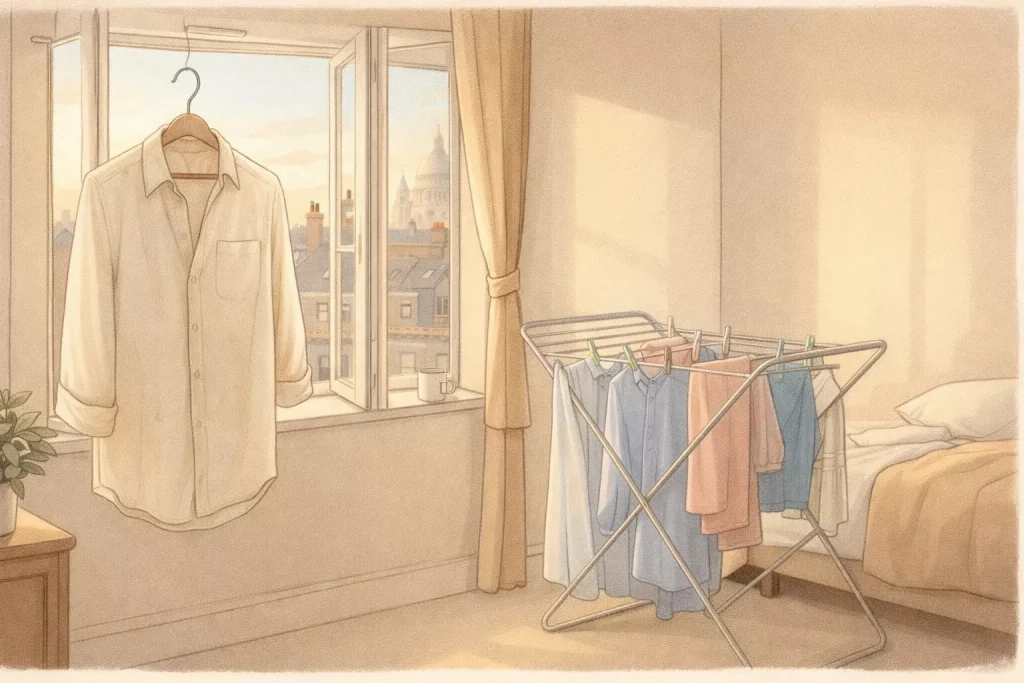
You know the scene. You wash linen before work, plan to hang it “in a minute”, then you remember it an hour later, and it’s come out with drum-shaped creases you can’t unsee. This is the no-fuss routine we use ourselves to cut wrinkles fast when you wash linen, especially in London flats where space, time, and patience run out quickly.
Linen creases because flax fibres have low elasticity, they don’t spring back like synthetics. Some people love that relaxed, rumpled look, while others want it tidy enough for the office or a dinner in Notting Hill. Our goal here isn’t “zero wrinkles ever”, it’s fewer deep creases and a finish you can sort in minutes, not an evening.
What you need before starting
Most of the battle happens before you even press Start. Give yourself 10 minutes for prep, and you’ll save double that later, especially if you wash linen regularly and want it to look sharp.
You’ll want:
- A laundry bag (mesh) for delicate linen
- Mild liquid detergent (powder can leave residue on darker linen)
- 2–3 wide hangers or a drying rack
- A spray bottle with water (for quick dampening)
- Optional: handheld steamer or steam iron
Here’s the contrarian bit we see all the time: people blame linen for wrinkles, but the real culprit is usually an overstuffed drum and a too-fast spin. If you’re trying to cram “one more shirt” in, you’re basically folding creases into the fabric at speed, which is exactly what you want to avoid when you wash linen.
Prep that stops creases forming
Care labels feel boring until you’ve shrunk a favourite shirt. Check whether you’re dealing with 100% linen, linen-cotton (usually easier), or linen-viscose (can go oddly shiny if overheated). If you’re unsure, look up the linen care label symbols, especially the wash tub temperature and tumble-dry icon. This quick check matters every time you wash linen, because the wrong heat is where most problems start.
Sort by weight as well as colour. A lightweight linen blouse twisted around heavy jeans is a crease factory. Keep loads small, think half to two-thirds full, so items can move without being crushed. If you wash linen with similar-weight pieces, you’ll get fewer deep set creases.
Quick prep checklist
Do these before the cycle:
- Turn items inside out (less abrasion, less surface roughness).
- Do up buttons and zips (stops twisting at seams).
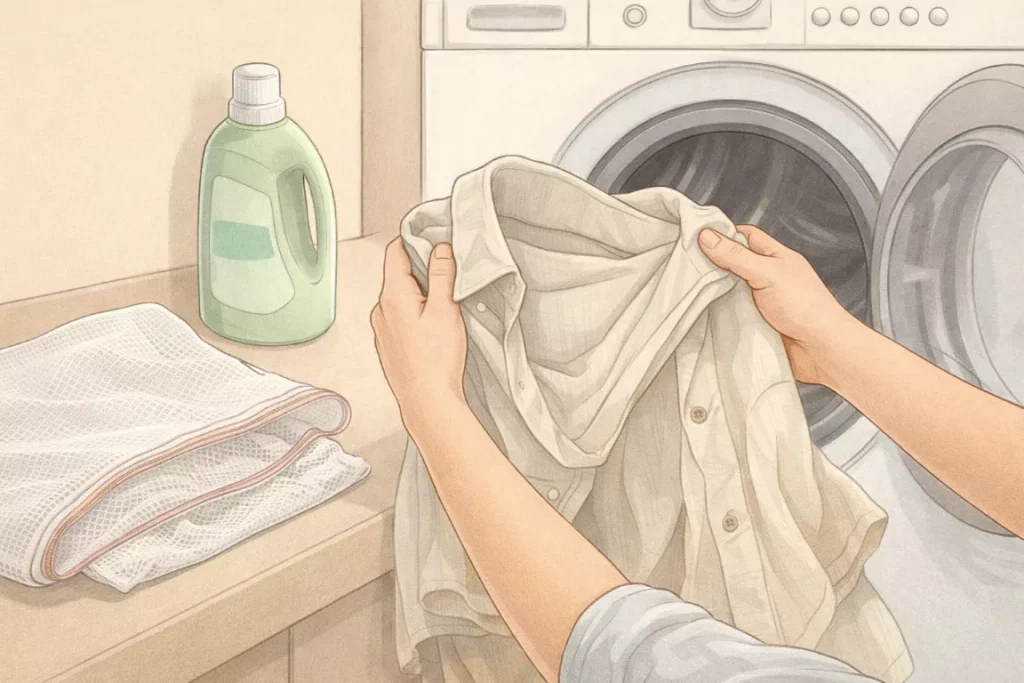
- Put delicate pieces in a mesh bag (especially loose weaves).
- Shake each item once before it goes in (sounds silly, helps more than you’d think).
Settings that help you wash linen
People argue about temperatures. On one hand, warmer water can lift oils and deodorant better. While others point out that modern detergents handle everyday dirt at low temps, and heat can set creases and stress fibres. The simplest rule is to wash linen cooler unless you have a specific stain that needs extra help.
For most day-to-day loads, we’d rather you use cool to 30°C. According to DEFRA’s Make Do and Mend guidance on caring for clothes, washing at lower temperatures helps cut energy use and is gentler on garments. Energy Saving Trust also reports that washing at 30°C can use around 40% less energy than 40°C, depending on your machine and programme, see their washing machine tips.
The three settings that matter
- Temperature: cool to 30°C for most linen, save warmer washes for specific stains.
- Cycle: delicates or gentle, and avoid long “cotton” programmes if you can.
- Spin: low to medium. A low spin cycle (around 600–800 rpm) usually means fewer sharp creases than 1200–1400 rpm.
Detergent is another quiet troublemaker. Too much makes fabrics feel stiff and can leave a film that grabs wrinkles. Ariel’s UK advice notes many detergents are designed to clean effectively at cooler temperatures, see Ariel’s wash cold guidance.
The 5-minute rule after the wash
If you only change one habit, change this. Most wrinkles happen after the cycle ends, not during the wash, even if you wash linen on the perfect settings.
Leaving linen sitting wet in the drum creates pressure creases, and they dry into place like a bad memory. Set a timer for the end of the wash, even if it’s just on your phone, and pull items out straight away. This is the fastest win after you wash linen.
What to do immediately
In the first five minutes:
- Snap each garment once or twice (a firm shake, not a violent whip).
- Smooth seams with your hands, especially collars, plackets, and hems.
- Reshape while it’s damp, cuffs flat, pockets straight, waistband aligned.
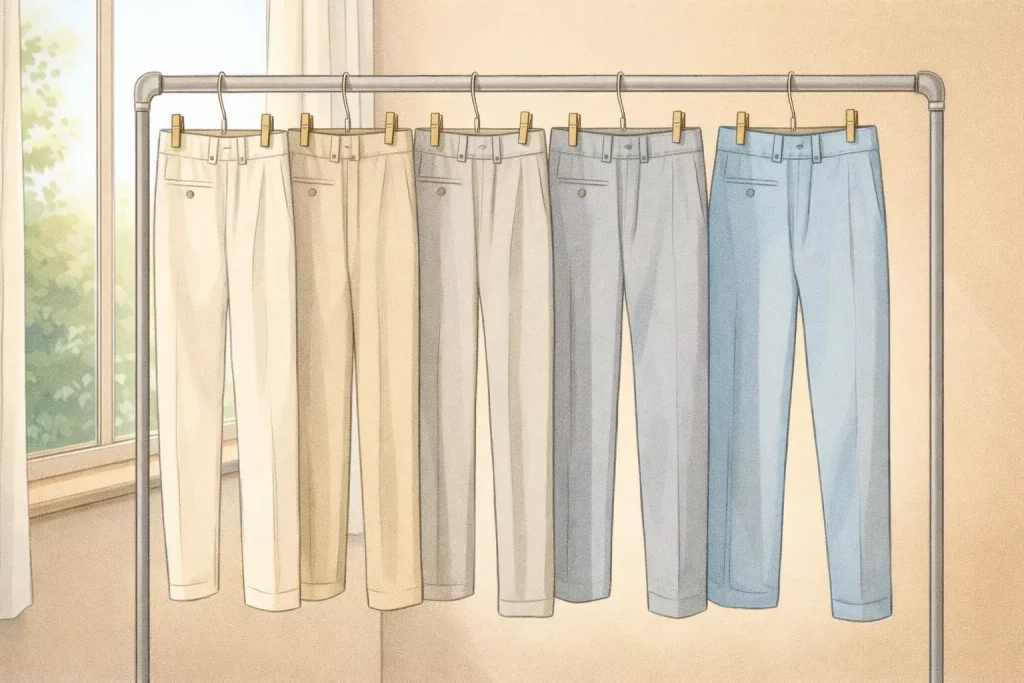
Hang properly. Wide hangers stop shoulder points on shirts, and thin wire hangers are basically wrinkle tools. For trousers, peg at the waistband so gravity helps, and keep the legs hanging cleanly.
Drying without crunch or creases
Air drying works brilliantly for linen if you give it space. Crowding items on a rack slows drying and encourages “rack lines”. Leave a few centimetres between pieces, and open a window if you can. If you wash linen often, this spacing step makes a bigger difference than most people expect.
Some items do better flat. Knit-like linen blends or anything that looks like it might stretch can lose shape on a hanger. Dry it on a towel, reshaped, and flip once.
Tumble dryers are divisive. On one hand, they can soften linen and cut drying time. While others argue they risk shrinkage and set creases if you overdo it. If the label allows it, use low heat and remove slightly damp, then hang or lay flat to finish. If you wash linen and tumble dry it, the “slightly damp” removal is the key detail.
Overdrying is the big mistake. It can make linen feel stiff and it becomes harder to press. If your linen comes out “crunchy”, it’s often because you’ve dried it bone-dry and used too much detergent. If smells are part of the problem too, there’s more practical help in our piece on getting rid of musty clothes smells.
Finishing that’s actually realistic
Here’s the truth: you can wash linen perfectly and still need a quick finish if you want it crisp. The trick is making that finish fast, especially when you wash linen midweek and need it wearable quickly.
Iron or steam while the fabric is slightly damp. If it’s already dry, mist it with a spray bottle and wait 60 seconds. You’ll get better results with less heat time. This is also why it helps to wash linen earlier in the day, so you can catch it at the right dampness.
Steam iron linen, section by section
Work in this order so you don’t re-crease what you’ve done:
- Collar and collar stand
- Placket and yoke
- Sleeves (then cuffs)
- Front panels
- Back panel
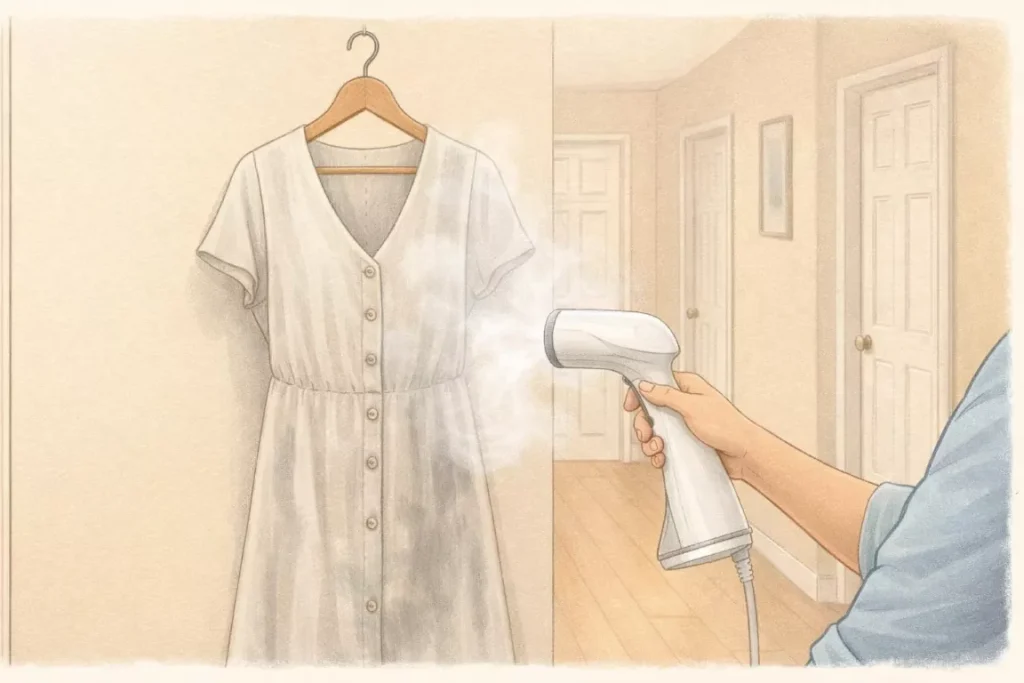
Use steam, keep the iron moving, and avoid pressing hard on linen-viscose blends as they can go shiny. For a busy morning rescue, bathroom steam can help, but don’t expect miracles. A handheld steamer works better, and a crease-release spray can help if you patch test first (some finishes spot).
If you’ve ever wondered why a professional press looks different to home ironing, it’s partly the equipment and partly the technique. We explained the difference in how pressing compares with ironing for crisp clothes.
When to use wash & press
Some weeks, you just can’t babysit the cycle. If you’re juggling the school run in North Finchley, or you’re racing between meetings off Ladbroke Grove, a wash and press service can be the difference between “fine” and “why does my sleeve look like that?”. It is also a practical option if you wash linen at home but never have time to finish it properly.
Good candidates for professional finishing:
- Linen shirts (creases love collars and button plackets)
- Linen dresses (especially with seams, darts, or lining)
- Linen suits and structured pieces
- Table linen for hosting (napkins and runners show every fold)
Tell us what matters. Point out stains, mention any past shrinkage, and flag special finishes or delicate trims. If you’re unsure whether something should be washed or dry cleaned, it’s worth reading our reality-check on washing dry-clean-only items at home.
You can also see our full service options on our laundry and dry cleaning services page.
Common problems and fixes
You can do everything “right” and still hit a snag. Here are the issues we see most, and what actually fixes them when you wash linen.
Wrinkles still look deep: you probably used a high spin or left it in the drum. Re-wet lightly (spray bottle), smooth seams by hand, then steam. If you need a quick, reliable finish after you wash linen, consider booking a professional finish.
Linen feels stiff after washing: too much detergent, hard water, or overdrying. Rinse once more, use less detergent next time, and don’t dry it to a crisp.
It’s gone a bit smaller: heat did it. Check the label, avoid hot washes, and keep tumble drying low and brief, if allowed. If you’ve already shrunk it, our practical unshrinking plan can sometimes help.
Colours look dull: overdosing detergent or washing dark linen too warm can do this. Turn inside out, use the right dose, and keep temps low.
If you want a hands-off option for stubborn creasing, our wash and press service is designed for items that need a wearable finish.
If you want a broader guide for everyday loads beyond linen, see our laundry and dry cleaning services page for what we can take off your plate.
Frequently asked questions
Should I wash linen in cold water or 30°C?
For most everyday wear, cold to 30°C works well and reduces stress on fibres. If you need to shift oily marks, spot treat first rather than jumping straight to hotter water.
What spin speed is best to reduce linen wrinkles?
Aim for 600–800 rpm if your machine allows it. Higher spins can leave sharper creases that bake in as the fabric dries.
Can linen go in the tumble dryer without shrinking?
Only if the care label allows tumble drying. Even then, use low heat and take it out slightly damp, then hang to finish, heat plus overdrying is what causes most shrinkage.
How do I get wrinkles out of linen without ironing?
A handheld steamer is your best bet. In a pinch, hang it in a steamy bathroom for 10 minutes, smooth with your hands, then let it air dry.
Why does my linen feel stiff after washing?
Usually it’s detergent residue or overdrying. Cut the dose, add an extra rinse, and stop drying just before it’s bone-dry.
Ready for linen that behaves?
If you take nothing else away, remember this: the fastest way to reduce creases is what you do right after you wash linen. Keep the load lighter, use a gentle cycle with a lower spin, and follow the five-minute routine before the fabric sets. If you wash linen at home but want it to look properly finished, a wash and press service can save you time.
If you’d rather skip the faff, bring your linen in and we’ll handle the wash, dry, and finish so it’s wearable straight away. You can drop off at either shop, whichever fits your commute.
North Finchley: 9 Halliwick Court Parade, Woodhouse Road, London N12 0NB | 020 3376 2060 | nfinchley@glintexpress.co.uk
Notting Hill: 341 Ladbroke Grove, London W10 6HA | 0745 030 2088 | NottingHill@glintexpress.co.uk