Wash pram cover safely: London parent checklist
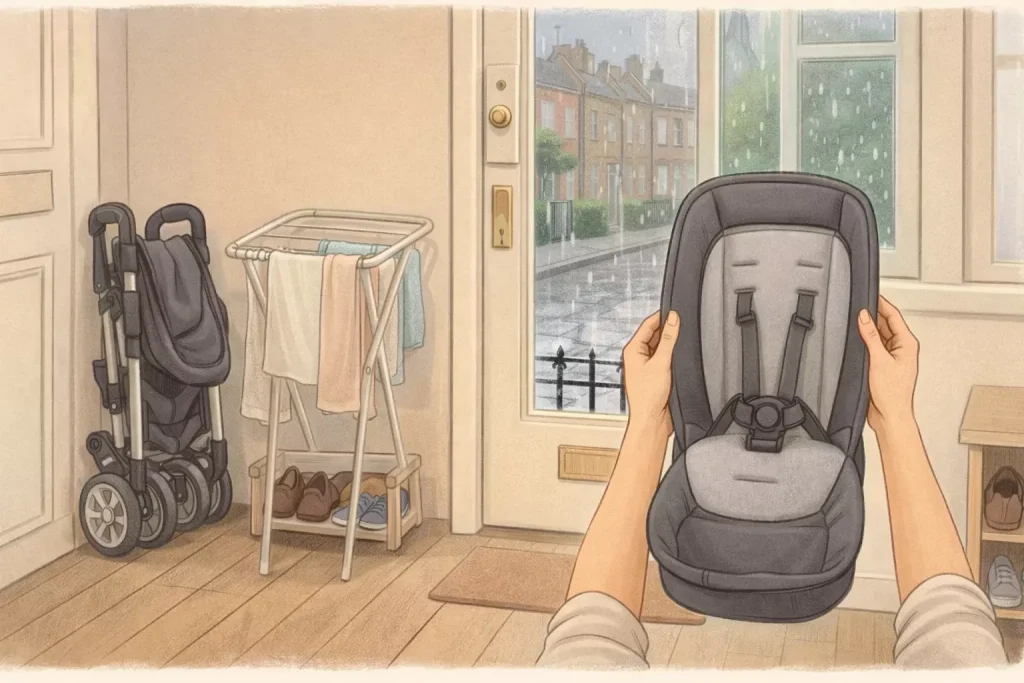
You know the moment. You lift the baby out, clock the milk dribble, crushed snack dust, and that grey London film, and you think, “Right, I need to wash pram cover properly, not just wipe it.” When you clean the pushchair fabric the right way, you remove what sits in the padding, not just what you can see on the surface. This list gives you a simple home-vs-professional checklist, plus drying tips that actually work in small flats and rainy weeks.
1) The real-life moment
When you need to wash pram cover fabric, it is usually because milk, snacks, rain splash, pollution, and sweaty little hands have built up in the same places: head area, harness slots, and seat crease. If you only do a quick wipe, grime stays in the padding like it’s hiding under the carpet.
Here’s the quick decision we use:
- Spot clean today if it’s one fresh mark, no smell, and the padding feels dry.
- Full wash this weekend if it smells sour, feels sticky, or the colour looks dull.
You don’t need fancy products. Grab a vacuum with a crevice tool, a soft brush or clean cloth, mild detergent, a bowl for pre-treating, and 2 to 3 towels. Think of it like washing a duvet cover: you’re not just cleaning the surface, you’re resetting what sits against your child’s skin.
2) 10-minute prep that prevents damage
Before you wash pram cover materials, most damage happens before water even touches the fabric. People yank the cover off, lose clips, then force it back on wet and stretched.
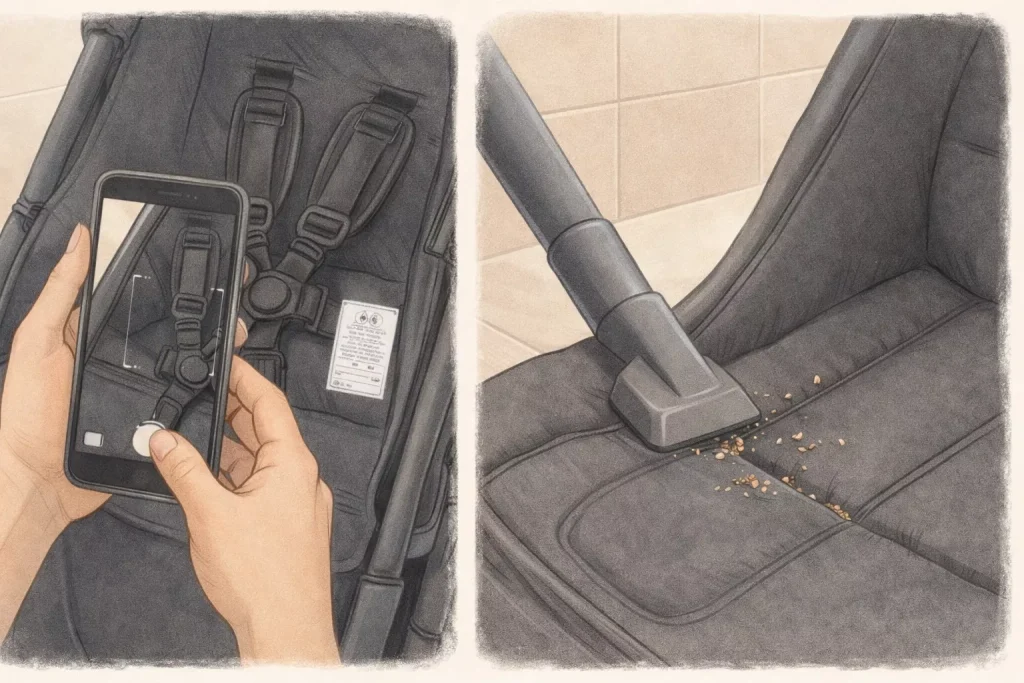
Do this instead. Check the care label, then take a few photos of how straps thread through and where elastic loops sit. Those pictures save you 30 minutes of head-scratching later.
Next, vacuum and shake out crumbs, sand, and grit. Grit acts like sandpaper in a wash cycle and can scuff the fabric. Finally, pre-treat gently. Use a small amount of mild detergent in cool water, dab, wait 10 minutes, then dab again. Avoid bleach, stain sprays with strong fragrance, and very hot water: they can set protein stains (like milk) and weaken coatings.
If you are also tackling other baby textiles, our guide on internal fillings and drying times in how to wash pillows in London can help you avoid that “dry on top, damp inside” problem.
3) How to wash pram cover in machine
If the label allows it, the washing machine is usually the safest and most consistent option when you wash pram cover fabric. You want controlled agitation, controlled temperature, and a thorough rinse.
A setup that works for most modern covers:
- Cool to 30°C
- Gentle or delicates cycle
- Mild, fragrance-free detergent
- Low spin (around 600 to 800 rpm)
According to the NHS guidance on washing and bathing your baby, fragrance-free products can help if your baby has sensitive skin, and rinsing well matters. That’s why we’d rather you add an extra rinse than pour in extra detergent.
Protect the fabric like you would a bra in the wash. Put the cover in a large laundry bag or pillowcase, fasten Velcro and poppers, and remove rigid inserts, boards, and any detachable straps if the brand allows. If you are cleaning a pram seat cover with plastic stays still inside, you risk warping and creases that never sit right again.
4) Hand washing and spot cleaning
If you need to wash pram cover parts that behave badly in a drum, hand washing is often safer. Older padding, glued trims, faux leather piping, and thick liners can separate or go lumpy. Hand washing works similarly to washing delicate upholstery: you control where the pressure goes.
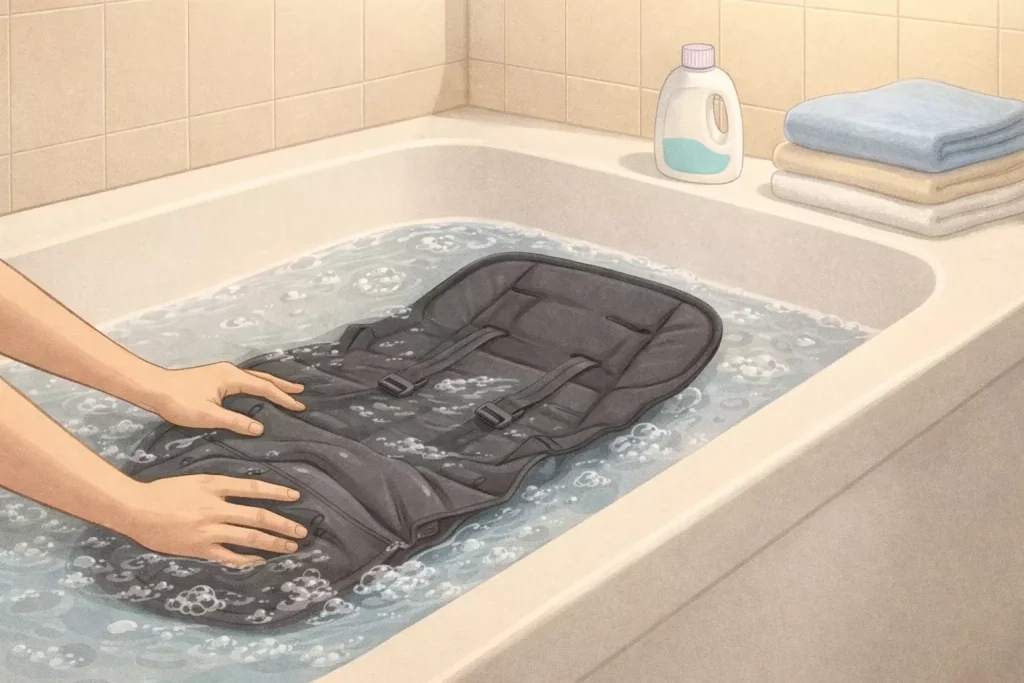
Fill a bath or big basin with cool to lukewarm water and a small amount of gentle detergent for baby items. Submerge the fabric, swish it for 2 to 3 minutes, then let it soak for 10 minutes. Lightly rub high-contact areas with a soft cloth, especially around harness slots.
For spot cleaning, don’t soak the whole thing for one stain. Dab from the outside in, then blot with clean water. If you’re dealing with milk, treat it like you would a protein stain on a shirt. Cool water first, never hot. That’s the quickest route for how to remove milk stains from fabric without “cooking” the mark into place.
5) Drying without shrinkage or smells
After you wash pram cover fabric, drying is where most London flats fight back. A cover can feel dry on top while the padding stays damp in the seams, and that’s exactly where sour smells start.
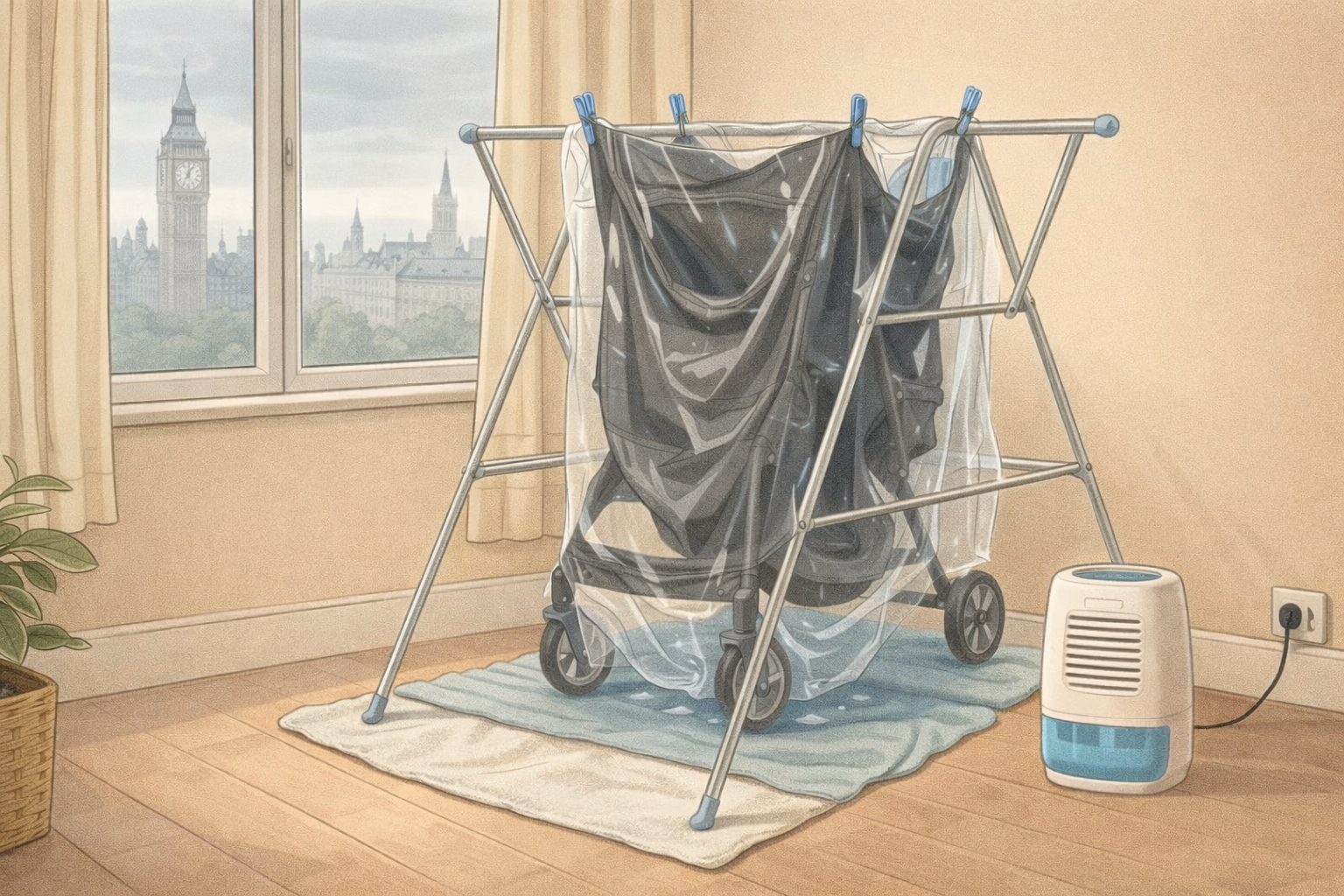
Air-drying is best for most covers. Towel-blot first (don’t wring), then reshape the fabric so seams sit flat and elastic isn’t stretched. Give it airflow. A clothes horse near an open window beats a radiator blast, which can stiffen fabric and shrink certain trims.
Tumble drying is risky unless the label clearly allows it. Even then, use low heat and short bursts, then air-dry to finish. Bugaboo’s own care pages stress following model-specific instructions for fabrics and parts, which is worth checking before you gamble on heat, see their pushchair care guidance.
If damp smells are your enemy, treat the cover like a washed pillow. Keep air moving, rotate it every few hours, and don’t reassemble until the padding is fully dry. If you’ve ever battled that musty scent, the same logic applies as in our musty smell fixes.
6) Reassembly and safety checks
Once you wash pram cover fabric and it is fully dry, reassembly is the bit most people rush, then wonder why the harness feels twisted or the cover sits baggy.
Before you put anything back, check the harness slots line up and straps move freely. Run your fingers along seams and padded edges. If anything feels cool or clammy, it’s still damp inside.
Now wipe down the non-fabric parts. A slightly soapy cloth, then a clean damp cloth, then dry. Handles and bars collect the most oils, especially if you grab a coffee on the go around Notting Hill or you’re doing the school run up near North Finchley.
Insider tip from what we see in-store: people often reassemble while the cover is 90% dry because it “looks fine”. That last 10% trapped in padding is what creates the lingering sick smell a few days later, especially in winter.
7) When to use a launderette
If you cannot safely wash pram cover parts at home, a launderette or professional cleaner can be the better tool. If the cover has stiff panels, heavy staining, unknown fabric, or lots of foam padding, you can do everything “right” and still end up with a warped fit.
Here are the signs we’d stop and get help:
- The label says dry clean only, or gives no washing guidance at all
- You can’t remove boards, stays, or rigid inserts
- The smell has settled in after repeat washes
- Stains include old milk, mould, or ground-in grime
Which? reports that detergent dosing matters, and too much detergent can leave residue that’s harder to rinse away, which can irritate sensitive skin and trap odours. Their testing and advice on laundry detergents is a good reality check if you tend to free-pour.
If you do bring it in, tell the cleaner what the stain is (milk, sick, food oil), whether your child has sensitive skin, and what parts detach. If you’re local, you can drop items off near Ladbroke Grove in Notting Hill or around Woodhouse Road in North Finchley. We’ll always flag what we think is safe, because replacing a fitted cover costs far more than cleaning it.
After you’ve got the method sorted, here’s the quick rule for choosing. If you can remove rigid parts, follow the label, and dry it properly, home washing makes sense. If you can’t guarantee a full dry in your space, or the cover has structure and padding that can deform, a launderette or dry cleaner usually saves money and hassle.
Frequently asked questions
Can I put my pushchair cover in the washing machine?
Often, yes, as long as the care label allows it and you remove rigid inserts. Use a gentle cycle, cool to 30°C, and a laundry bag to protect fastenings. If you’re unsure, don’t guess. That’s how covers come back misshapen.
What temperature should I use to wash a pram cover?
Stick to cool or 30°C unless the label says otherwise. Hotter washes can shrink trims and set protein stains like milk. If you need extra cleaning power, add an extra rinse, not extra heat.
How do I get milk or sick smell out of a pram or pushchair cover?
Start with cool-water pre-treatment and a proper rinse. Smell usually means residue or damp padding, not “dirt”. Let it dry fully with airflow and rotate it. If odour keeps returning, you may need a deeper clean, similar to the approach in our pillow washing tips.
Can I tumble dry a pushchair cover or liner?
Only if the label explicitly allows tumble drying. Even then, use low heat and short cycles, then finish by air drying. Heat can warp plastic parts and stiffen coated fabrics.
How often should I wash a pram or pushchair cover?
For most families, every 4 to 8 weeks works, with spot cleaning in between. Wash sooner if you’ve had a big spill, a sickness incident, or you notice a sour smell. If you regularly leave it too late, the stains set and you end up scrubbing harder, which wears the fabric faster.
Most parents don’t need perfection here, just a repeatable routine. If you wash pram cover with the 10-minute prep, choose machine wash or hand wash based on the cover’s structure, then dry it properly, you will avoid most smells and misshapen fits. If you want a hand with a tricky liner, strong odour, or a cover you’re nervous to risk, pop into Glint Express and we’ll talk you through options before we clean anything.
Notting Hill: Glint Express, 341 Ladbroke Grove, London W10 6HA | 0745 030 2088 | NottingHill@glintexpress.co.uk
North Finchley: Glint Express, 9 Halliwick Court Parade, Woodhouse Road, London N12 0NB | 020 3376 2060 | nfinchley@glintexpress.co.uk
If you’re dropping other bits with it, we’ve also explained the difference between crisp finishing methods in our piece on pressing vs ironing.