How to Kill Dust Mites in Bedding

I spent years washing my bedding every week, feeling virtuous about my clean sheets, and wondering why my allergies never seemed to improve. I’d wake up stuffy every morning, spend the first hour sneezing, and assumed I was just unlucky with hayfever. Then my doctor suggested I might be allergic to dust mites, ran some tests, and confirmed it. The problem wasn’t that I wasn’t washing my sheets enough. The problem was that I was washing them in cold water, which doesn’t actually kill dust mites at all.
When I learned that all mites were killed by water temperatures 55 degrees C or greater, I felt genuinely stupid. I’d been washing my bedding religiously for years in 30-degree water, essentially just giving the dust mites a pleasant bath before tucking them back into bed with me. No wonder my allergies weren’t improving.
If you’re dealing with allergies and you’re washing your bedding in cold or warm water, you need to understand what’s actually happening. Let me share what I’ve learned about dust mites and why temperature matters so much.
What Dust Mites Actually Are
Dust mites are microscopic creatures, smaller than 1/70 of an inch, that thrive in warm, dark, moist places with temperatures of 68° to 84°F and humidity levels at 75 to 80 percent. Your bed is basically dust mite paradise. It’s warm from your body heat, dark at night, and contains moisture from your sweat.
Here’s the genuinely disgusting bit. They thrive on sloughed-off human and animal skin. Humans shed enormous amounts of dead skin cells every night, and dust mites feast on this. Your pillow and mattress are essentially their dining room and bedroom combined.
What causes allergic reactions isn’t actually the living mites themselves. It’s the feces and body parts from the dust mites that are the allergens, so simply killing the mites won’t remove the allergen, although reducing populations is always a considerable help. This is crucial to understand. You need both to kill the mites and to wash away their droppings and body fragments.
I found this knowledge both horrifying and motivating. The idea that I was sleeping surrounded by microscopic creatures and their waste products was enough to make me completely overhaul my bedding care routine.
Why Cold Water Doesn’t Kill Dust Mites

Most modern washing advice tells you to use cold water to save energy and protect fabrics. This is generally good advice for clothes, but it’s terrible advice for bedding if you have dust mite allergies.
Research shows that using the 30 degrees C and 40 degrees C washing modes, only 6.5% and 9.6% of dust mites were killed. That means over 90% of the dust mites in your bedding survive a cold or warm wash. They’re still there, alive and well, ready to continue reproducing and creating more allergens.
The dust mites living on your clothes and bed linens are likely to die by drowning not scalding when you do the laundry. But the problem is that dust mites are remarkably good at surviving in water. They can hold their breath for extended periods, and unless the water temperature is high enough to kill them outright, many will survive the wash cycle.
I spent years thinking my weekly cold-water washes were adequate. They weren’t. I was maintaining clean-looking sheets while the dust mite population thrived undisturbed.
The Temperature That Actually Works
Wash all sheets, blankets, pillowcases and bedcovers in hot water that is at least 130 F (54.4 C) to kill dust mites and remove allergens. This is the minimum temperature needed. Higher is even better if your bedding can tolerate it.
When I switched to hot water washing, the difference in my allergies was remarkable within about two weeks. My morning stuffiness reduced dramatically, I stopped waking up with itchy eyes, and my overall quality of sleep improved because I wasn’t congested throughout the night.
The science backs this up. Using the 60 degrees C and steam water washing modes, all dust mites were killed. Not most of them. All of them. The temperature difference between 30 degrees and 60 degrees is the difference between ineffective and completely effective.
What If Your Bedding Can’t Handle Hot Water
Some delicate bedding genuinely can’t be washed in hot water without shrinking or being damaged. Silk sheets, certain duvets, decorative pillows, these might not tolerate 60-degree washing.
For items that can’t be hot washed, put the items in the dryer for at least 15 minutes at a temperature above 130 F (54.4 C) to kill the mites. The high heat of the dryer accomplishes what hot washing does, killing dust mites through heat exposure.
Research confirms this approach works. Dry heat to 140°F can instantly kill dust mites and their eggs. An hour in a hot tumble dryer can kill up to 99 percent of dust mites in a comforter.
I use this method for my duvet, which has a care label saying cold wash only. I wash it in cold water to clean it, then tumble dry it on high heat for at least an hour. The combination removes dirt and allergens while the heat kills the mites.
The Freezing Alternative
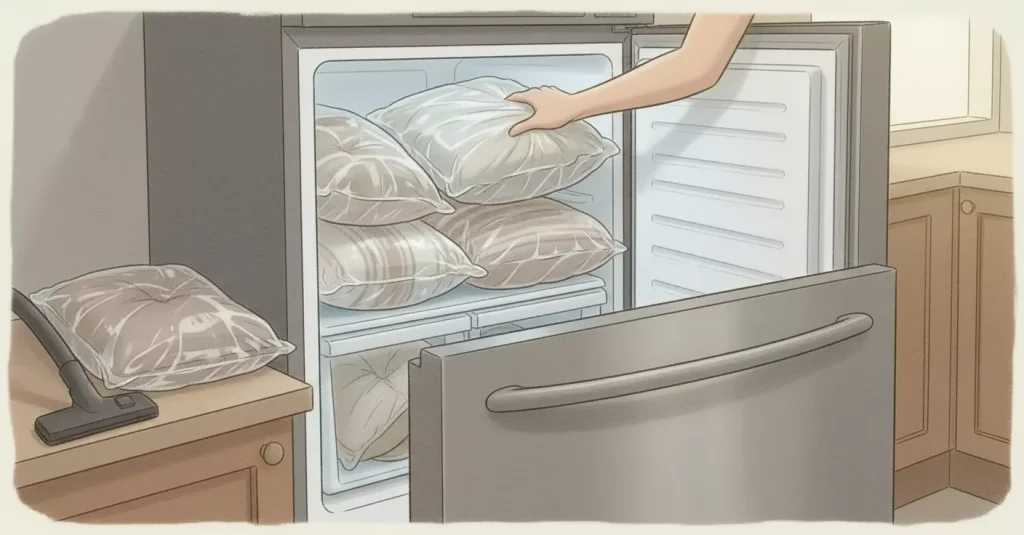
For items that can’t be washed or dried at high temperatures, freezing is another option. Freezing stuffed toys, pillows, and other articles in a home freezer at −15°C for 48 hours should kill both dust mite species and their eggs.
I use this method for decorative cushions that can’t go in the washing machine. Every few months, I bag them up and put them in the chest freezer for two full days. It’s not as convenient as washing, but it does kill the mites.
However, freezing articles does not remove mite allergens. Washing is required to remove the remaining mite allergens following freezing. So ideally, you freeze to kill the mites, then wash or vacuum to remove the dead mites and their droppings.
How Often You Actually Need to Wash Bedding
Leading organisations such as the American Academy of Dermatology and the Asthma and Allergy Foundation of America recommend washing bed sheets and pillowcases once a week in hot water. Weekly washing disrupts the dust mite life cycle and prevents populations from building up.
I know weekly feels like a lot, especially if you’ve got multiple beds to manage. But the difference it makes to allergy symptoms is genuinely worth the effort. I wash sheets every Sunday now without fail, and my allergies are so much better controlled than when I was washing fortnightly.
For duvets and heavier bedding, a 2025 microbiologist review recommends washing duvets every 3–4 months when used regularly or shared with pets and children. This isn’t as frequent as sheets, but it’s still more often than most people wash their duvets.
What About Pillows
Pillows are dust mite hotels. Buy a new pillow every 6 months if you’re serious about dust mite control. This sounds excessive and expensive, but pillows accumulate dust mites, dead skin, sweat, and allergens faster than almost anything else.
I couldn’t quite manage replacing pillows every six months, but I do wash mine monthly in hot water and replace them yearly. This is a compromise between the ideal recommendation and what’s practical and affordable.
Pillow protectors help extend the time between replacements. Zippered allergen-proof covers create a barrier that dust mites can’t penetrate, protecting both you from the mites and the pillow from contamination.
The Bigger Picture of Dust Mite Control
Washing bedding properly is crucial, but it’s only part of dust mite management. Direct sunlight kills dust mites, so hang bedding in the sun whenever possible. I do this in summer when the weather allows. The UV rays kill mites and the fresh air removes musty smells.
Dust mites die when the humidity falls below 40 to 50 percent; use a dehumidifier if the weather is humid. London’s climate is often quite humid, which dust mites love. I run a dehumidifier in my bedroom, particularly in summer, and it makes a noticeable difference.
Mattress and pillow covers are essential. These allergen-proof barriers prevent dust mites from colonising your mattress and pillows in the first place. They’re an upfront investment but worth every penny if you have dust mite allergies.
The Detergent Question
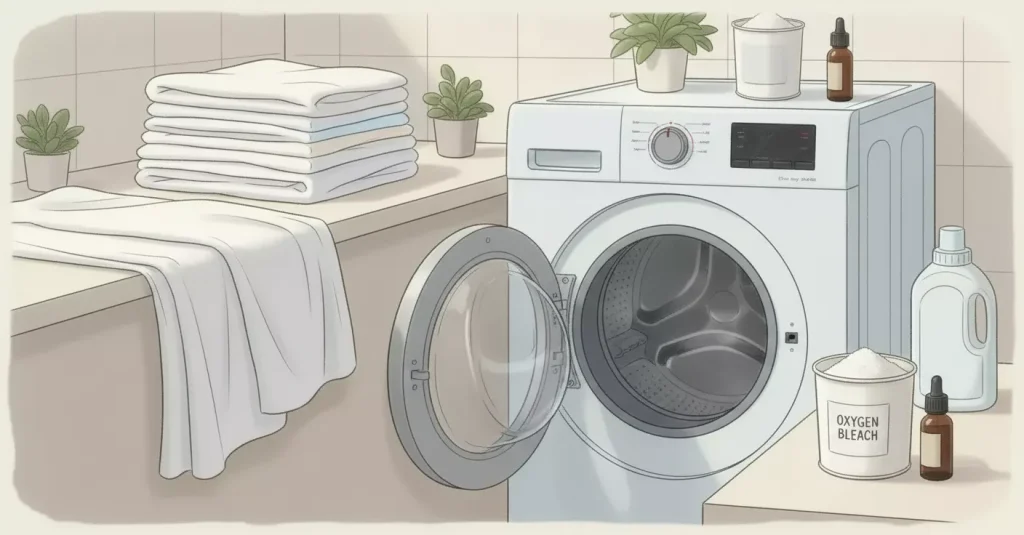
Experiments have shown that washing in warm water removes around 84% of dust mite allergens, with or without laundry detergent. The water itself, particularly hot water, does most of the work. Detergent helps with general cleanliness but isn’t essential for allergen removal.
However, adding bleach to your detergent while washing whites and colorfast items can remove even more dust mite allergens—up to 98%. I use oxygen bleach on my white sheets monthly as a deep clean, and it definitely helps keep them looking fresh while removing allergens thoroughly.
Some people swear by adding essential oils to the wash. Tea tree oil, eucalyptus and spearmint all have insecticidal properties. I’ve tried this but found the scent too strong on bedding. If you have allergies, adding fragranced products to your wash might actually make things worse, so proceed with caution.
When Professional Washing Makes Sense
If you don’t have access to hot water washing at home, or if your washing machine doesn’t reach high enough temperatures, professional laundry services become worth considering.
Commercial washing machines reach much higher temperatures than domestic ones. They can wash at 70 or even 90 degrees, which not only kills all dust mites but also removes allergens more thoroughly than home washing.
I used a launderette service for my duvet once when my washing machine was broken. The industrial machines and high-temperature wash got it cleaner than I’d ever managed at home. The duvet came back fluffy, fresh, and genuinely clean rather than just surface clean.
For people with severe dust mite allergies, having bedding professionally washed monthly might be worth the investment. The cost is modest compared to the improvement in quality of life from reduced allergy symptoms.
Getting Professional Help
If you’re in North Finchley or Notting Hill and managing dust mite allergies feels overwhelming, we’d be happy to help at Glint Express. We understand the importance of high-temperature washing for allergen control at our North Finchley and Notting Hill branches.
Our service washes use properly hot water that actually kills dust mites, not just lukewarm water that gives them a bath. We can handle bedding, duvets, and other items that need high-temperature treatment to be genuinely allergy-safe.
Living with dust mite allergies doesn’t mean accepting constant symptoms. Proper hot-water washing makes an enormous difference. Whether you do it at home or use professional services, temperature is the key factor. Cold water might save energy, but it won’t save you from allergies.