Curtain cleaning Notting Hill, drop-off and done
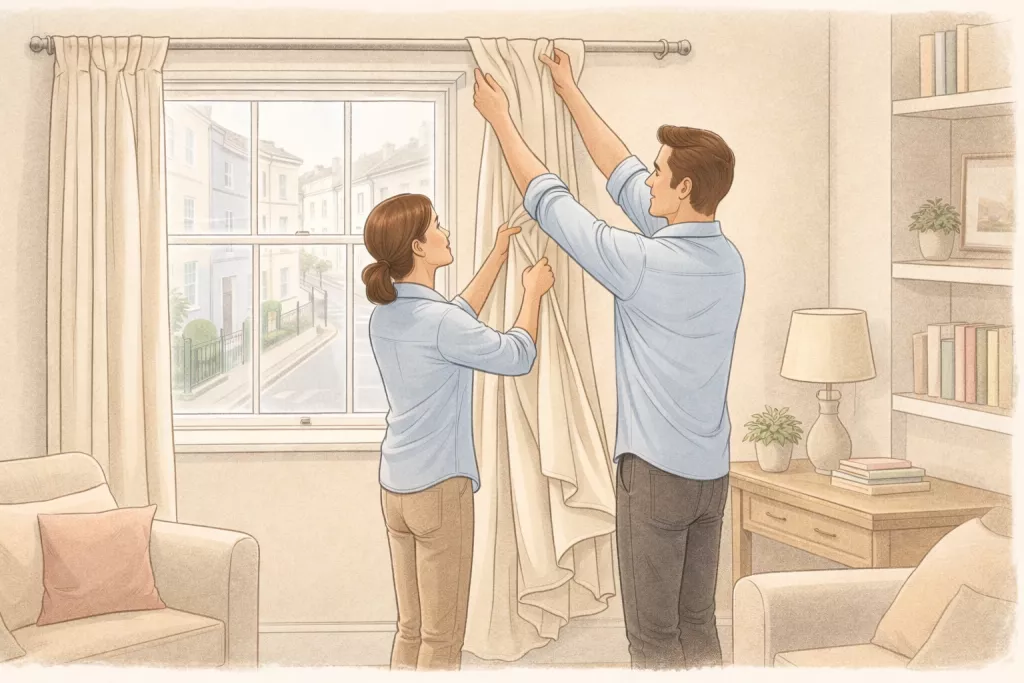
You know that moment when you open the window on a sunny morning and the room still smells a bit like last night’s frying? That’s usually your curtains talking. We see this all the time with curtain cleaning Notting Hill, especially around Ladbroke Grove and Portobello where traffic dust and cooking odours build up faster than people expect. The good news is you don’t need to guess what method to use, or wrestle with a steamer at 10pm.
Background and context
One of our regulars (a busy couple in a first-floor flat just off Westbourne Grove) brought in two sets of lined curtains and a voile. They’d lived with “a faint smell” for months, then noticed the fabric looked dull in daylight. The flat had a small kitchen area, and the curtains sat close to the hob, which is a common setup locally.
They didn’t want a full re-fit service or weeks of disruption. They just wanted a straightforward drop-off, the right cleaning method, and curtains that looked like they belonged in the room again.

The challenge
Most people wait until curtains look visibly dirty, but that’s late in the cycle. Dust, skin flakes, and airborne particles settle into soft furnishings long before you see marks, and that can matter if anyone at home has allergies. For many households, curtain cleaning Notting Hill is less about appearance and more about keeping fabrics from becoming a dust reservoir.
Allergy UK’s guidance for dust mite allergy focuses on reducing dust reservoirs and cleaning fabrics regularly, because mites thrive in warm, humid homes and cling to textiles. According to Allergy UK’s dust mite advice, controlling exposure often involves frequent cleaning of soft furnishings where dust gathers.
Now add Notting Hill reality. Defra notes that indoor air pollution comes from everyday sources like cooking, and outdoor pollution can enter homes and settle on surfaces and textiles (which is basically what curtains are). That mix is why “it smells fine after we cook” can turn into “why does the living room always smell?” within a few months. See Defra’s overview on indoor air quality for the bigger picture.
Here’s the quick “do I need cleaning now?” checklist we use at the counter:
- You notice cooking smells hanging around after ventilation
- The fabric looks greyer at the top edge or near windows
- You spot dust when you flick the hem or run a hand along folds
- Anyone at home has asthma, eczema, or dust sensitivity
- You’ve had building works, sanding, or redecorating nearby
If you tick 2 or more, don’t wait for a stain.
The approach
We treated this like most real-life curtain cleaning Notting Hill jobs: diagnose first, then pick the safest method. “Professional” should mean we reduce risk, not just make things smell nicer for a week.
Pick the right method
Different methods solve different problems. If you match the method to the fabric, you get clean curtains without shrinkage or water marks.
- Dry cleaning: best for structured fabrics, heavy linings, and anything that might shrink or distort in water. If you’re trying to dry clean curtains with interlining or pleats, this is often the safer route.
- Wet washing: works for many synthetics and some cottons, but only if the label allows it and we control temperature and agitation.
- Curtain steam cleaning: useful for freshening and light odour reduction, but it’s not a magic fix for embedded grease or years of dust.
Insider tip: steaming can set certain marks if you don’t pre-treat them properly. People assume steam “lifts” everything, but heat can lock in protein or tannin stains.
Check labels, linings, and risk
Before we commit to a method, we check:
- Care label instructions and fibre content
- Lining type (standard, thermal, blackout)
- Shrink risk (especially cotton headers and older stitching)
- Colour bleed risk (bold dyes, older fabrics, sun-faded panels)
This is where DIY goes wrong. A common mistake is washing one panel to “test it”, then realising the pair no longer matches in length or colour.
Prep and process, then finish
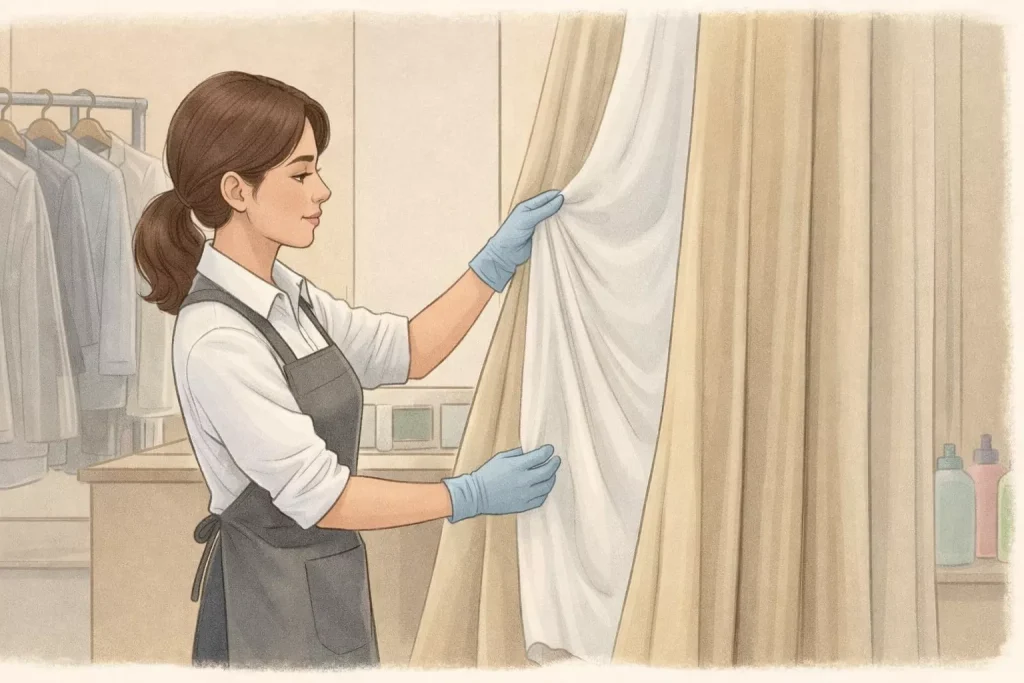
We cleaned the lined curtains using the safest method for their construction, then finished them so they hang properly again. That last part matters. Curtains can be clean and still look wrong if you don’t handle creases and folds correctly, which is why pressing technique matters as much as cleaning chemistry. If you’re curious, we broke down the difference in pressing vs ironing with real examples.
For more on choosing between methods, see our guide to dry cleaning prices in Notting Hill and what typically affects the final bill.
If you’re comparing options for home fabrics beyond curtains, our guide to musty smell removal tips is also useful for understanding what causes lingering odours.
The results
For this curtain cleaning Notting Hill case, the change wasn’t just “they smell nicer”. The curtains looked brighter in daylight, the folds sat more cleanly, and the voile regained that crisp, airy look people expect.
The couple told us two practical outcomes mattered most:
- The room stopped holding onto cooking odours after dinner.
- They didn’t feel like they needed to open windows as often just to make the air feel fresh.
That lines up with what public health guidance generally says about indoor allergens. UKHSA has highlighted that dust reservoirs in the home contribute to exposure, and regular cleaning of soft furnishings can help reduce allergen load. If you want the official angle, UKHSA’s resources on indoor air quality and health are worth a skim.
One more thing people don’t expect: “dull colour” often comes from a film of fine dust and cooking residue, not dye loss. Once that layer lifts, patterns and texture come back without any harsh treatment.

Lessons learned
Most Notting Hill homes don’t need complicated curtain care, they need the right decision early. If you wait until curtains smell strongly or show tide marks, you’ve got fewer safe options. That is why curtain cleaning Notting Hill works best as routine maintenance, not a last-minute rescue.
Here’s what we’d tell any neighbour planning local curtain care, without the drama:
- Don’t guess the method. Blackout and interlined curtains behave differently, and blackout curtain cleaning can go wrong if water gets trapped in layers.
- Treat “freshening” as maintenance, not a fix. Steaming helps between cleans, but it won’t remove oily kitchen residue.
- Label pairs before you drop them off. It saves you time at re-hanging, and it stops left and right panels getting swapped.
If odour is your main issue, tackle the source too. Grease aerosols from cooking settle on textiles fast, so use extractor fans properly and ventilate for 10 to 15 minutes after frying.
Frequently asked questions
How much does curtain cleaning cost in Notting Hill?
Prices depend on size, fabric, and lining. A small unlined pair costs less than a full-length interlined set, and extras like heavy blackout linings add time. If you want realistic local numbers, our dry cleaning prices in Notting Hill breakdown explains what typically drives cost.
Can you dry clean blackout curtains and lined curtains?
Usually, yes, and it’s often the safer option. We check the label and construction first because some blackout coatings and thermal linings don’t like moisture or heat. If you’ve got expensive lined curtains, don’t put them in a domestic machine “on gentle” and hope for the best.
Do I need to take the hooks off before bringing curtains in?
Yes, please. Remove hooks, rings, and any track fittings if you can, and bring tiebacks separately. If you’re not sure what’s removable, pop in and show us a photo on your phone before you take them down.
How often should curtains be professionally cleaned?
For most homes, every 12 to 24 months works well. If you’ve got pets, smokers, a busy kitchen-diner, or dust allergies, aim closer to every 6 to 12 months, because fabrics hold onto particles and allergens even when they look fine. That’s one reason local customers often book ahead of spring.
Can professional cleaning remove smoke or cooking smells from curtains?
In many cases, yes. The key is choosing a method that lifts residue, not just masks scent. If you’re trying to remove odours from curtains, tell us whether it’s smoke, cooking, damp, or pet smell, because each one behaves differently.
Ready to get them cleaned? Pop in
If you’re juggling work, school runs, or just don’t fancy experimenting with blackout linings in your bath, a simple drop-off is the easiest route. Bring your curtains, voiles, tiebacks, and even cushion covers if you want the room to match, then we’ll confirm the safest method on the spot. Most people around Ladbroke Grove, Portobello Road, and Westbourne Grove find this quicker than hiring equipment or risking shrinkage at home.
If you want curtain cleaning Notting Hill locals actually use, come by Glint Express in Notting Hill:
Glint Express Notting Hill
341 Ladbroke Grove, London W10 6HA
0745 030 2088
NottingHill@glintexpress.co.uk
Pop in with your curtains today, and we’ll tell you straight what they need, and what they don’t.