Cooking smells clothes: quick fixes that work
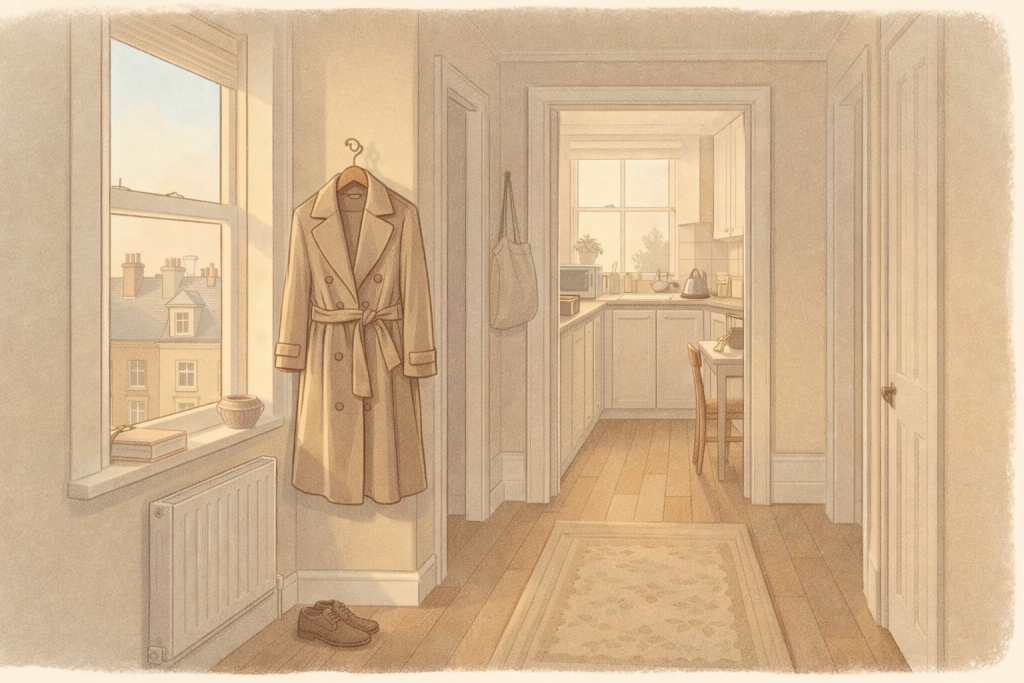
You know that moment on the Central line where you catch a whiff of yourself and think, “Why do I smell like last night’s takeaway?” When cooking smells clothes, it happens all the time, especially after frying, curry nights, or fish. If your outfit still carries kitchen odour in the morning, you don’t need to bin it or drown it in perfume. You just need the right order of moves, because heat and the wrong products lock odours in.
The basics in plain English
When cooking smells clothes, it clings because tiny oily particles from cooking behave like invisible grease. They float around the kitchen, then settle into fibres like dust into a rug. In practice, that means you’re not dealing with “air” you can spray away, you’re dealing with oil that needs lifting.
What we’ve found works best is thinking in two lanes:
- Fast refresh for things you need again today (coat, blazer, school uniform jumper).
- Proper removal for anything that’s absorbed oil or smoke (hoodies, knitwear, work shirts).
If you’re in a flat near Ladbroke Grove or up by North Finchley’s high street, you’ve probably also got the “no garden line” problem. That’s fine. You can still shift odours indoors if you avoid the big mistake: adding heat too soon.
Why cooking smells stick to clothes
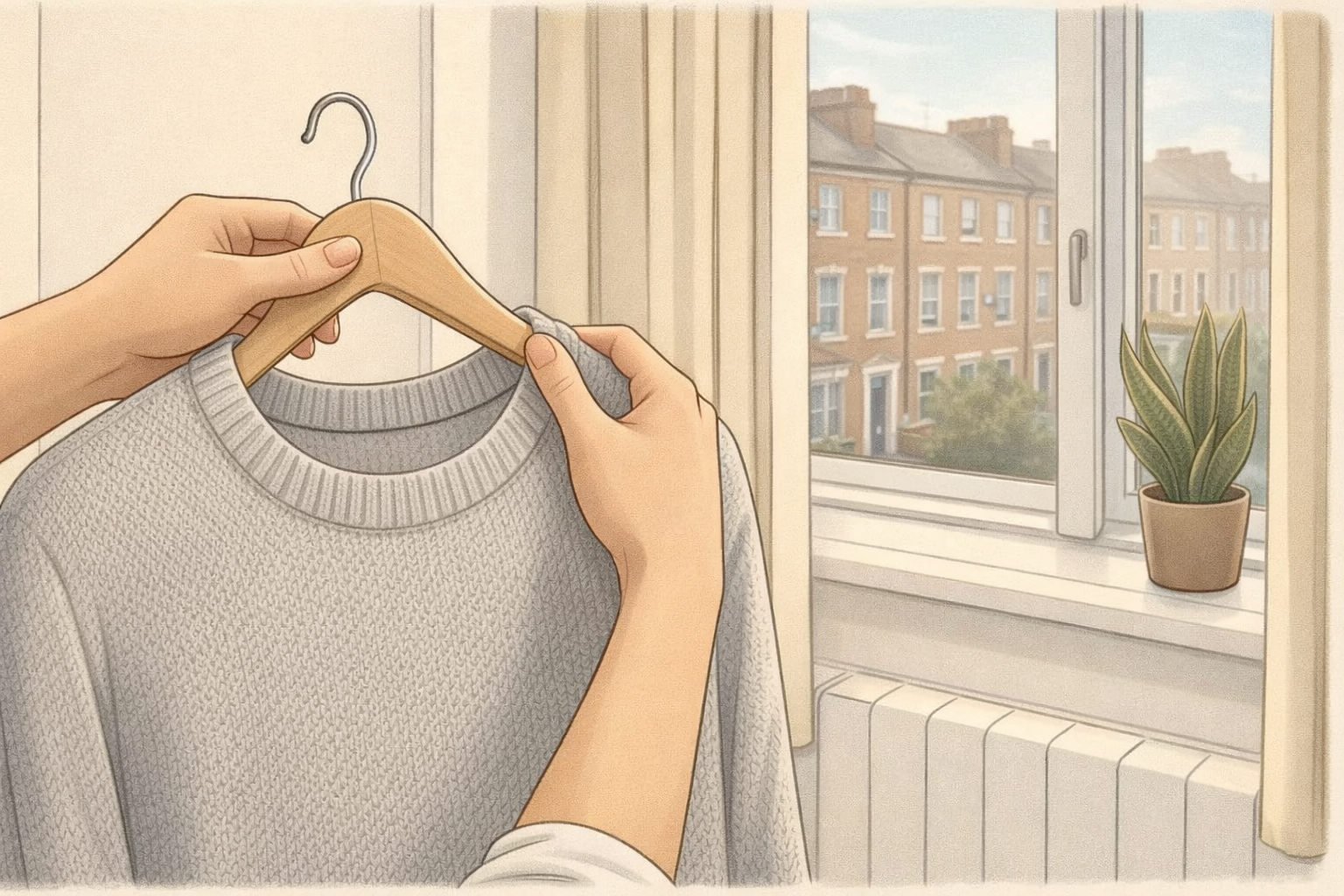
When cooking smells clothes, most people make it worse without realising. They hang the item on a radiator, blast it with a hairdryer, or chuck it in the tumble dryer hoping the smell “burns off”. Heat doesn’t remove it, it sets it.
Oil and smoke bond to fibres
Frying oil, garlic, and spice mixes throw off aerosolised grease. Those particles cling to fabric, then oxidise over time, which is why a coat can smell stronger the next day. According to the American Cleaning Institute detergent enzymes help break down oily soils, which is exactly what cooking odours ride on.
Heat locks odours in
Ironing, tumble drying, and even a hot radiator can bake oil deeper into fibres. Energy Saving Trust reports that washing at 30°C uses around 40% less energy than at 40°C for the same cycle, which is handy, but odour removal sometimes still needs warmth. The trick is using the lowest temperature that still shifts the grease, then never drying with heat until you’ve confirmed the smell is gone.
Fabric makes a big difference
- Synthetics (polyester, nylon) hold onto oily smells like a sponge.
- Cotton releases odours more easily but can still trap curry oils.
- Wool can air out well, but it hates aggressive washing.
Quick fixes for cooking smells (15 mins)
If cooking smells clothes and you’re rushing out for work or the school run, you need a “good enough” refresh that won’t damage the fabric. We use these steps ourselves on shift when a jacket picks up kitchen odour.
First, check the care label. If it says dry clean only, stick to air and gentle steam.
Air it properly indoors
Hanging it “somewhere” isn’t the same as airing it. What works in a London flat:
- Near an open window with the item spaced out (not folded over a chair).
- In the bathroom with the extractor on for 15 minutes, door cracked.
- In the hallway if it’s cooler and away from the kitchen.
NHS ventilation advice consistently stresses using extractor fans and opening windows to reduce indoor pollutants and lingering odours, which maps perfectly to kitchen smells that drift into fabrics. (Worth a quick read on NHS indoor air and ventilation advice).
Lift odour with gentle steam
Steam loosens the oily film so it can evaporate off. A handheld garment steamer beats “hot shower steam” because it’s targeted and quicker.
Common mistake we see: steaming, then putting the item straight back in a wardrobe. Give it 10 minutes to dry and vent, or you’ll trap the smell in a closed space.
Quick mist (patch test first)
If an item still smells, a light mist can help. What we rely on is either:
- Vodka and water 1:1 in a fine mister for odour neutralising.
- A fabric refresher you already tolerate (especially if you’ve got allergies).
Always patch test inside a hem first, especially on silk, acetate linings, and dark wool.
Washing steps that remove odours
If cooking smells clothes after a proper air-out, you need a wash routine that targets grease, not just “freshness”. Here’s the order we use because it prevents that frustrating wash, dry, still-smells cycle.
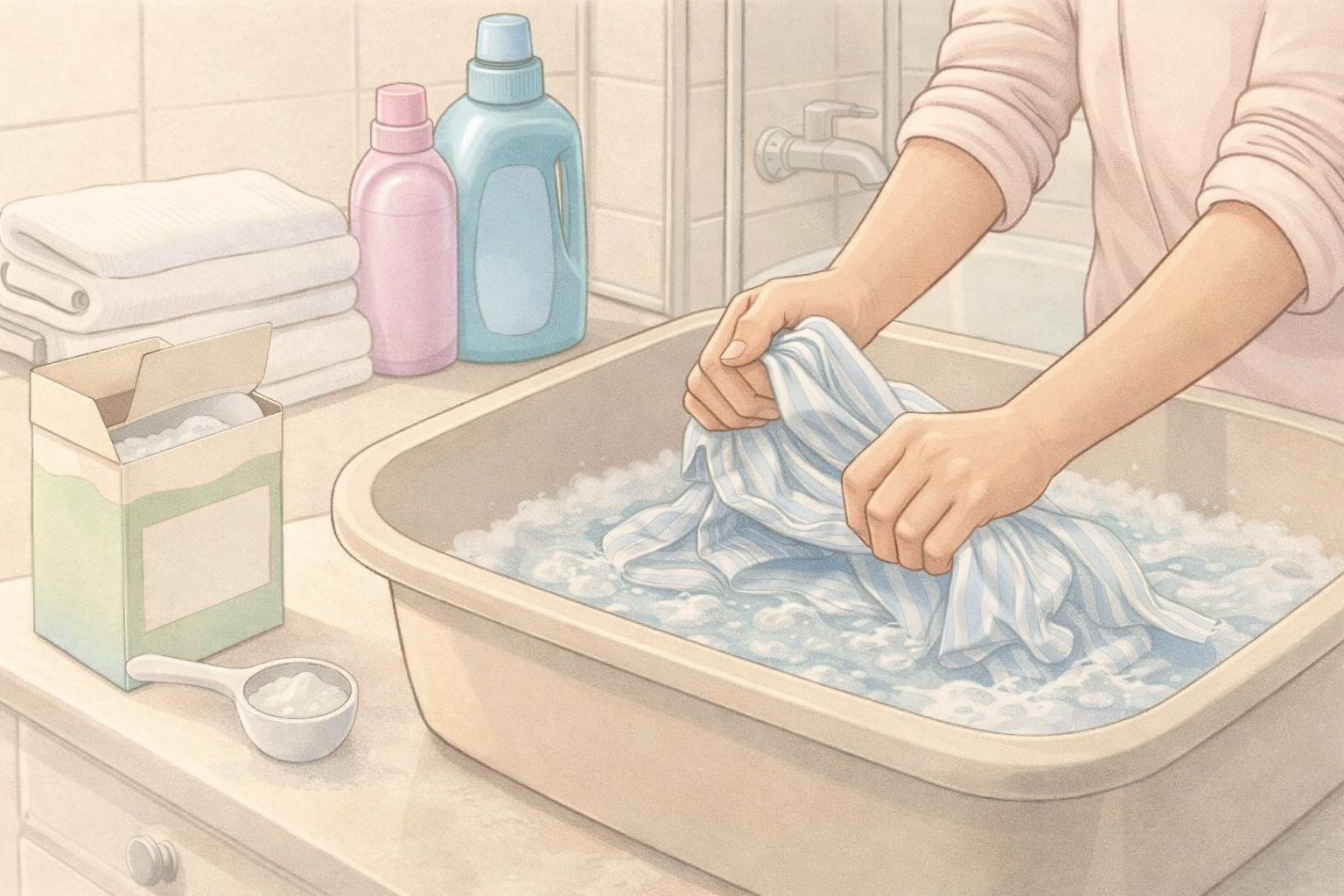
Pre-treat and soak
Pick one soak, not both at once:
- Bicarbonate of soda: great for general deodorising and that stale “kitchen air” smell. Use 2 to 4 tablespoons in a basin of cool to lukewarm water for 30 to 60 minutes.
- White vinegar: better when the smell feels sharp and oily (think fish pan, garlic oil). Add 100 to 150 ml to a basin of cool water for 20 to 30 minutes.
Insider tip: vinegar can loosen deodorant build-up in armpits too, which often mixes with food smells and makes the whole thing worse.
Use the right detergent and dose
If you’re trying to remove food odours from fabric, enzymes matter. According to the American Cleaning Institute, enzyme detergents are designed to break down common soils, including greasy residues. We’ve found an enzyme detergent for grease is especially useful on synthetics and work shirts.
Don’t under-dose. Too little detergent leaves oil behind, and the smell returns once the fabric warms up on your body.
Wash temperature without wrecking fabric
Energy Saving Trust highlights the energy benefit of cooler washes (around 40% less energy at 30°C vs 40°C), and for many cottons that’s enough. For heavy curry oils or chip-shop smells, bumping to 40°C can help, but only if the care label allows it.
Dry the right way
Never tumble dry “to see if it’s fixed”. Air-dry first, then do a sniff test:
- Air-dry the item fully indoors near ventilation.
- Smell the underarms, cuffs, and collar.
- Only tumble dry if the odour has gone.
Delicates and dry clean only items
When cooking smells clothes and you’re dealing with wool coats, suits, silk blouses, or structured pieces, treat them like they’re expensive, even if they weren’t. What we’ve found works best is removing surface odour without soaking the inner structure.
For a wool coat that picked up kitchen smells on the walk back from a Notting Hill dinner, do this:
- Brush it with a clothes brush to lift surface particles.
- Steam lightly from a distance.
- Hang it with space around it overnight.
What not to do (this ruins garments fast): heavy spraying, hot water spot cleaning on wool, or rubbing at the lining. If the label says dry clean only and the kitchen smell keeps coming back, that’s your cue to stop DIY before you create shiny patches or watermarking.
If you want a broader odour playbook, there’s more on stubborn smells in our piece on getting rid of musty odours in clothes, since the same “don’t add heat first” rule applies.
Stop it happening again
If cooking smells clothes often in your home, the best fix is not a better spray, it’s a “sacrificial layer”. We see busy households do this brilliantly because it saves so many rewashes. When kitchen odours keep getting into your wardrobe, prevention is usually faster than any wash routine.
Kitchen habits that actually matter:
- Put lids on pans earlier than you think.
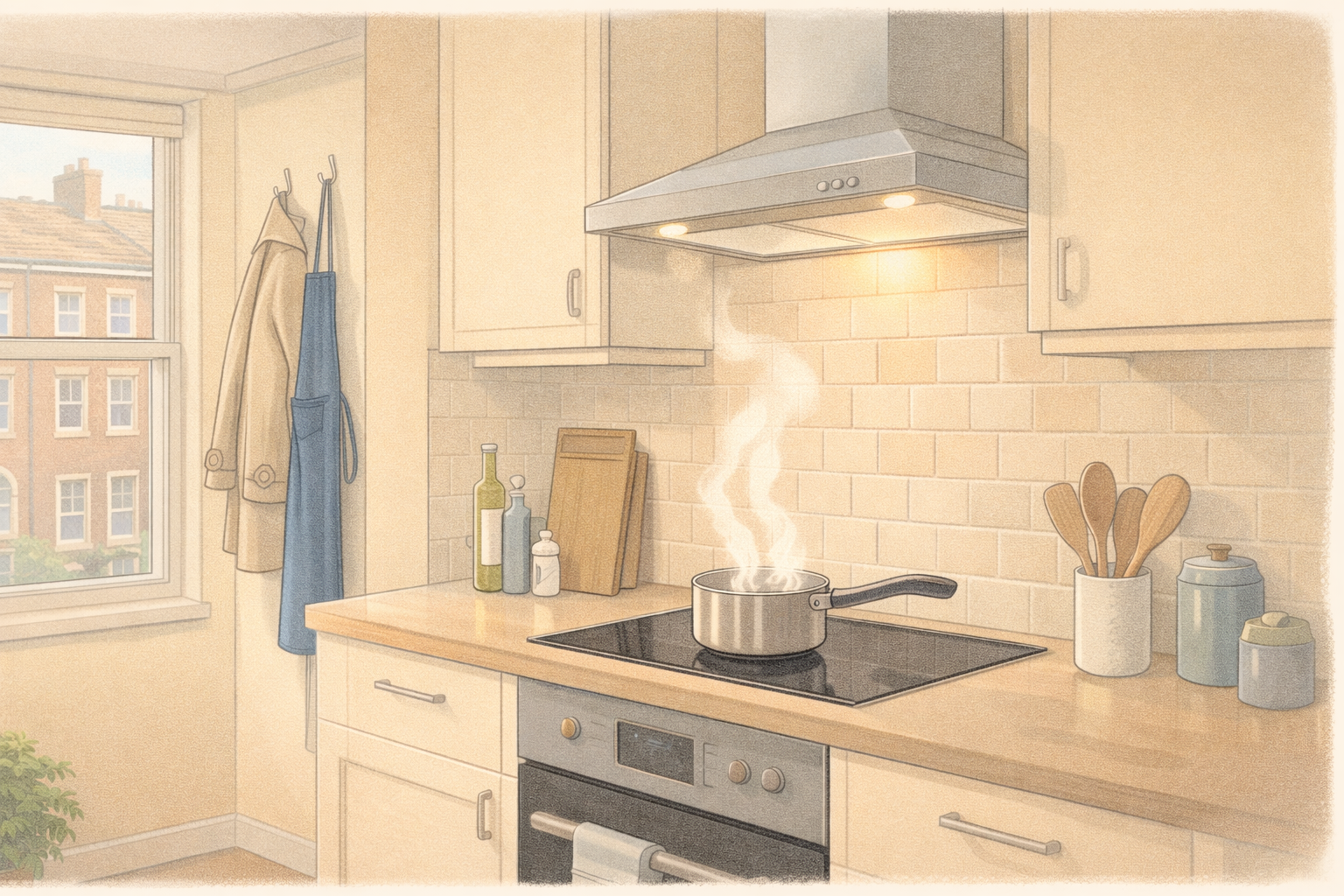
- Run the extractor fan from the start, not once you smell it.
- Keep the kitchen door closed if you can, especially in open-plan flats.
Clothing habits that save your wardrobe:
- Keep a cooking hoodie or old jumper by the kitchen.
- Use an apron for anything involving oil.
- Store coats away from the kitchen, not on a chair nearby.
Small-space London tip: if your only hanging spot is near the kitchen, use a garment bag or even a clean duvet cover over coats during cooking. It looks odd, but it stops that greasy film settling.
Putting it into practice today
If cooking smells clothes and you want a simple routine you can repeat without thinking, this is the one we suggest to neighbours around North Finchley and Notting Hill. This routine keeps you out of the wash, dry, still-smells loop.
Numbered plan:
- Morning (5 to 10 mins): air by a window, then light steam if safe.
- After work: sniff test. If it’s still there, do a bicarb or vinegar soak.
- Wash: enzyme detergent, correct dose, label-safe temperature.
- Dry: air-dry fully, then only use heat if the smell has gone.
If you’re also noticing colour fade from frequent rewashing (especially black workwear), our tips on keeping dark clothes from fading help you avoid that “clean but tired” look.
If you’re near Notting Hill or North Finchley
When cooking smells clothes and DIY hits a wall, it is usually because grease is still embedded or the item can’t be washed safely at home. If you’ve done the wash and the odour comes back as soon as the fabric warms up on your commute, that is a strong sign you need a professional clean. For many people, kitchen odours are most stubborn in coats, linings, and knitwear.
Pop in if you’ve got:
- Wool coats, suits, silk, occasionwear
- Knitwear that’s holding onto spice smells
- School uniforms and workwear you need ready fast
- Curtains that have absorbed kitchen odour (very common in small flats)
Which service fits depends on the item:
- Dry cleaning for structured and delicate pieces.
- Wash and fold for everyday loads where you want speed.
- Wash and press if you need a crisp finish for office wear (and if you’re curious about the difference, we broke it down in our pressing vs ironing walkthrough).
You can also check our wash and fold service and dry cleaning service pages to see what is best for your items.
Frequently asked questions
How do I get curry smell out of clothes fast?
Air it by a window for 10 minutes, then steam lightly if the fabric allows. If it still lingers, a 30 to 60 minute bicarbonate soak usually shifts curry oils without stressing the fibres.
Does vinegar remove cooking smells from clothes or just mask them?
Used properly, vinegar helps lift oily residue so the smell rinses away, it’s not just a cover-up. Don’t overdo it though, too much can leave its own scent until fully rinsed and dried.
Can I put a smoky coat in the tumble dryer?
We wouldn’t. Heat can set smoke and grease odours into the fabric and lining. Air it first, then steam, and only use any heat once you’re sure the smell has gone.
How do I remove fish smell from clothes safely?
Rinse in cool water first, then do a short vinegar soak (20 to 30 minutes) and wash with an enzyme detergent. Avoid hot water on delicates because it can lock odour in and damage fibres.
When should I take smelly clothes to the dry cleaners?
If cooking smells clothes after you’ve aired and washed them once, or the care label says dry clean only, stop there. Professional cleaning removes oily residues safely from linings and structured garments.
A quick final word
If cooking smells clothes in your wardrobe, you don’t need stronger perfume, you need the right sequence: air and vent first, lift oils with steam or a safe soak, then wash with an enzyme detergent and only add heat once the odour is gone. If kitchen odours keep clinging to your clothes no matter what you do, bring the item in and we’ll tell you honestly whether it needs dry cleaning or just a better wash routine.
You’ll find us at:
Glint Express North Finchley
9 Halliwick Court Parade, Woodhouse Road, London N12 0NB
020 3376 2060 | nfinchley@glintexpress.co.uk
Glint Express Notting Hill
341 Ladbroke Grove, London W10 6HA
0745 030 2088 | NottingHill@glintexpress.co.uk
Pop in today and we’ll get your coat, suit, or workwear smelling normal again.