Can You Fix Moth Holes in Wool Jumpers?

I will never forget opening my wardrobe last October to pull out my favourite cashmere jumper, the one I’d saved up for months to buy, only to find three perfect little holes right across the front. My stomach absolutely dropped. I genuinely felt sick. Those tiny holes represented not just ruined clothing but moths living in my wardrobe, eating my things while I remained completely oblivious.
If you’ve just discovered moth holes in your wool jumpers, you’re probably feeling a mixture of horror, disgust, and desperate hope that maybe, just maybe, you can save them. The good news is that moth holes can often be repaired. The realistic news is that it depends entirely on the size of the holes, the type of fabric, where they’re located, and honestly, how much time and skill you have.
Let me share what I’ve learned about moth hole repair, both from my own attempts and from seeing what actually works versus what’s just optimistic internet advice.
Understanding What You’re Actually Dealing With
Before you start thinking about repairs, you need to understand what’s happened. Moth holes aren’t caused by adult moths. Those fluttery things you see are harmless. The damage comes from their larvae, tiny caterpillar-like creatures that feed on natural fibres like wool, cashmere, and silk.
The larvae are attracted to dirty clothes, particularly anything with sweat, food stains, or body oils on it. This is why moth damage often appears in areas like underarms, collars, and cuffs where your skin makes most contact with the fabric. They’re not eating the wool itself so much as the proteins from your body that have soaked into it.
Moth holes have very distinctive characteristics. They’re usually small and round with clean edges, almost like someone took a tiny hole punch to your jumper. This is different from wear holes, which are irregular and frayed, or snags, which pull the fabric rather than removing it entirely.
The holes often appear in clusters because the larvae don’t move far from where they hatched. If you find one moth hole, inspect the entire garment carefully under good light. There are probably more that you haven’t spotted yet. I learned this the hard way when I repaired one visible hole only to discover five more tiny ones a week later.
The Harsh Reality About DIY Repairs
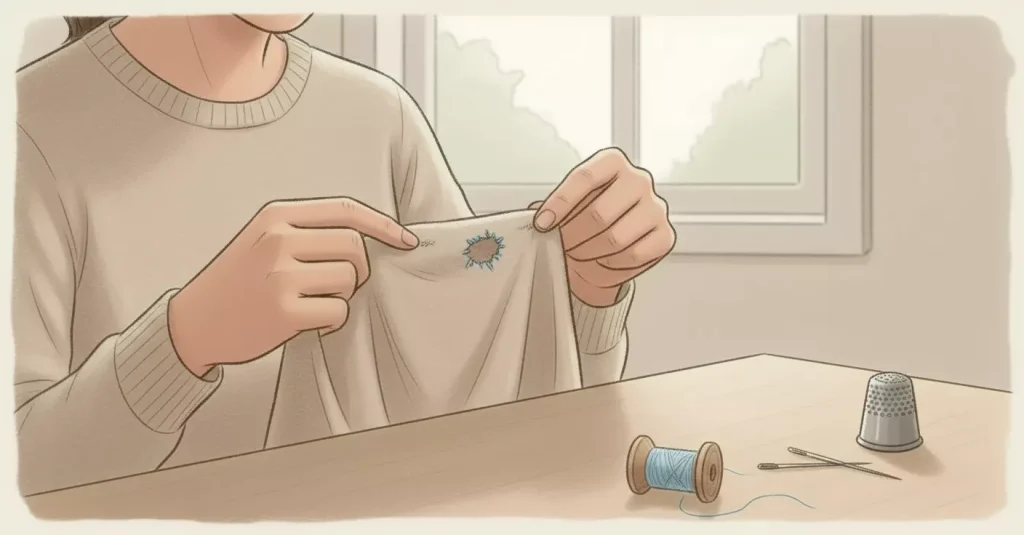
I’m going to be honest with you because I wish someone had been honest with me. Most DIY moth hole repairs on wool jumpers are visible if you know where to look. Unless you’re incredibly skilled at needlework, or the hole is in an inconspicuous location, you’ll be able to see the repair.
This doesn’t mean you shouldn’t attempt it. A visible repair that saves a jumper you love is better than throwing it away. But go into this with realistic expectations. You’re not going to achieve professional invisible mending quality at home with a basic sewing kit and a YouTube tutorial.
The type of fabric makes an enormous difference. Chunky knits are much more forgiving than fine-gauge cashmere. A thick Aran jumper can hide repairs relatively well because the texture camouflages the mend. A delicate merino or cashmere jumper shows every stitch, every slight mismatch in tension, every tiny imperfection.
I tried repairing a moth hole in a fine cashmere cardigan myself. I watched videos, I practiced on an old jumper first, I used matching thread and took my time. The result was… okay. From a distance, you couldn’t see it. Up close, it was obvious. For a jumper I wear around the house, this was fine. For something I’d wear to work or out socially, it wasn’t good enough.
Simple Repairs You Can Attempt at Home
For very small holes, like pinprick size, there are some techniques that can work reasonably well at home.
The Felting Needle Method
This technique uses special felting needles with barbed edges to essentially weave new fibres into the hole. You need wool roving or yarn in a matching colour. Pull apart small amounts of the roving, place them over the hole, and repeatedly stab them with the felting needle. The barbs on the needle tangle the fibres together, gradually filling the hole.
I tried this on a thick wool jumper with small holes, and it worked surprisingly well. The repairs weren’t invisible, but they blended in enough that you wouldn’t notice unless you were looking for them. The key is using the right colour and not overdoing it. Too much felting creates a dense, puffed area that looks odd.
You can buy felting needle kits from craft shops like Hobbycraft or online. They’re not expensive, maybe ten or fifteen quid. If you’ve got multiple jumpers with small moth holes, it’s worth having the kit available.
The downside is that felting only works on wool and other natural fibres that can felt. It won’t work on synthetic blends. And it requires a steady hand and patience. If you rush it or use too much force, you can create more holes rather than fixing existing ones.
Basic Darning for Larger Holes
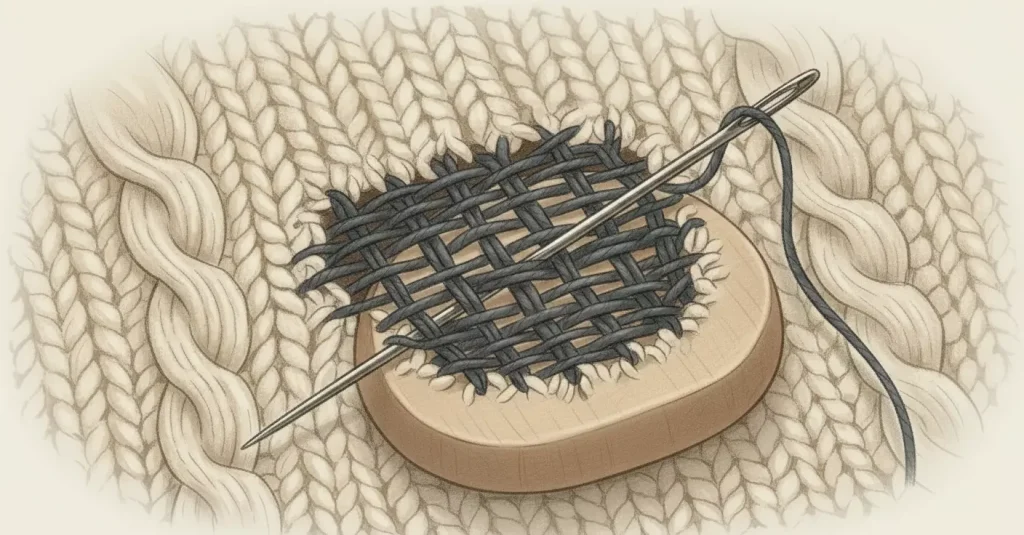
Darning is the traditional method for repairing holes in knitted fabric. You essentially weave thread back and forth across the hole, recreating the fabric structure. It requires a darning needle, matching yarn or thread, and something to support the fabric while you work, like a darning mushroom or even a light bulb.
I won’t lie, darning is fiddly and time-consuming. For a hole about the size of a five pence piece, you’re looking at thirty to forty minutes of careful work. The result depends entirely on your skill level and the quality of your thread matching.
I attempted darning on a wool jumper with moderate success. The repaired area was stronger than the felting method, but it was also more visible. The texture wasn’t quite right, and the weave pattern didn’t perfectly match the surrounding fabric. For a jumper I wear gardening or around the house, it was perfectly acceptable. For anything I cared about looking good in, it wasn’t.
When Professional Help Is the Only Option
Some moth holes genuinely need professional invisible mending, particularly if the garment is expensive, sentimental, or in a very visible location like the chest or shoulder.
Professional invisible mending, also called reweaving or French weaving, is a specialist skill. The reweaver literally recreates the fabric structure thread by thread, matching the exact weave pattern and tension of the original. When done well, you genuinely cannot see the repair even when you know where it is.
I had a cashmere jumper professionally mended after my DIY attempts proved inadequate. The jumper had cost me nearly two hundred pounds, and throwing it away felt wasteful. The invisible mending cost sixty pounds for three small holes. Yes, that’s expensive. But compared to replacing the jumper, it was absolutely worth it.
The repair took about two weeks. When I got the jumper back, I actually couldn’t find where the holes had been. I had to look at the photos I’d taken to remember their exact locations. The work was genuinely invisible. I’ve worn that jumper dozens of times since, and nobody has ever noticed the repairs.
Not all dry cleaners offer invisible mending, and not all who claim to are equally skilled. This is specialist work that requires training and experience. Look for places that specifically mention reweaving or invisible mending, and ask to see examples of their work if possible.
The Prevention Conversation Nobody Wants

Once you’ve dealt with moth damage, preventing it happening again becomes crucial. I learned this after a second moth incident six months after the first. Fool me once, shame on you. Fool me twice, and I clearly haven’t learned my lesson.
Moths are attracted to dirty clothes. Even if something looks clean, if you’ve worn it, there are body oils and proteins in the fabric that moths find delicious. Never put worn clothes back in the wardrobe without washing them first, even if you’ve only worn them for a few hours.
Storage is critical. Moths love dark, undisturbed places. That box of winter jumpers sitting untouched for six months is moth paradise. I now store all my wool in sealed containers or garment bags. Not the plastic dry cleaning bags, which trap moisture, but proper breathable fabric bags designed for storage.
Cedar blocks and lavender sachets do help repel moths, but they’re not foolproof. I use them in all my drawers and wardrobes, but I also regularly check my clothes for signs of moth activity. Prevention requires vigilance, not just hoping some cedar chips will magically protect everything.
If you buy vintage or second-hand wool items, freeze them for at least 72 hours before putting them in your wardrobe. This kills any moth eggs or larvae that might be hiding in the fabric. I learned this from a vintage clothing dealer after bringing home a beautiful 1950s cardigan that turned out to be moth-infested.
The Emotional Side of Moth Damage

This might sound dramatic, but discovering moth damage in clothes you love is genuinely upsetting. There’s the financial loss, obviously. Good wool jumpers aren’t cheap. But there’s also the emotional attachment to favourite clothes, the frustration of preventable damage, and the feeling of violation that comes from knowing insects have been living in your wardrobe.
I felt so stupid when I discovered my moth problem. Like I should have noticed sooner, should have been more careful, should have known better. But moths are sneaky. They hide in dark corners, their larvae are tiny and easy to miss, and by the time you notice the damage, they’ve often been there for months.
Don’t beat yourself up about it. Moth infestations happen to careful, clean people all the time. Urban environments like London have plenty of moths, and once they find a good food source, they’ll exploit it. You’re not dirty or careless. You’re just unlucky.
Deciding What’s Worth Saving
Not every moth-eaten jumper is worth repairing, and that’s okay. You need to make practical decisions based on the garment’s value, both monetary and sentimental, and the extent of the damage.
A twenty quid high street jumper with multiple large holes probably isn’t worth professional repair. The cost of invisible mending would exceed the jumper’s value. You might attempt a DIY repair if you love it, or you might just accept it’s time to let it go.
A cashmere jumper that cost you a hundred pounds or more, or a hand-knitted jumper your grandmother made, or a vintage piece you can’t replace? These are worth investing in professional repair. The cost is justified by what you’re saving.
Location of the damage matters too. Holes in highly visible areas like the front chest are more noticeable than holes on the back shoulder or near the hem. You might accept a less-perfect repair in a spot that’s rarely seen.
I had a wool jumper with moth damage along the bottom hem. I trimmed the bottom edge above the holes, gave it a quick hem stitch, and now it’s slightly shorter but perfectly wearable. Sometimes the solution is modification rather than repair.
When You Need Real Help

If you’re in North Finchley or Notting Hill and you’re dealing with moth-damaged wool jumpers, we’d be happy to help at Glint Express. We see moth holes constantly at our North Finchley and Notting Hill branches, and while we don’t do invisible reweaving ourselves, we can advise you honestly about what’s salvageable and what isn’t.
For items that need professional repair, we can point you toward reputable invisible mending specialists in London. For items that just need thorough cleaning to prevent further moth damage, we can handle that. Sometimes a proper professional clean is all that’s needed to get rid of any remaining eggs or larvae and make your jumpers safe to wear again.
Moth damage feels like a disaster when you first discover it, but it’s often more manageable than you think. Some jumpers can be saved with DIY methods. Some need professional help. Some are genuinely beyond rescue. We’ll help you figure out which is which and find the right solution for your specific situation.
Your favourite jumpers don’t have to be lost forever just because moths found them first. There are ways to save them, and we’re here to help you do that.