Stop Black Clothes Fading in London

You pull on your “proper” black top for work, and it’s already gone a bit charcoal. Annoying, because you didn’t buy it to look washed-out after three spins. If black clothes fading keeps happening in your flat, it’s usually not bad luck, it’s a few repeatable habits (plus London water and drying setups) working against you. Give us 10 minutes and you’ll know what to change at home, what to stop doing, and what’s genuinely worth handing to a local cleaner.
What you need before starting
You don’t need a new machine or some mythical secret detergent. You need a small kit and a slightly stricter routine to reduce colour loss in dark laundry.
- A colour-care detergent (labelled for darks or blacks)
- A mesh laundry bag (for delicates and anything with straps)
- A soft stain cloth or cotton pad
- A drying rack (or access to a shaded line)
- 10 minutes to sort, 60 to 120 minutes for a wash and dry cycle
One contrarian point: more products rarely fix fading. In our experience, less heat, less friction, and correct dosing beat any “miracle” additive.
Step 1: Why black clothes fade so fast
Most people blame the dye, full stop. That’s only half the story.
Dye loss is real, especially on cheaper reactive dyes and heavily washed cotton. But fibre damage matters just as much, because roughened fibres scatter light and make black look grey even when plenty of dye remains.
Dye loss vs fibre damage
Heat opens fibres and speeds dye release. Friction (from overloading, rough fabrics, and long cycles) abrades the surface. Detergent that’s too strong strips oils and finishes, then the fabric looks tired.
Sunlight is sneakier than you think
Drying by a bright window can bleach darks surprisingly fast. UV breaks down dyes, and a “nice sunny spot” on the radiator rack is basically a slow fade booth.
Step 2: The biggest mistakes behind black clothes fading
Despite what you may have read, “just wash cold” isn’t a magic shield. People still dull their darks on cold because they keep the other mistakes.
Hot washing and hot drying sit at the top of the list. Even “warm” (30°C to 40°C) can be too much for some blacks if you pair it with a long cycle and a heavy dose of detergent.
Too much product is the next culprit. Overdosing leaves residue that turns into a grey film, especially in hard-water areas of London. Overloading the drum makes it worse because clothes can’t rinse properly.
Finally, mixing rough items is a quiet disaster. Towels, denim, zips, and Velcro act like sandpaper on cotton tees and black work shirts.
Step 3: How to wash black clothes at home
If your week is busy, you need a routine you’ll actually follow. Here’s the one that holds up and helps prevent dulling in dark garments.
Do a quick sort by “damage risk”
Sort darks by fabric weight and hardware, not just colour. This stops abrasion, which is the fastest route to that dull look.
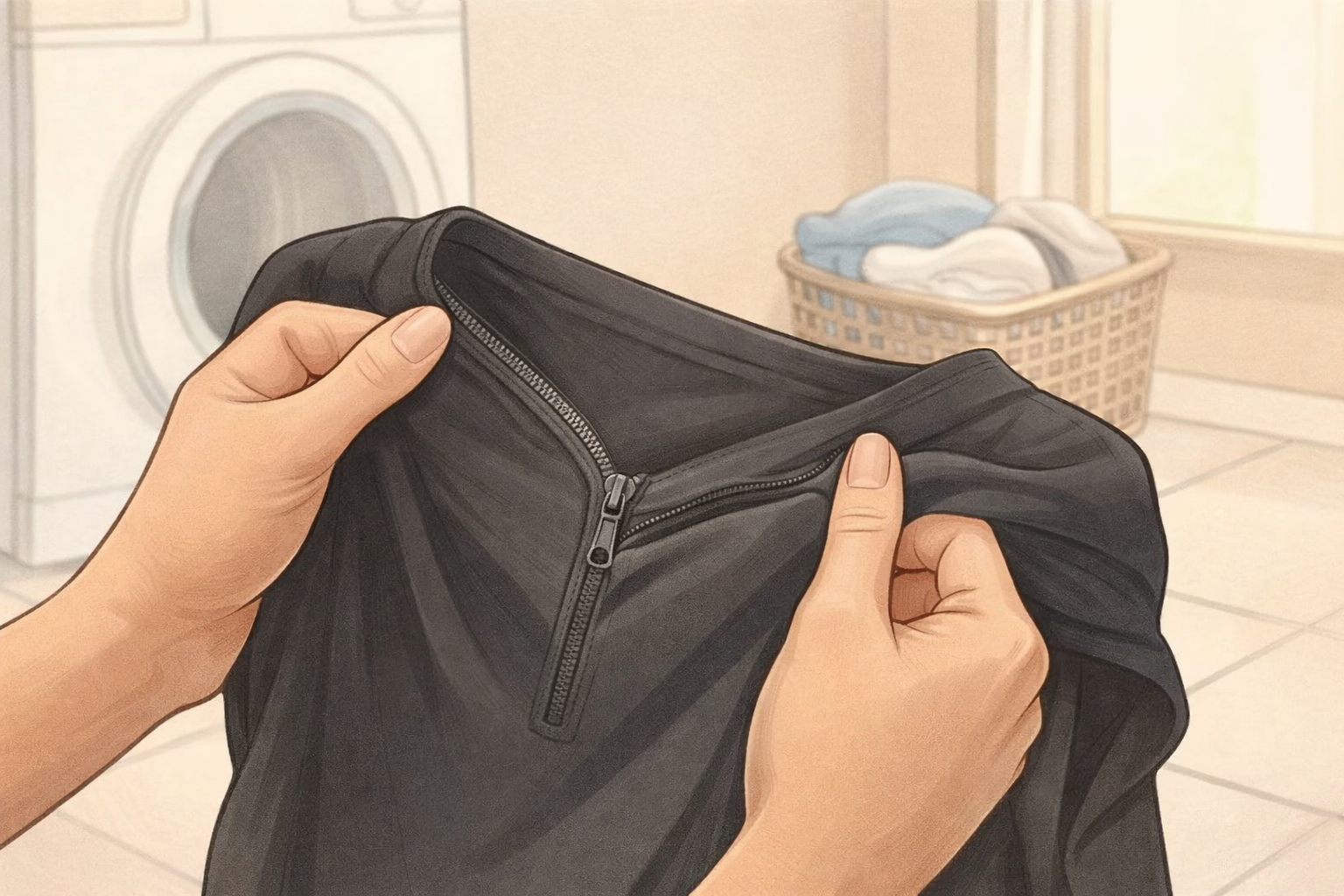
- Turn items inside out (this protects the outer face)
- Zip, button, and tie drawstrings
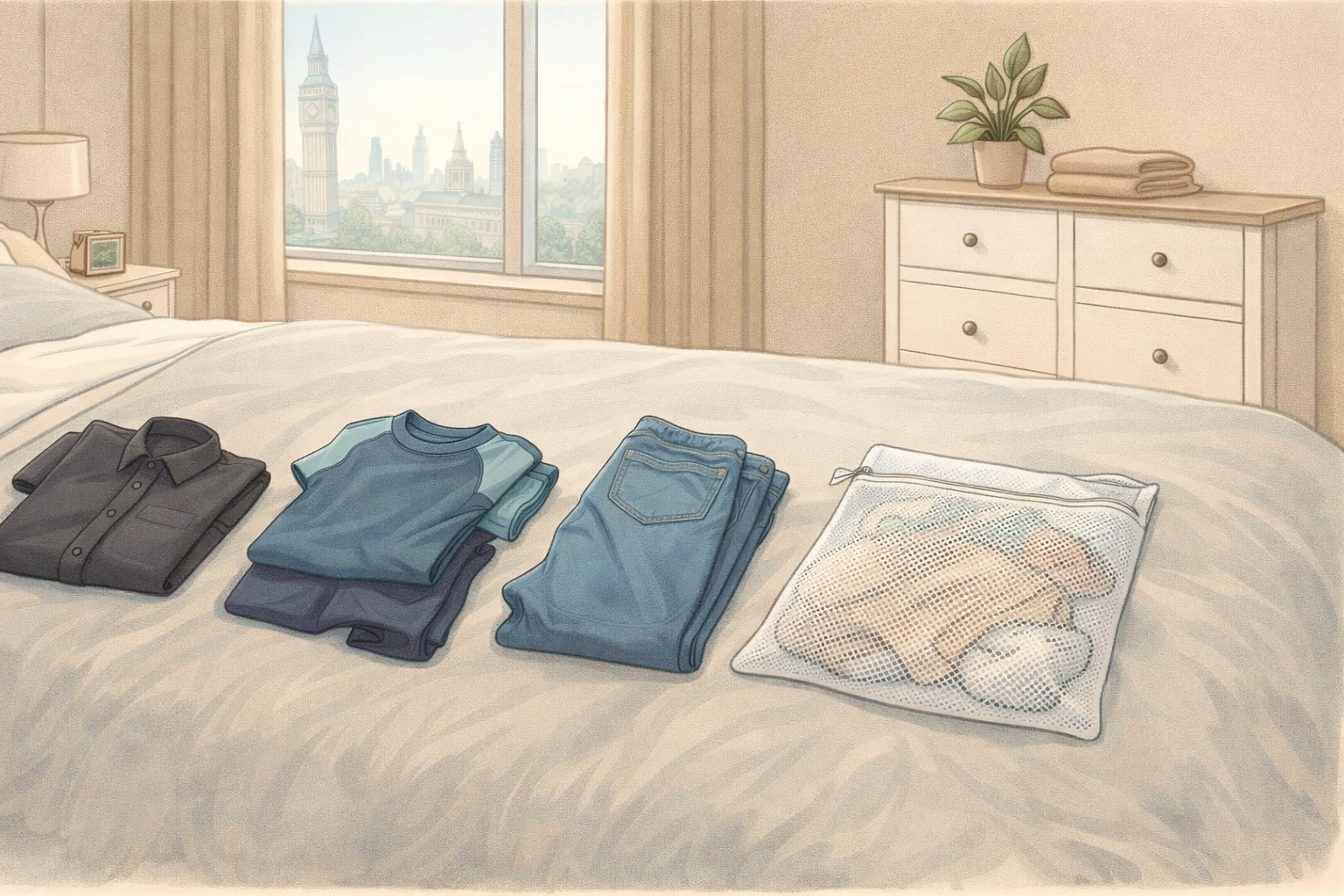
- Separate: delicates, gym kit, denim, and towels
Use a mesh bag for anything with straps, hooks, or lace. It’s not precious, it just stops snagging and surface fuzz.
Pick the right cycle and dose
Use a cold wash for blacks (20°C is ideal) for tees, gym kit, and most everyday cotton. Use 30°C only if you need it for hygiene, and keep the cycle shorter.
Choose a detergent for dark colours and measure it. Ignore the cap lines if your machine is half-full. Hard water and overdosing are a nasty combo for dullness.
Step 4: Drying and storage that actually works
A lot of colour loss happens after the wash. People focus on detergent, then blast their blacks with heat and sun, which accelerates black clothes fading.
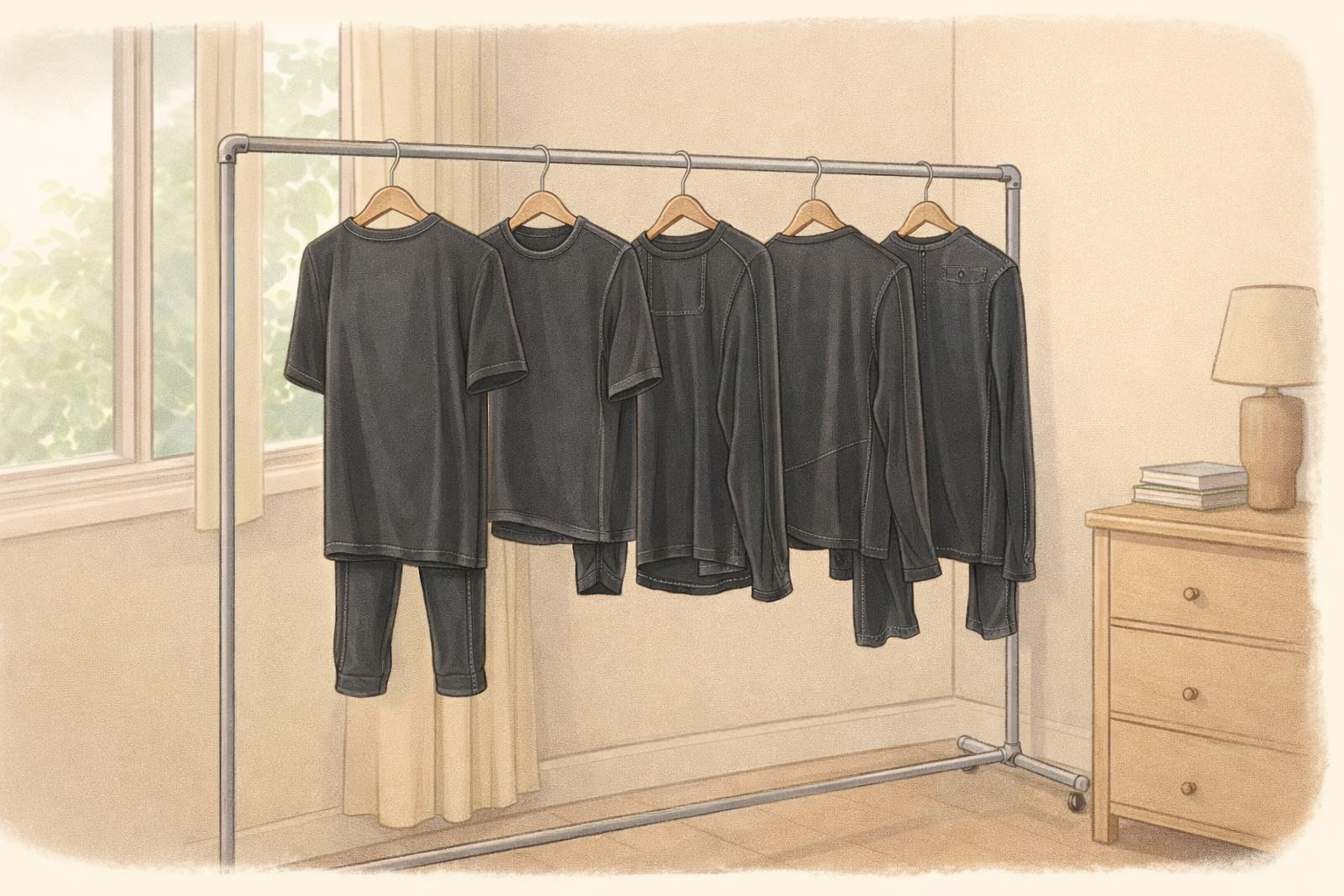
Line drying in shade is usually gentler than a tumble dryer. If you can’t get shade, dry indoors away from direct light, then air the room to avoid damp smells. If mustiness is already a problem, there’s more practical help in our piece on getting rid of that musty clothes smell.
To reduce creasing without extra heat, shake garments out and hang them properly. For tees, hang from the hem on a hanger to avoid shoulder bumps.
Store blacks away from windows and don’t cram them into a damp wardrobe. Watch deodorant marks too, they can “bleach” underarms over time and leave pale patches that look like fading.
Step 5: When dry cleaning helps (and when it doesn’t)
Here’s the sceptical truth: dry cleaning isn’t a universal fix for colour loss in dark clothing. It helps most when water and agitation are the problem, not when the fabric is already damaged.
Wool, structured jackets, lined skirts, and tailored trousers often keep their colour and shape better with dry cleaning. Water can cause distortion and surface wear, especially on dark wool blends.
For black work shirts and trousers, the best option often isn’t dry cleaning, it’s choosing between wash & fold and wash & press based on what you care about. If you want crisp finish with less home-iron heat, wash & press usually wins. We explained the difference between pressing and ironing (and why it matters for finish) in our pressing vs ironing breakdown.
If you are deciding whether to outsource regular loads, our guide to wash and fold laundry service explains what’s included and when it makes sense.
For service options, you can also see our dry cleaning in London page and our wash and press service page.
Spot cleaning is where people panic and cause pale marks. Dab, don’t rub. Use a colour-safe approach, and avoid harsh stain removers unless the label says they’re safe for darks.
Common problems and fixes
If you’re doing “everything right” and still seeing dullness, it’s normally one of these. This section is also where most black clothes fading complaints end up once you look closely at water, residue, and friction.
Grey haze after washing often means detergent residue plus hard water minerals. Run an extra rinse, reduce detergent by a third next time, and avoid mixing blacks with towels.
Patchy fading usually comes from spot scrubbing, heat, or product splashes (think bathroom cleaners and benzoyl peroxide acne treatments). Treat stains by blotting from the back of the fabric first.
If your gym kit holds odour, people reach for hotter washes and ruin the colour. Try a cooler wash, better dosing, and airflow drying. If the smell keeps returning, the fabric may need a deeper reset.
According to the European Environment Agency (2024), Europeans consume large volumes of textiles each year and generate significant textile waste, so keeping clothes wearable for longer matters. WRAP also pushes the “wear longer” principle because extending a garment’s life reduces its footprint, and colour care is a big part of that. WRAP reports that keeping clothing in use for longer cuts waste and reduces demand for new items.
Can you restore faded black clothes?
Sometimes, yes. Not always. Anyone promising a guaranteed “back to new” is selling you hope.
First, try the quick wins. Rewash once on cold with the right darks detergent and an extra rinse to remove residue. If the fabric feels rough, a gentle conditioner made for laundry can reduce that light-scattering fuzz.
Fabric dye can work on natural fibres, but it’s messy and uneven on blends. If you go that route, test a hidden seam first and expect stitching to stay lighter. Choose a product designed as fabric dye for black clothes, and avoid “colour-safe bleach alternatives” unless they’re specifically meant for darks. Many oxygen-based products brighten by lifting soils, which can also lift dye if you overdo it.
If an item fits brilliantly but looks tired, alterations can save it. Shortening, tapering, or replacing a zip sometimes keeps a “nearly there” black piece in rotation for another year.
A quick checklist for black clothes fading
If you only do one thing, do this triage. It stops most damage on busy weeks.
3-minute pre-wash check
- Turn everything inside out
- Close zips and Velcro
- Separate towels and denim from lighter cotton blacks
- Put delicates and bras in a mesh bag
Weekly plan that’s realistic
Jeans: every 5 to 10 wears unless stained. Tees: every 1 to 2 wears. Gym kit: after each session, but cold and short cycle. Work shirts: wash after 1 to 2 wears, then finish with a press rather than blasting them with a hot iron.
This isn’t just about looks. The ONS CPI detailed tables show clothing and footwear prices move over time, and replacing basics adds up quicker than most people expect. Keeping blacks darker for longer is a quiet money saver.
What’s worth dropping off
Bring these in when you want the best chance of keeping darks dark:
- Black suits, wool coats, lined dresses
- Structured jackets and pleated skirts
- Black workwear you need sharp (shirts, trousers)
- Anything with tricky trims, hardware, or “dry clean only” labels
For North Finchley and Notting Hill, we see the same pattern: people do the easy loads at home, then use wash & press or dry cleaning for the items that actually show wear first.
Frequently asked questions
Should I wash black clothes in cold water or warm?
Cold is the default. Use 20°C for most blacks. Go to 30°C only for heavy sweat or illness, and keep the cycle short so you don’t trade hygiene for fading.
What detergent is best for black clothes fading?
Pick a liquid detergent for dark colours and dose it properly. Powder can leave more visible residue on darks in hard water. If black clothes fading keeps happening, cut the dose and add an extra rinse before you buy another product.
Does vinegar or salt actually stop black clothes from fading?
Not reliably. Vinegar can help with odour and residue in some cases, but it won’t “lock in” dye the way social media claims. Salt sometimes helps in the dyeing process, but tossing it in the wash won’t magically fix fading.
Can I tumble dry black clothes without fading them?
You can, but keep it low heat and don’t overdry. Heat plus long time equals dullness. Take items out slightly damp and air dry the rest.
Is dry cleaning better for keeping black clothes black?
Sometimes. It often helps for wool, tailoring, and lined pieces because it reduces water agitation. For cotton tees and gym kit, better home washing habits usually matter more than switching to dry cleaning.
Ready for a second opinion?
If you’ve tightened your routine and black clothes fading still keeps ruining your favourites, it might be the fabric, the finish, or just a load mix that’s too rough. Pop in and we’ll tell you, honestly, whether wash & press, wash & fold, or dry cleaning makes sense for that specific item.
Notting Hill: Glint Express, 341 Ladbroke Grove, London W10 6HA. Call 0745 030 2088 or email NottingHill@glintexpress.co.uk.
North Finchley: Glint Express, 9 Halliwick Court Parade, Woodhouse Road, London N12 0NB. Call 020 3376 2060 or email nfinchley@glintexpress.co.uk.