Pressing vs ironing: what we do for crisp clothes
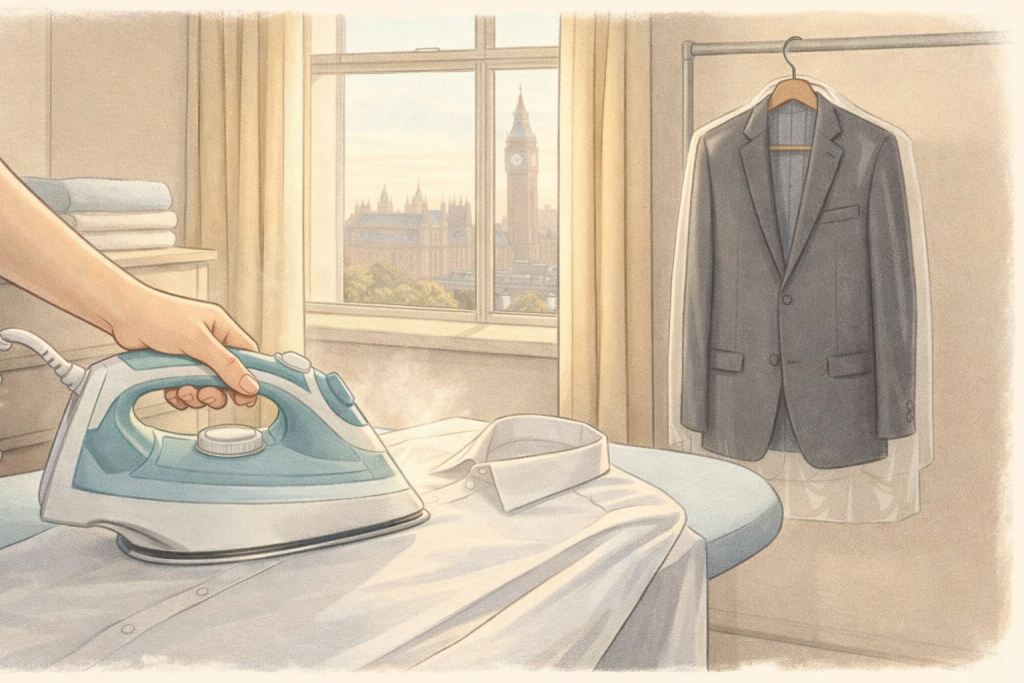
You know that moment at 8am when your work shirt looks fine on the hanger, then you put it on and it’s basically a crumpled map? That’s where pressing vs ironing really matters. Get the balance between pressing and ironing wrong and you waste time, flatten the shape, or worse, you get that shiny patch on dark fabric.
What we’ve found works best is keeping it simple: iron to smooth big areas, press to set shape and creases. Below is the neighbour-to-neighbour version, with the shortcuts we use every day in North Finchley and Notting Hill.
1) Pressing vs ironing in a rush
Most people don’t need a “perfect” finish, they need a reliable one that doesn’t backfire mid-morning. In practice, pressing vs ironing means you choose the method based on what will show when you’re wearing it: the front panel, collar, cuffs, and any crease down the leg.
Here’s the one-sentence takeaway we give customers: ironing is sliding motion to smooth fabric, pressing is lift-and-place to set shape and creases. If you only remember that, you’ll avoid 90% of disasters.
One more practical point. According to the ONS Time use in the UK release, unpaid household work (which includes laundry and clothing care) takes a measurable chunk of the week, especially for adults juggling work and family. So shaving even 10 minutes off your “get ready” routine adds up fast, and understanding the difference between pressing and ironing helps you cut wasted effort.
2) The real difference in technique
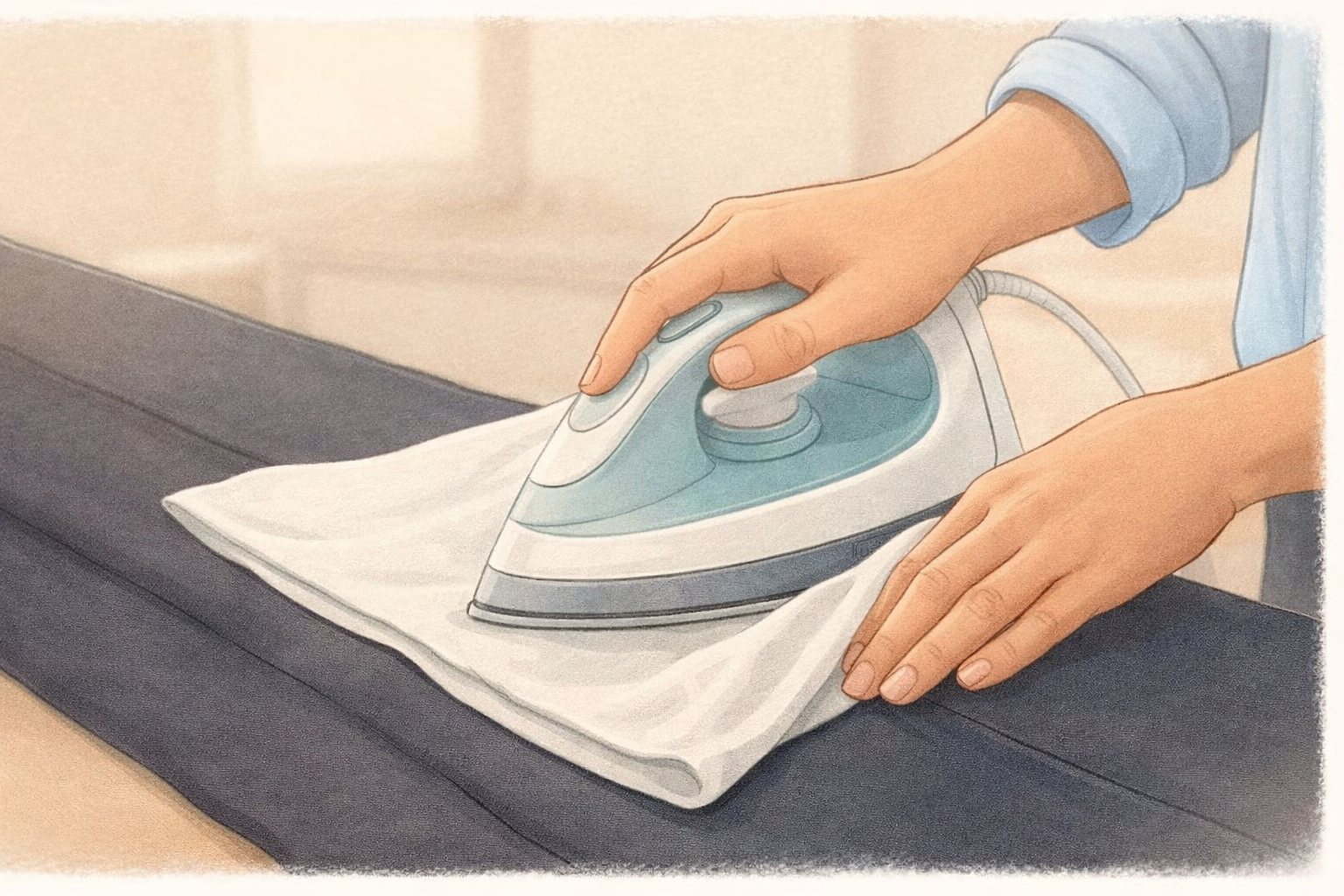
The movement is the whole story, and it is the key to pressing vs ironing. With ironing, you glide the iron to relax wrinkles across larger, flat areas, like the back of a cotton shirt or a duvet cover. With pressing, you place the iron down, apply steam and pressure, then lift it straight up and move to the next spot.
What most people get wrong when comparing pressing and ironing is trying to “rub in” a crease. That’s how you end up with iron shine on trousers, especially on dark wool or poly blends. We see it a lot on suit trousers brought in around Ladbroke Grove, where the fabric is good quality but the finish has been polished by friction.
If you want a quick self-check, look at the iron plate marks and sheen under a lamp. If you see a glossy strip, you used too much movement, too much heat, or no press cloth.
3) Cheat sheet for shirts, trousers, bedding
If you want the fastest decision, use this. We use the same logic behind the counter when someone asks, “Can you make it look sharp by tomorrow?” This cheat sheet makes pressing vs ironing easy to choose without overthinking.
Iron these (smooth finish):
- Cotton tees and casual shirts
- Bedding and pillowcases
- Linen shirts where you want “neat” not razor sharp
Press these (shape and crisp lines):
- Suit trousers, especially the centre crease
- Pleats, darts, waistbands
- Shirt collars and cuffs
Our 30-second checklist is fabric, finish, time. If it’s delicate, structured, or dark, pressing is usually safer. If it’s big, flat, and forgiving, ironing is quicker. That is the practical rule of thumb for choosing between pressing and ironing when you want a fast, repeatable result.
One contrarian tip from practice: if you’re rushing, don’t chase every wrinkle. Do the bits people see, then hang it in the bathroom while you shower to let steam relax the rest.
4) Home kit that saves effort
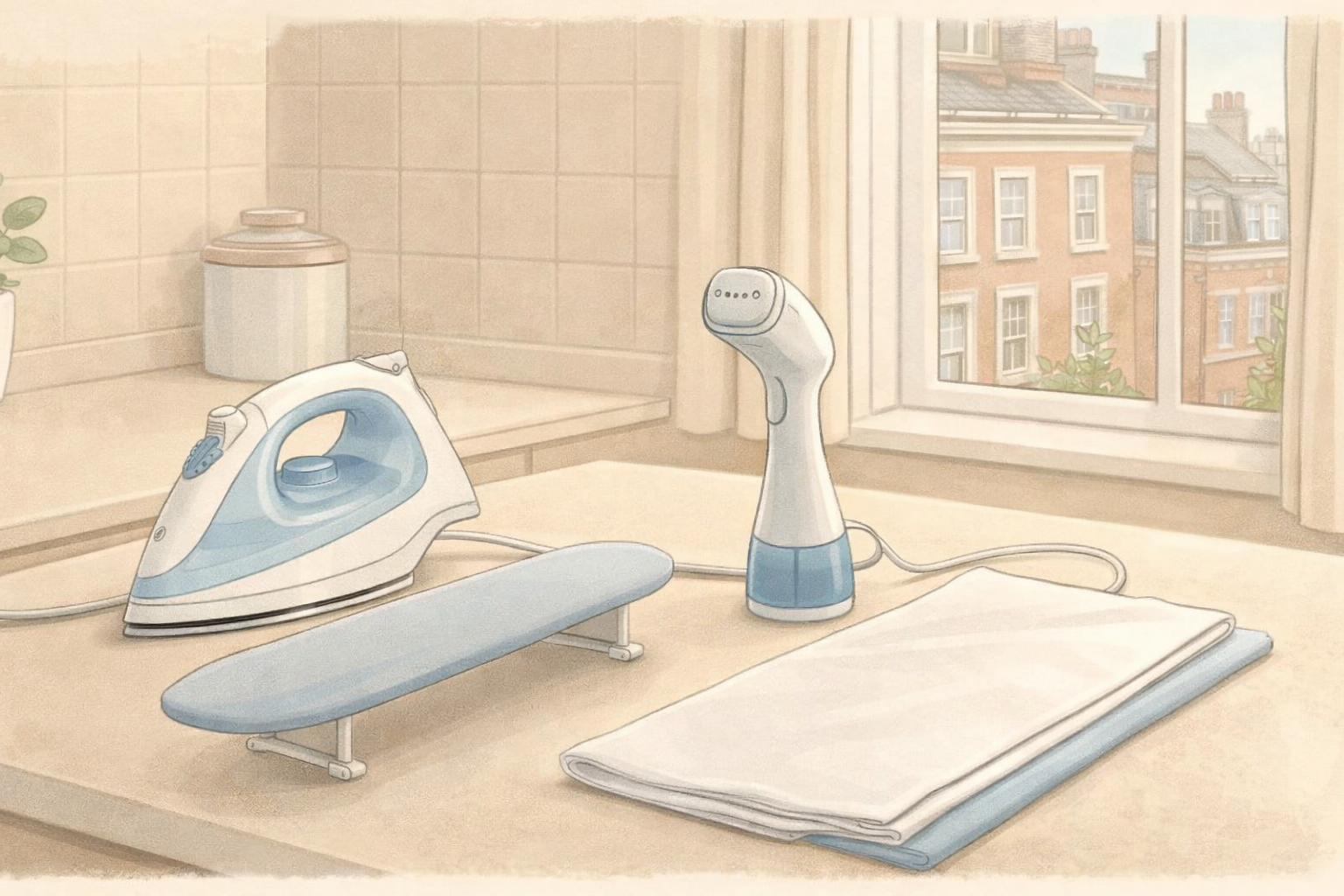
We’re not precious about equipment, but a few basics stop a lot of damage. The tools we rely on include a decent steam iron, a simple board with a firm pad, and a press cloth (even a clean cotton tea towel works). If you are serious about pressing vs ironing, the press cloth alone prevents a lot of shine and scorch marks.
On steam iron vs steamer, here’s the honest take. A steam iron gives you pressure and heat, which you need for crisp collars and trouser creases. A handheld steamer is brilliant for “freshening” and easing light wrinkles, but it won’t set a sharp crease, and it struggles on thick cotton. In other words, your choice of kit affects how well pressing and ironing work at home.
Energy matters too, especially if you’re ironing loads. Energy Saving Trust’s guidance on reducing energy use at home highlights that small changes to how you use appliances can cut waste, and ironing is one of those tasks where people often leave kit heating longer than needed. In practice, this means you should batch your ironing and switch off a couple of minutes early, the plate stays hot.
5) Fabric rules we stick to
If you’ve ever scorched a blouse or melted a sports top, you already know labels matter. What we’ve found works best is treating the care label as your starting point, then adjusting based on feel and colour. Fabric is where pressing vs ironing becomes less about speed and more about avoiding damage.
For garment care symbols UK, the label usually tells you max heat and whether steam is safe. Which? also summarises fabric temperature settings and common risks like shine and scorching. According to Which? ironing temperature advice (updated 2024), synthetics need lower heat, while cotton and linen can take higher temperatures (with care).
Our quick fabric-by-fabric approach:
- Cotton and linen: higher heat with steam, press for sharp creases, iron for big panels.
- Wool and suits: lower heat, lots of steam, always use a press cloth, lift and place.
- Synthetics and blends: low heat, quick contact, never linger (melt risk is real).
If something smells damp or musty after being stored, fix that before you apply heat, because heat can “bake in” odours. We covered practical fixes in our piece on getting rid of musty clothes smells.
If you are also dealing with stubborn creases after washing, see our guide to removing wrinkles from clothes for extra at-home techniques that pair well with pressing vs ironing.
6) The finish you actually want
A lot of people ask for “no creases”, but they usually mean one of three finishes: smooth, crisp, or shaped. Once you pick the finish, the method becomes obvious, and pressing vs ironing becomes a simple decision rather than a guessing game.
Smooth is for everyday. Iron larger areas with light pressure, keep the fabric taut, and don’t over-steam, or you’ll re-wrinkle it as it dries.
Crisp is for smartwear. This is where pressing wins. If you’re learning how to press seams, think of it like setting a fold rather than rubbing it flat. Place the iron, give it a 2 to 4 second press with steam, then lift. Let it cool on the board for a few seconds before you move it, cooling “locks” the crease. This is the clearest example of choosing between pressing and ironing in real life.
Shaped is for structured garments like jackets, shoulders, lapels, and anything tailored. At home, people flatten these by accident. In practice, that’s why we press with cloth and steam, and we use the right board shape rather than forcing it flat.
7) Local options: press, iron, or dry clean
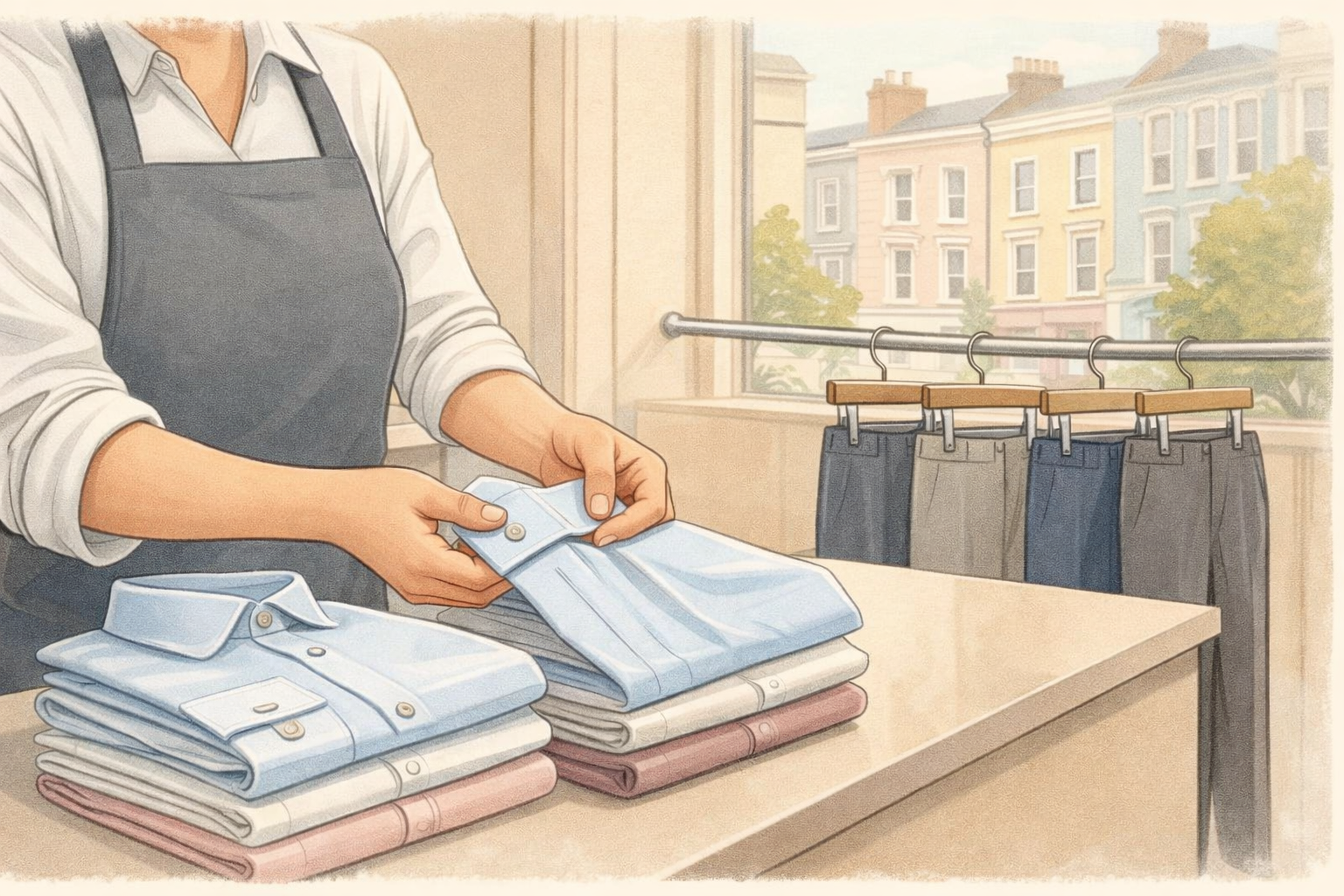
If you’re busy, the best method is sometimes handing it over and getting your evening back. For regular weekly loads, a wash and press service usually means we wash, dry, then press items so they’re ready to hang or fold. It suits shirts, polos, school uniforms, and bedding, and it removes the stress of pressing vs ironing at home.
Dry cleaning is the safer option when water could distort the fabric or construction. Think wool coats, tailored suits, silk, embellished pieces, and lined garments where you want the shape to stay put. If you’re unsure, bring it in and we’ll tell you straight what we’d do and why.
What helps us get you the result you want is simple notes, not long explanations. Tell us:
- Any stains and what caused them (coffee, oil, makeup)
- Whether you want a sharp trouser crease or a softer finish
- Any sensitive skin or fragrance preferences
If you’re around North Finchley, you can pop in near Woodhouse Road and we’ll turn it around without fuss. If you’re closer to Notting Hill, we’re right on Ladbroke Grove, handy if you’re heading past Portobello Road.
After all that, here’s the quick “which should I pick?” answer. If you want speed on casual items, iron. If you want a crisp line, a set seam, or to avoid shine on dark fabrics, press. If the item is structured, delicate, or expensive to replace, drop it to us and don’t gamble. That is the practical conclusion of pressing vs ironing.
Frequently asked questions
Is pressing better than ironing for shirts?
For most shirts, you’ll use both. We iron the big panels (front, back) to get them smooth, then press the collar, cuffs, and placket for a sharper finish. If you only do one, pressing the visible areas often looks smarter with less effort.
Can a handheld steamer replace ironing?
It can replace ironing for light wrinkles on dresses, blouses, and curtains. It won’t replace a steam iron if you want crisp cuffs, sharp creases, or a truly flat cotton shirt. If you’re choosing one tool, we’d pick an iron first, then add a steamer later.
How do I stop my trousers going shiny when I iron them?
Use lower heat, reduce movement, and add a press cloth. The shine comes from friction and too much heat on the surface fibres. For dark suit trousers, press with steam, lift the iron each time, and let the fabric cool before you wear it.
Do I need to press seams when I sew or alter clothes?
Yes, almost always. Pressing seams as you go makes the garment sit flatter and look professionally made. If you’re doing alterations and want them to disappear, press the seam allowance properly, don’t just iron over it.
What is the difference between wash and press and dry cleaning?
Wash and press uses water and detergent, then pressing to finish. Dry cleaning uses a solvent process designed for fabrics and constructions that don’t cope well with water. If the label warns against washing, or the item is tailored, dry cleaning is usually the safer bet.
If you’re still stuck on pressing vs ironing, bring the item in and we’ll give you a straight recommendation based on the fabric and finish you want.
If you’re local, drop by Glint Express and we’ll sort it.
North Finchley: 9 Halliwick Court Parade, Woodhouse Road, London N12 0NB | 020 3376 2060 | nfinchley@glintexpress.co.uk
Notting Hill: 341 Ladbroke Grove, London W10 6HA | 0745 030 2088 | NottingHill@glintexpress.co.uk