How to Get Chewing Gum Out of Clothes (The Right Way)

I was sitting on the tube last year, completely absorbed in my phone, when I felt something sticky under my hand on the seat. By the time I realised what it was, I’d already shifted position and sat directly on it. Fresh chewing gum, now firmly embedded in my favourite work trousers. I got home, grabbed a knife, and started scraping frantically at the gum before it could set properly.
Big mistake. Huge mistake. The first step in how to get gum out of fabric is to remember not pull on it because you may wind up tearing the garment. I created a horrible rough patch on the fabric where I’d scraped too aggressively, and bits of gum were now smeared across a wider area than before. Those trousers never quite recovered, and I learned an expensive lesson about patience.
If you’ve got chewing gum stuck on your clothes right now, stop whatever you’re doing and read this first. The natural instinct to scrape or pull will almost always make things worse.
Why Scraping Fresh Gum Is the Worst Thing You Can Do
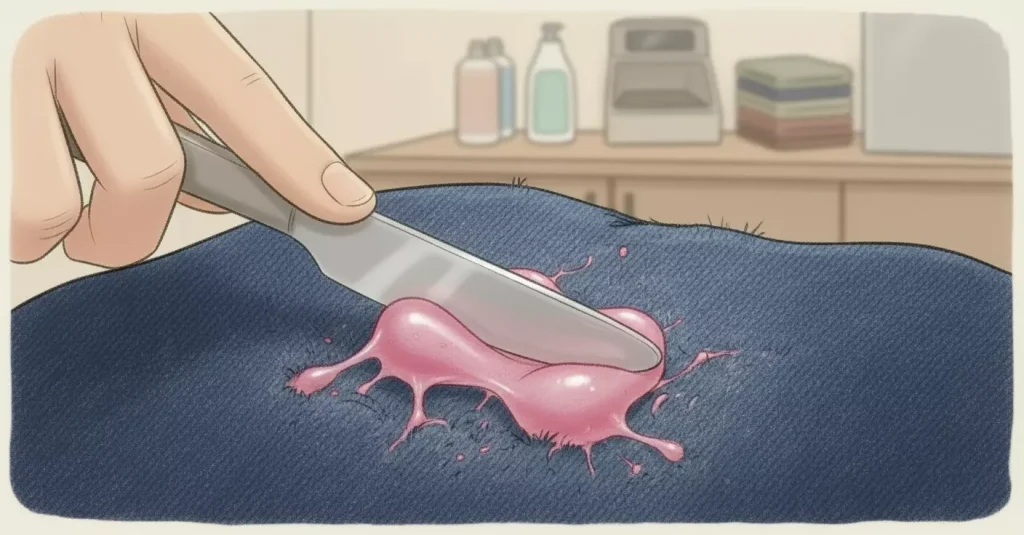
Here’s what happens when you attack fresh gum with a knife or your fingernails. Unlike other foods and substances that can also stain clothing, due to its gum base, chewing gum is stubborn and can bond so strongly to fibers that pulling to remove it may tear them. Gum is designed to be sticky and stretchy, and when it’s fresh, it’s at its most adhesive.
When you scrape at soft gum, you don’t remove it cleanly. Instead, you push it deeper into the fabric weave and spread it across a larger area. The scraping action also damages the fabric fibres themselves, creating a roughened patch that looks awful even after you’ve eventually removed all the gum.
I’ve seen people completely ruin expensive jeans by scraping too hard at fresh gum. The denim became frayed and thin where they’d attacked it with a knife, and the colour faded in that spot. The gum came off eventually, but the trousers were unwearable because of the damage from the removal attempt.
The key to successful gum removal is changing the state of the gum first, either hardening it through freezing or softening it through heat, before attempting removal. Never try to remove gum in its natural sticky state.
The Freezing Method That Actually Works

Gum bonds to fabric, but you can break that bond by freezing the gum. Once it hardens, you can scrape it off the surface of the fabric since the gum hasn’t entered the structure of the fabric. This is genuinely the most reliable method for most fabric types.
Place the ice cubes or an ice pack directly on the gum, or put the garment in a plastic bag and set it in the freezer. If using ice cubes, hold them on the gum for about 10-15 minutes, or until the gum feels hard and brittle to the touch. I keep a few ice packs in my freezer specifically for this purpose now, as they’re easier to manage than loose ice cubes.
If the garment is small enough and you’ve got time, freezing the whole thing is actually more effective than using ice cubes. If the garment is small enough, you can even try placing it in the freezer to solidify the gum. Put it in a plastic bag first to protect it from freezer smells and moisture.
Once the gum is frozen solid, use a dull-edged tool to gently lift and scrape the gum away from the fabric. Work slowly to avoid damaging the fibers. I use a butter knife or the edge of a credit card. The gum should crack and lift off in chunks rather than smearing.
The important thing is keeping the gum cold throughout the removal process. If the gum doesn’t come off easily, use more ice. As soon as frozen gum starts warming up, it becomes sticky again and the whole exercise becomes pointless.
The Heat Method for Different Situations

Freezing isn’t always practical. If you’re out and about without access to a freezer, or if you’re dealing with gum on something bulky that won’t fit in a freezer, heat can work instead.
Instead of attempting to harden the gum as with freezing, applying heat should loosen its grip, making it easier for you to remove the gum effortlessly. We recommend using a hairdryer on a high setting. Hold the hairdryer around 6 inches away from the gummed fabric and blast away until the gum becomes soft enough to remove.
The trick with heat is getting the gum hot enough to soften without scorching the fabric. I’ve used this method on sturdy fabrics like denim with good results, but I wouldn’t risk it on delicate materials or synthetics that might melt.
Sometimes you can even use a regular iron set to medium heat to remove gum. Turn the garment with the gum side facing downward on a piece of clean cardboard. Apply the medium-heat iron to the back of the stained area, pressing it into the cardboard. As the gum is heated, it will stick to the cardboard, allowing you to transfer it away from your fabric.
I tried the iron method on a pair of jeans with surprising success. The gum transferred completely onto the cardboard, leaving just a faint residue on the jeans that washed out easily. But you need patience and you need to keep checking that the gum is actually transferring rather than just melting deeper into the fabric.
Household Products That Help
Once you’ve removed the bulk of the gum through freezing or heating, you often have residual stickiness left on the fabric. This is where household products come in.
Thanks to its acidity, cleaning vinegar breaks down sticky chewing gum and makes it easier to remove. Heat up a small bowl of white vinegar in the microwave. Apply hot vinegar to the chewing gum and let it sit for two to three minutes. Then gently work at the gum with a soft toothbrush.
I keep white vinegar in my laundry cupboard for all sorts of cleaning tasks, and it’s brilliant for gum residue. The warmth and acidity combine to break down what’s left after the main removal. Just make sure you rinse the area thoroughly after using vinegar.
For really stubborn residue on durable fabrics, WD-40 can be an effective way to remove chewing gum from clothes. Simply spray it on the affected area and let it sit for a few minutes before rubbing the gum off with a paper towel or piece of cloth.
However, be careful with WD-40. It’s oil-based, which means it can stain some fabrics. I only use it on dark, sturdy materials like black jeans where a slight oil mark won’t show. Never use it on light colours or delicate fabrics.
What Not to Use on Gum

While there are many ways to remove chewing gum from shoes and hair, it’s important to remember that you should not use any oil-based products on your clothing. Skip the peanut butter, olive oil and petroleum jelly, and opt for solutions that won’t leave oily stains on your garments.
I see this advice all over the internet, people recommending peanut butter or coconut oil for gum removal. While these might work for gum in hair, they’re terrible for clothes. You’ll remove the gum but be left with a greasy stain that’s arguably worse than the original problem.
Similarly, avoid using harsh chemicals like nail polish remover unless you’re absolutely desperate and willing to risk damage. These solvents can dissolve synthetic fibres, fade colours, and leave permanent marks.
The Step-by-Step Process I Use Now
After multiple gum disasters and plenty of trial and error, here’s the process I follow every time now, and it works reliably.
First, I assess how fresh the gum is and where it’s located. Fresh, sticky gum on removable clothing goes straight to the freezer in a plastic bag for at least two hours. Dried gum or gum on items that can’t be frozen gets the ice cube treatment.
Once the gum is frozen solid, I use a butter knife to gently crack and lift it away from the fabric. I work slowly and patiently, refreezing if the gum starts to soften. Most of the gum comes off in this stage if I’m patient enough.
For any remaining sticky residue, I apply warm white vinegar with a clean cloth and gently rub in small circular motions. This usually dissolves whatever’s left. Finally, I wash the garment as normal to remove any vinegar smell and any final traces of gum.
Before placing the garment in the dryer, check to make sure all gum and residue are gone. Heat can set any remaining gum, making it much harder to remove. This is crucial. I always air-dry items that have had gum on them until I’m absolutely certain everything is gone.
Special Cases and Tricky Situations
Some gum situations are more challenging than others. If gum gets in a pocket, use the technique of freezing the gum and then scraping it off. You’ll probably need to use a lot of ice cubes. Start by freezing the gum in small portions and then scrape. This should allow you to pull more of the pocket lining out of the pocket, which will give you better access to all the gum.
I had gum in a jacket pocket once, and it was genuinely difficult to access. I ended up turning the pocket inside out as much as possible and using ice cubes held against both sides of the fabric. It took ages, but it eventually worked.
For delicate fabrics like silk or wool, I don’t attempt home removal at all. The risk of damage is too high, and professional dry cleaners have better techniques and products for these materials.
Knitted items are particularly vulnerable because the gum can get caught between the loops of yarn. On knitted or embroidered items, be careful not to catch any of the threads as you lift the gum. Work incredibly slowly and gently, using tweezers to pick away small pieces rather than scraping.
When to Get Professional Help
Sometimes gum removal is beyond reasonable DIY efforts. If gum has been on fabric for days or weeks and has really set in, if it’s on expensive or delicate clothing you can’t risk damaging, or if your attempts at removal have made things worse, professional cleaning is worth considering.
I ruined one pair of trousers and damaged another before I learned that some situations warrant professional help. A good dry cleaner can remove gum without damaging fabric using specialist solvents and techniques that aren’t available to consumers.
The cost is usually modest, maybe ten to twenty pounds depending on the garment, and it’s nothing compared to replacing ruined clothes. I now take anything valuable or tricky straight to professionals rather than risking damage through amateur attempts.
Getting Expert Help
If you’re in North Finchley or Notting Hill and you’re dealing with stubborn gum that won’t shift, or if you’ve got gum on something valuable you don’t want to risk damaging, we’d be happy to help at Glint Express. We see gum disasters regularly at our North Finchley and Notting Hill branches.
Sometimes the smart move is handing it over to professionals who have proper gum removal products and techniques. We can assess whether home treatment is appropriate or whether specialist cleaning is needed. There’s no judgment, just practical help to save clothes you care about.
Chewing gum on clothes is frustrating and stressful, but it’s not the end of the world. With patience, the right technique, and sometimes professional help, most gum can be removed successfully. Just remember: freeze or heat first, scrape gently second, never pull or scrape while it’s still sticky.