How to Sort Laundry Properly (So You Don’t Ruin Your Clothes)
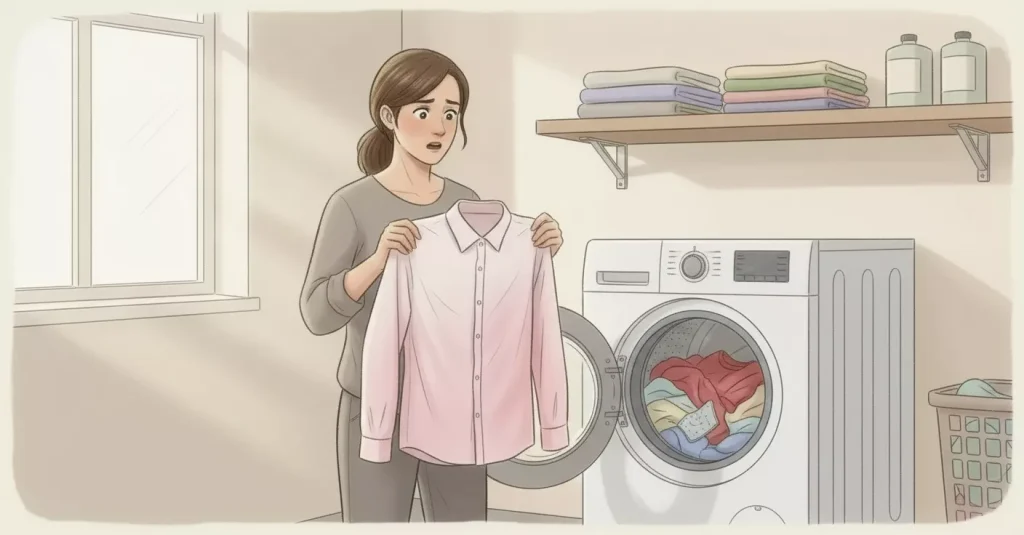
I’ll never forget the morning I pulled my husband’s favourite white dress shirt out of the washing machine. It was pink. Properly pink, not just a faint tinge. A brand new red gym top had somehow found its way into the white wash, and the result was catastrophic. That shirt had been expensive, and now it looked like something a child would wear to a fancy dress party.
The worst part? I’d used a colour catcher sheet, one of those magic sachets that’s supposed to trap loose dyes and prevent exactly this kind of disaster. Clearly, it hadn’t worked. Or rather, it had tried its best but been completely overwhelmed by a brand new red garment releasing enough dye to tint an entire load.
If you think colour catchers are a substitute for proper laundry sorting, let me save you from making the same expensive mistakes I did. They’re useful, but they’re not magic, and they definitely aren’t enough on their own.
Why Colour Catchers Aren’t the Solution You Think They Are
Colour catcher sheets work by absorbing loose dye molecules floating in the wash water. They’re genuinely clever products, and they do help prevent minor colour transfer. But they have serious limitations that manufacturers don’t exactly advertise.
First, they have a saturation point. Once a colour catcher has absorbed as much dye as it can hold, any additional dye just floats freely in the water looking for somewhere to land. With a brand new dark garment, especially something red or navy, the amount of dye released can easily overwhelm several colour catchers.
Second, colour catchers can’t prevent direct dye transfer from fabric-to-fabric contact. When clothes tumble together in the washing machine, they rub against each other. If a wet red sock is pressed directly against a white T-shirt for the entire wash cycle, dye will transfer regardless of how many colour catchers you’ve used.
Third, they don’t address the other reasons for sorting laundry. Fabric weight matters too, as heavy denim abrading against delicate silk accelerates wear and damage, and towels washed with dress clothes cause pilling through friction. Colour catchers do nothing about these mechanical damage issues.
I still use colour catchers occasionally, but I treat them as an extra safety measure, not as permission to skip proper sorting. They’re backup, not primary defence.
The Proper Way to Sort Your Laundry

Most people know to separate whites from colours, but that’s genuinely not enough. To really prevent color bleeding, get into the habit of making four distinct piles: pure whites, lights and pastels, brights and medium tones, and darks. This might seem excessive, but it takes the guesswork out of laundry and practically guarantees you won’t end up with pink shirts.
Pure Whites
This pile is for 100% white items only. Not cream, not ivory, not white with coloured trim. Purely white T-shirts, sheets, socks, and towels. Nothing else. These get washed separately because even the slightest colour transfer shows up brilliantly on white fabric.
I learned to be ruthless about this category. A white shirt with navy pinstripes doesn’t go in the white wash, even though it’s mostly white. The navy can bleed, and suddenly your white shirts aren’t white anymore. When in doubt, it goes in a different pile.
Lights and Pastels
Pale blues, greys, creams, light pinks, beiges, anything in a light colour goes here. These items can handle a bit of colour transfer without it showing too obviously, but they still need protecting from darker dyes.
This is where most of my everyday clothes end up. Work blouses, casual shirts, light-coloured jeans, they all go together. I wash this pile in cold water with a colour catcher as backup, and I’ve not had problems.
Brights and Medium Tones
Reds, bright blues, greens, purples, and bold patterns go in this category, as these are your most likely bleeders, so quarantining them together means any dye that does escape will only meet up with other bold shades.
New items in this category always get washed separately for the first few times. The amount of excess dye in brand new brightly coloured clothes is shocking. I wash a new red top on its own three or four times before I trust it with other clothes.
Darks
Blacks, navies, dark greys, deep browns, charcoal, anything really dark goes in this pile. These items are saturated with dye that can easily make your lighter clothes look dingy and faded.
Dark jeans are the worst offenders. New dark jeans can release enough indigo to tint an entire load. I always wash new jeans separately several times before mixing them with anything else, even other dark items.
Beyond Colour: Sorting by Fabric Type
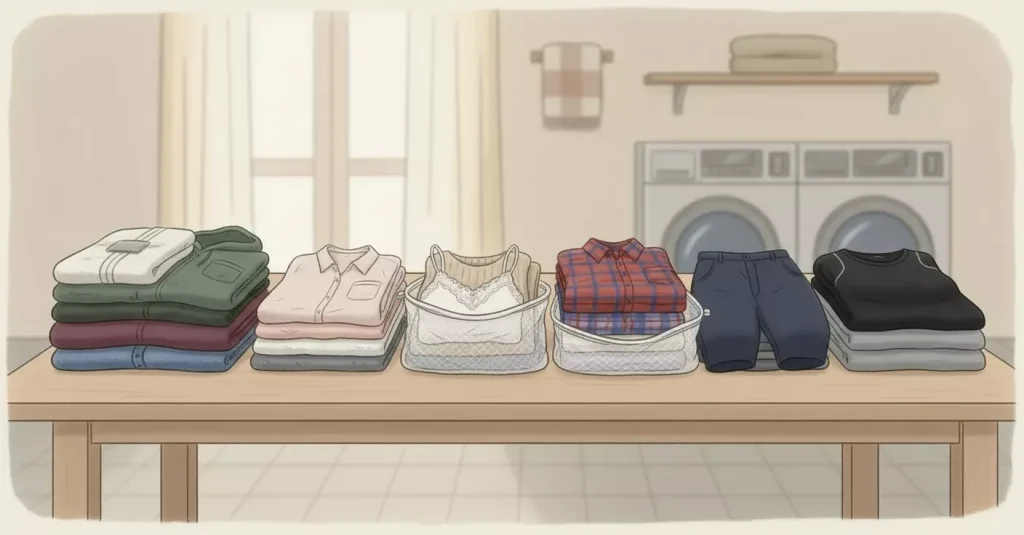
Once you’ve got colour sorted, fabric type is the next consideration. This is where people often go wrong, even when they’ve separated by colour correctly.
Heavy vs Delicate
Heavy items like towels, jeans, and sweatshirts need a different wash cycle than delicate blouses, lingerie, and fine knitwear. Washing them together means the delicate items get beaten up by the heavy ones, leading to pilling, stretching, and premature wear.
I wash towels completely separately from everything else. They’re heavy, they create loads of lint that sticks to other clothes, and they need a hotter, more vigorous wash than most of my other laundry. Towels with dress shirts is a terrible combination.
Delicate items go in mesh laundry bags and get the gentlest cycle possible. Sometimes I hand wash really delicate things rather than risking the machine at all. It takes more time, but expensive silk or lace items are worth the extra care.
Lint Producers vs Lint Attractors
Some fabrics shed lint like mad, particularly towels, fleece, and flannel. Other fabrics attract lint, especially synthetic materials and corduroy. Washing these together means your dark clothes come out covered in fluff.
I learned this after washing a black fleece with my work trousers. The trousers came out looking like they’d been through a snowstorm. It took ages to remove all the white fluff, and some of it never fully came off.
Now I wash lint-producing items together, and lint-attracting items get washed separately with a good shake before they go in the dryer.
Water Temperature Matters More Than You Think
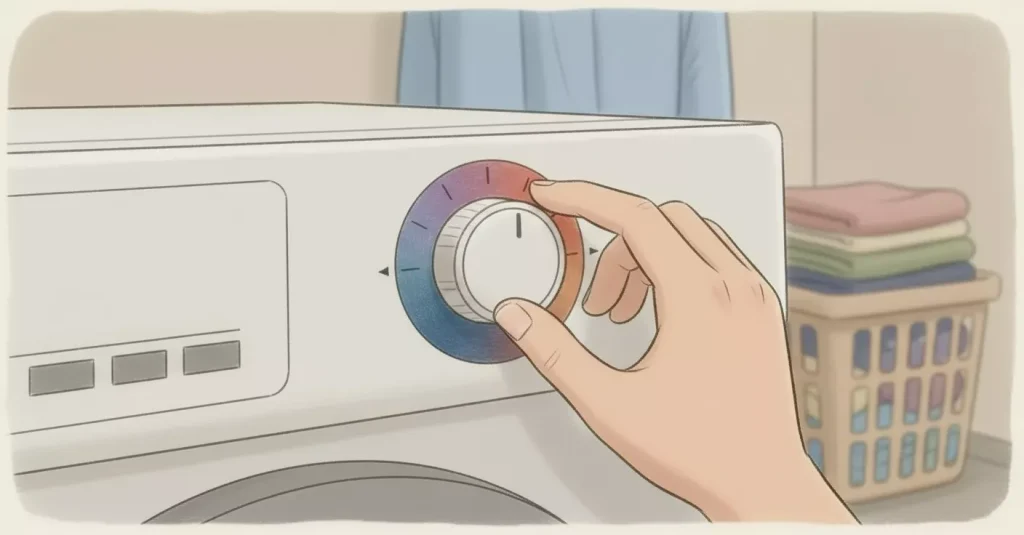
Hot water opens fabric fibers, allowing more dye transfer, while cold water keeps fibers tighter, reducing color bleeding risk. This is why proper temperature selection is crucial.
For most coloured loads, I use cold water exclusively. Modern detergents work perfectly well in cold water, and the reduction in colour bleeding is significant. Plus, cold water is gentler on fabrics and saves energy.
Whites can handle warm or hot water, which helps keep them bright and removes stains more effectively. But even with whites, I check what else is in the load. If there are any items with coloured trim or patterns, I stick to warm rather than hot.
Towels and bedding benefit from warmer water for hygiene reasons, but I make sure they’re all properly colourfast before using hot water. A dark towel that bleeds in hot water can ruin an entire load of bedding.
The New Clothes Problem
New clothes are colour bleeding disasters waiting to happen. New clothes are more likely to bleed dye, so they should be washed separately the first few times. This is particularly true for dark colours and bright reds.
I test new clothes for colourfastness before their first wash. Dampen a hidden area and blot with a white cloth; if color transfers, wash separately the first few times. This simple test has saved me from several disasters.
New dark jeans get at least three solo washes before I mix them with anything else. The amount of indigo dye that comes out in those first few washes is remarkable. The water literally runs blue. After three or four washes, they’re much safer to wash with other dark items.
Red clothes need the same treatment. I bought a bright red jumper last winter and washed it alone five times before I trusted it with my other clothes. Even then, I used a colour catcher as backup for the first few mixed washes.
Don’t Overload Your Machine

Overloading can cause friction and possibly increase the risk of dye transfer. When clothes are packed too tightly, they don’t get properly cleaned, they don’t rinse thoroughly, and they rub against each other more aggressively.
I used to cram as much as possible into each load to save time and energy. But this meant clothes came out less clean, took longer to dry because they were still damp, and wore out faster from the excessive friction.
Now I fill the machine to about two-thirds capacity maximum. Clothes have room to move, water and detergent can circulate properly, and the final spin actually removes water effectively. The washing results are noticeably better.
For bulky items like duvets or heavy curtains, I take them to a launderette with larger machines rather than trying to force them into my domestic machine. It’s not worth damaging either the item or the machine.
Heat Sets Stains and Dye

If colour bleeding does happen, never put the affected items in the tumble dryer. Heat from the dryer can set stains, so always air-dry after treating colour bleed. Once heat sets the dye, removing it becomes infinitely harder, sometimes impossible.
I’ve made this mistake. I didn’t notice colour bleeding until I pulled clothes out of the dryer, and by then the damage was permanent. The heat had set the dye so thoroughly that no amount of re-washing or treatment would shift it.
Now I always check clothes carefully after washing and before drying. If there’s any hint of colour transfer, I deal with it immediately while it’s still fresh and reversible.
When Accidents Happen Despite Everything
Even with perfect sorting, accidents occasionally happen. A tissue left in a pocket, a rogue sock from the wrong pile, a new garment that bleeds more than expected. When colour bleeding occurs, act immediately.
To remove color bleed, avoid using a dryer which can set the stain; instead soak garments with laundry detergent, vinegar or oxygen-based bleach depending on fabric type. I keep white vinegar and oxygen bleach in my laundry cupboard specifically for emergencies.
For white items, I soak them in a solution of oxygen bleach and warm water for several hours. This often lifts colour bleed that seems hopeless. For coloured items, vinegar works better as it won’t affect the original colour.
The key is speed. The longer dye sits in fabric, the harder it becomes to remove. If I notice colour bleeding, I re-wash the affected items immediately, sometimes multiple times, until the transferred colour is gone.
When Professional Help Makes Sense
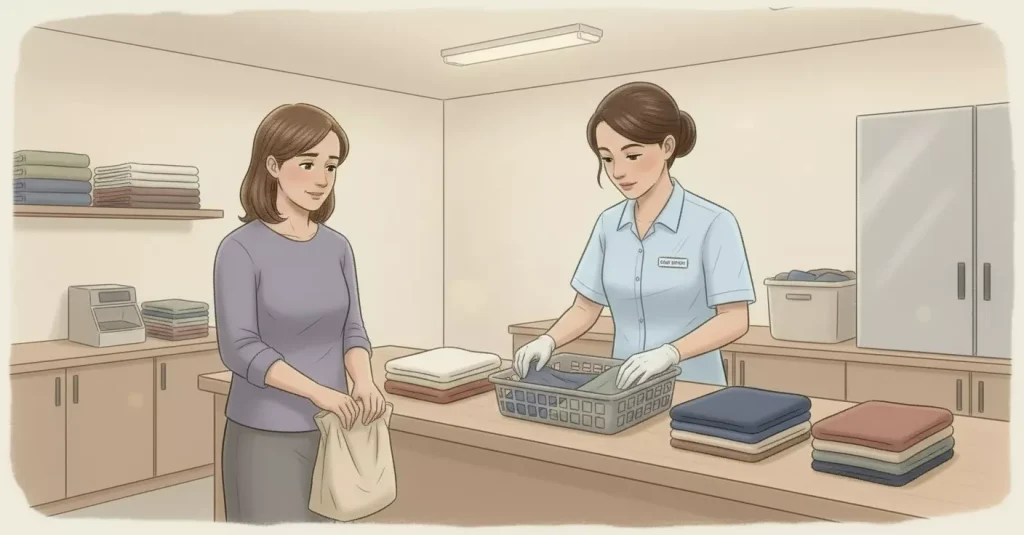
Sometimes you need professional laundry services, particularly for items that are difficult to sort at home or that need specialist care. If you’re juggling a busy London schedule and struggling to keep up with laundry, having professionals who understand proper sorting can be a lifesaver.
Professional laundry services should sort your clothes properly as a basic standard. Proper separation allows targeted temperature control, with cold for colors, warm for whites, and hot for sanitizing towels. This is what you’re paying for, not just having your clothes washed.
If you’re in North Finchley or Notting Hill and proper laundry sorting feels overwhelming, we’d be happy to help at Glint Express. We understand how to sort laundry correctly at our North Finchley and Notting Hill branches, treating each load with the care it needs.
We sort by colour and fabric type, use appropriate temperatures and cycles, and treat your clothes like they matter. Because they do. Your wardrobe represents a significant investment, and it deserves proper care.
Whether you need help with regular laundry or you’ve got specific items that need careful handling, we’re here. Proper sorting isn’t an optional extra, it’s fundamental to good laundry care. We never skip this step, even when it would be quicker or easier to do so. Your clothes are worth the effort.