How to Clean a Leather Jacket Properly (Without Ruining It Forever)
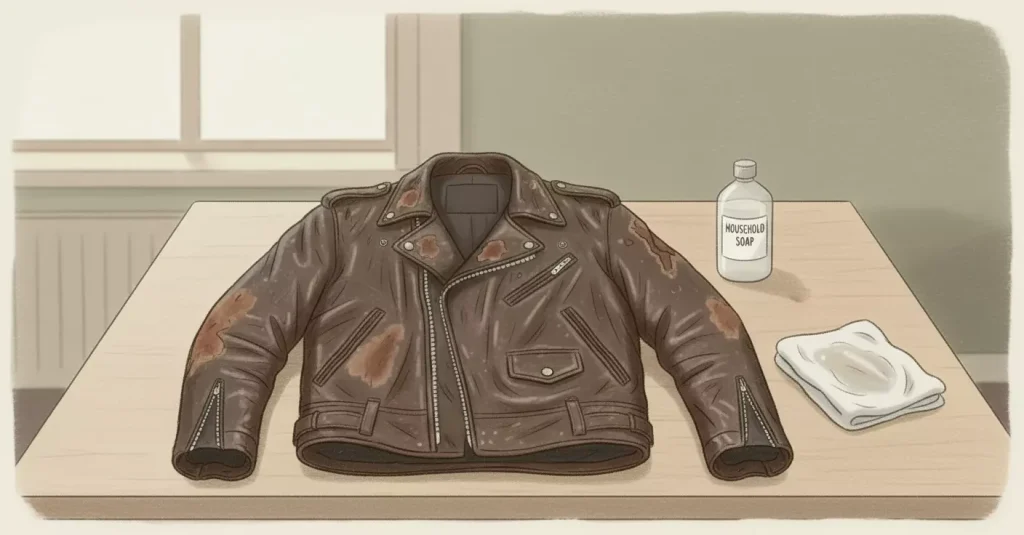
I’ll never forget the day I tried to clean my vintage leather jacket with a damp cloth and regular kitchen soap. I thought I was being careful, thought I was doing the right thing. Twenty minutes later, I was staring at water stains that wouldn’t come out and patches where the colour had faded. That jacket had cost me three months’ worth of saving, and I’d damaged it in less than half an hour.
If you’ve got a leather jacket that needs cleaning, you’re probably nervous about ruining it. You should be. Leather is one of those materials that seems tough but is actually surprisingly delicate when it comes to cleaning. Get it wrong, and you can cause permanent damage that no amount of conditioning will fix. But get it right, and your jacket will look brilliant for decades.
Let me walk you through what I’ve learned, both from my own mistakes and from talking to people who actually know what they’re doing.
Why Leather Is So Tricky to Clean
Here’s the thing about leather that most people don’t understand. It’s not fabric. It’s skin, animal hide that’s been treated and dyed. That means it reacts to water, heat, and chemicals in ways that cotton or polyester never would.
Leather has natural oils in it that keep it supple and strong. When you clean it the wrong way, you strip those oils out. The leather dries out, becomes stiff, and eventually cracks. Once it’s cracked, there’s no bringing it back. You might be able to hide the damage with conditioner, but the structure of the leather is compromised forever.
Different types of leather need different care, too. Full-grain leather, which is what most quality jackets are made from, is relatively forgiving. Suede and nubuck are absolute nightmares to clean at home. They stain if you look at them funny, and water ruins them instantly. If you’ve got a suede jacket, honestly, just take it to a professional and save yourself the heartache.
The Most Common Ways People Ruin Leather Jackets
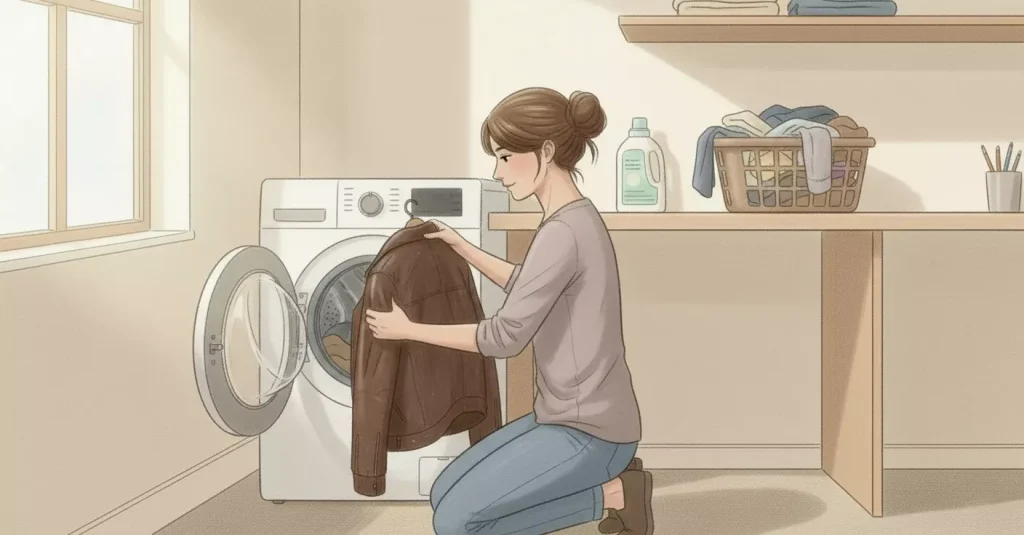
Throwing It in the Washing Machine
I know someone who did this. They thought if they used cold water and a gentle cycle, it would be fine. The jacket came out looking like it had been through a war. The leather was stiff, misshapen, and about two sizes smaller than when it went in. The colour had bled onto the lining, and weird wrinkles had set in that never came out.
Washing machines are designed for fabrics, not hide. The agitation, the amount of water, the detergent, all of it is wrong for leather. Washing a leather jacket in a washing machine removes the natural oils, and as the leather dries out it may crack. Even if your jacket survives one wash, you’ve taken years off its life.
Using Too Much Water
This is the mistake I made with my vintage jacket. I thought if I kept the cloth damp rather than soaking wet, I’d be fine. But leather is porous. Leather absorbs water quickly, which can lead to stiffness, discoloration, and even mold growth. Even a damp cloth can leave water marks if you’re not careful.
Water also causes leather to swell and then shrink as it dries. This creates stress on the fibres and can lead to cracking, especially around seams and creases. If your jacket gets properly soaked, say in a downpour, you need to let it dry very slowly and naturally, away from any heat source.
Applying Heat While Drying
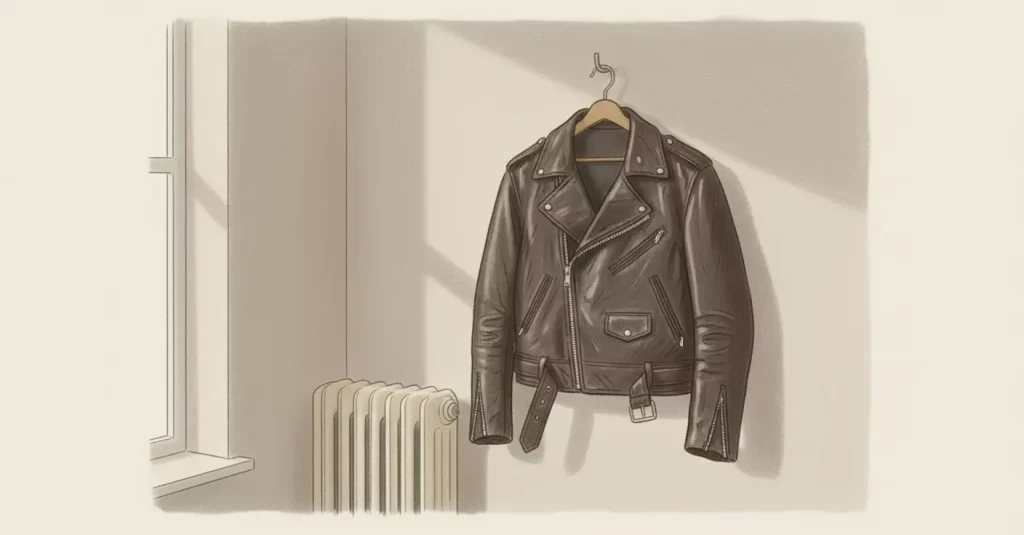
When leather gets wet, the temptation is to speed up the drying process with a hairdryer or by hanging it near a radiator. Don’t. Heat dries leather out far too quickly, making it brittle and prone to cracking. I’ve seen jackets that looked fine until someone tried to dry them quickly, and then they developed cracks within hours.
Direct sunlight is just as bad. UV rays fade the colour and damage the leather’s structure. Your jacket needs to dry slowly, in a cool place with good air circulation. Yes, this might take a day or two. That’s normal. Patience is essential.
Using Household Cleaners
All-purpose cleaners, washing-up liquid, bleach, these are all terrible for leather. They’re far too harsh and strip away the protective oils. Even things that seem gentle, like baby wipes, often contain chemicals that damage leather over time.
I once watched someone try to remove a stain from their leather jacket with nail polish remover. The remover took out the stain alright, along with the colour and the top layer of the leather. They were left with a pale patch that looked awful and couldn’t be fixed without professional re-dyeing.
What You Can Safely Clean at Home
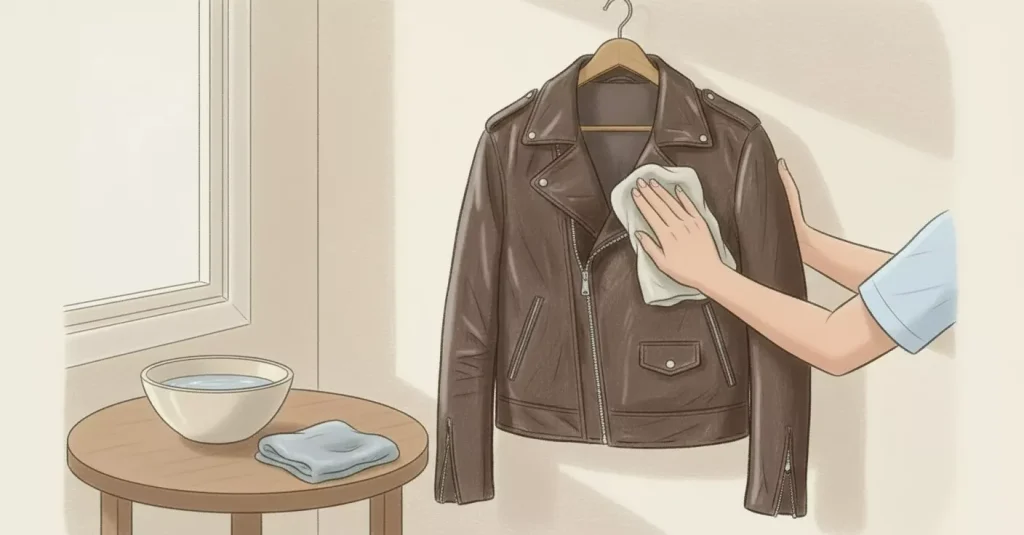
Not every leather jacket issue needs professional intervention. Surface dust and light dirt can absolutely be dealt with at home, as long as you’re careful and use the right techniques.
Regular maintenance is actually the best approach. If you wipe down your jacket with a soft, dry cloth after wearing it, you prevent dirt from building up in the first place. This takes about thirty seconds and saves you from needing deep cleans later.
For light surface dirt, you can use a very slightly damp cloth with just water. The cloth should be barely damp, not wet. Wipe gently in the direction of any grain in the leather. Don’t scrub or rub hard. Blot rather than wipe if you’re dealing with any kind of stain.
If you need something stronger, mix a tiny amount of mild soap with water. And I mean tiny, like two or three drops in a small bowl of water. Dip your cloth in, wring it out thoroughly so it’s just slightly damp, and gently wipe the leather. Immediately follow with a clean, slightly damp cloth to remove any soap residue, then dry with a soft towel.
The Inside Lining Problem
People often forget about the inside of leather jackets, but that’s where sweat and body oils build up. If you wear your jacket regularly, especially in warm weather, the lining can start to smell and actually damage the leather from the inside.
Cotton and polyester linings can be cleaned with the same gentle soap and water method you’d use on the outside. Turn the jacket inside out, hang it up, and carefully wipe down the lining with your barely damp cloth. Pay extra attention to the underarms, collar, and cuffs where sweat accumulates most.
Silk or wool linings are trickier. Silk stains easily and water can leave marks. Wool can shrink if it gets too wet. For these, you’re better off using a fabric refresher spray or taking the jacket to professionals who know how to handle delicate linings.
The smell issue is real, and airing out your jacket regularly helps enormously. Hang it outside on a breezy day, not in direct sunlight, just somewhere with good air circulation. This lifts odours naturally without any cleaning products.
Dealing With Specific Stains
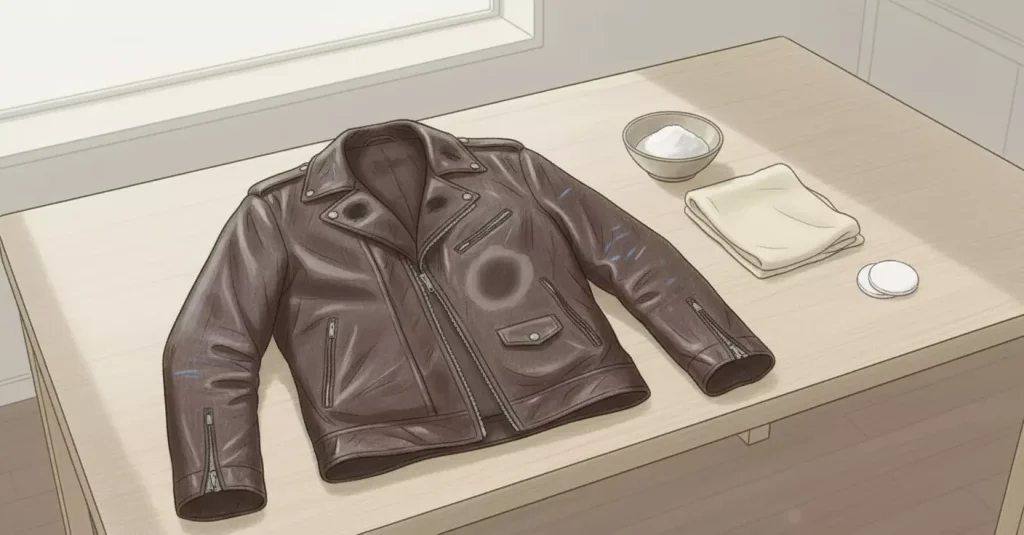
Different stains need different approaches, and honestly, some stains are beyond home treatment. But here’s what can work for common problems.
For grease or oil stains, the old trick of sprinkling cornstarch or baking soda on the spot actually does help. The powder absorbs the oil. Leave it on overnight, then brush it off gently. This won’t remove heavy stains, but it can improve light ones significantly.
Ink stains are horrible on leather. Some people suggest using rubbing alcohol or nail polish remover, but these can damage the leather’s finish. If you’re going to try this, test it on a hidden spot first, use the absolute minimum amount, and blot very gently. Personally, I think ink stains warrant professional help.
Water marks are surprisingly common, especially on light-coloured leather. The weird thing about water marks is that sometimes you can remove them by applying more water evenly to the whole area. Dampen a cloth and wipe down the entire panel of the jacket, not just the stain. As it dries, the mark often disappears. But this is risky, so test it somewhere inconspicuous first.
Mould is another issue, particularly if you’ve stored your jacket somewhere damp. You can try wiping it with a cloth dampened with a mixture of equal parts water and rubbing alcohol, but be very gentle. Mould that’s set into the leather might be permanent, and aggressive cleaning can make it worse.
The Conditioning Question
After any cleaning, even gentle cleaning, leather needs conditioning. Conditioning replaces some of the oils that cleaning removes and keeps the leather supple. Without it, your jacket will gradually dry out and crack.
You can buy leather conditioners from places like The Leather Care Company or good shoe shops. Make sure you get one suitable for the type of leather you have. Apply a small amount to a soft cloth and rub it into the leather in circular motions. Let it absorb for the time specified on the product, usually fifteen minutes to an hour, then buff off any excess.
Some people make their own conditioner with things like olive oil or coconut oil. I’m not convinced by this. These oils can go rancid over time and might attract dirt. Proper leather conditioner is formulated to avoid these problems and isn’t expensive.
How often you condition depends on how much you wear the jacket and what conditions it’s exposed to. If you’re wearing it daily and it sees rain or sunshine regularly, conditioning every three months makes sense. A jacket you wear occasionally might only need it once a year.
Storage Matters More Than You Think
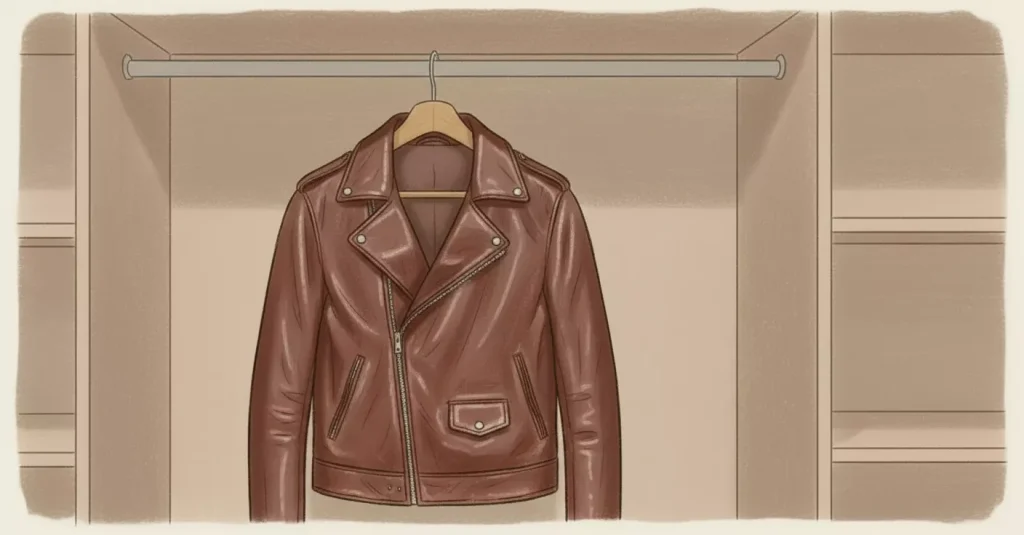
How you store your leather jacket when you’re not wearing it affects how much cleaning it needs and how long it lasts. Bad storage can cause as much damage as bad cleaning.
Never store a leather jacket in a plastic bag or cover. Leather needs to breathe. Those plastic dry cleaning bags are only meant for transport from the shop to your home. As soon as you get home, take the jacket out of the plastic. If you leave it in plastic, moisture gets trapped, mould develops, and the leather deteriorates.
Use a proper wooden or padded hanger that supports the shoulders. Wire hangers or thin plastic ones will distort the shape of the jacket over time. The shoulders are the most structured part, and if they lose their shape, the whole jacket looks wrong.
If you want to protect the jacket from dust, use a breathable fabric garment bag. Cotton or canvas bags let air circulate while keeping dust off. You can get decent ones from John Lewis or Lakeland. They’re worth having if you’ve got expensive leather pieces.
Store your jacket somewhere cool and dry, away from direct sunlight or heat sources. A bedroom wardrobe is usually fine. Avoid attics or basements where temperature and humidity fluctuate wildly. These changes cause leather to expand and contract, which weakens it.
When DIY Cleaning Isn’t Enough
There comes a point where home cleaning methods aren’t appropriate. Major stains, heavy soiling, damage to the leather, these all need professional attention.
Professional leather cleaners have equipment and products that aren’t available to consumers. They can deep clean leather without damaging it, treat stubborn stains, repair minor damage, and restore colour to faded areas. Yes, it costs money, but it’s nothing compared to the cost of replacing a ruined jacket.
If your jacket is expensive, vintage, or has sentimental value, it’s always worth having it professionally cleaned rather than risking home treatment. The peace of mind alone is valuable. You’re paying for expertise and proper equipment, and that’s genuinely worth it for items you care about.
Look for dry cleaners who specifically mention leather care on their signage or website. Not all dry cleaners are equally good with leather. Some just use standard dry cleaning chemicals that can be harsh on it. You want someone who specialises in leather and suede, who understands different types and finishes.
The London Leather Challenge
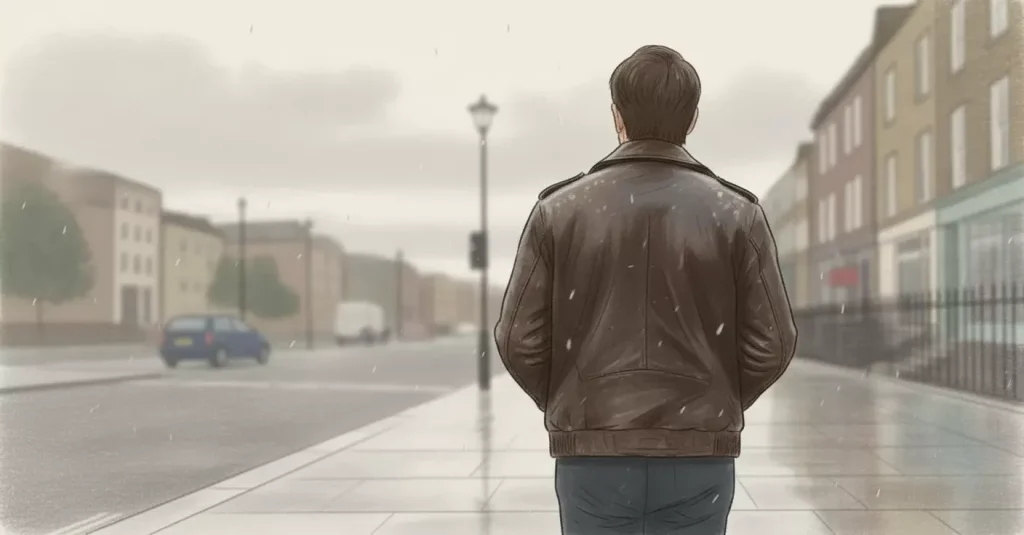
Living in London adds its own complications to leather jacket care. Our weather is unpredictable, and leather doesn’t love damp, changeable conditions. One day it’s dry, the next you’re caught in a sudden downpour. Your jacket takes a beating just from normal wear.
The pollution here is another factor. City grime settles on leather and can be quite stubborn to remove. That grey, dingy look that develops on leather jackets worn regularly in London isn’t just dirt, it’s a combination of pollution, dust, and general urban muck. Regular gentle cleaning helps prevent this buildup.
Having a local dry cleaner you trust makes a huge difference. You can drop things off easily, you can have a conversation about specific concerns, and you’re supporting local businesses. It’s worth finding somewhere good near you rather than putting off cleaning because it’s inconvenient.
Signs You Need Professional Help Right Now
Some leather jacket problems are beyond DIY fixes and need immediate professional attention. If you’ve got deep stains that aren’t responding to gentle cleaning, don’t keep trying different methods at home. Each attempt might make things worse.
Colour fading or discoloration needs expert treatment. Trying to restore colour yourself with dyes or polish rarely works and often looks terrible. Professionals can re-dye leather so it looks even and natural.
If the leather has gone hard and stiff, it’s lost too much of its natural oils. You can try conditioning it heavily, but often it needs professional treatment to really bring it back. Cracks in the leather are serious. Minor surface cracks might improve with conditioning, but deep cracks in the structure won’t. A professional can assess whether repair is possible.
Mould that’s spread extensively or penetrated deep into the leather needs specialist cleaning. Surface mould you can sometimes handle at home, but widespread mould requires proper treatment to kill the spores and prevent them coming back.
Prevention Is Better Than Cure
The best way to keep your leather jacket looking good is to prevent it needing serious cleaning in the first place. Treat it gently, protect it from the worst weather when possible, and maintain it regularly.
If rain is forecast, consider wearing a different jacket. I know leather jackets look brilliant, but they’re not waterproof and they don’t love getting soaked. A waxed cotton jacket or a proper rain coat will serve you better on truly wet days.
Eat carefully when wearing your jacket. Food stains are among the hardest to remove from leather, and they can set quickly if you don’t treat them immediately. If you do spill something, blot it gently with a clean cloth right away. Don’t rub it in trying to clean it.
Keep sharp objects away from leather. Keys, pens, anything that could scratch or puncture it. Leather is tougher than most fabrics, but it’s not invincible. Once you’ve scratched it, that mark is there forever.
What Good Professional Cleaning Actually Involves
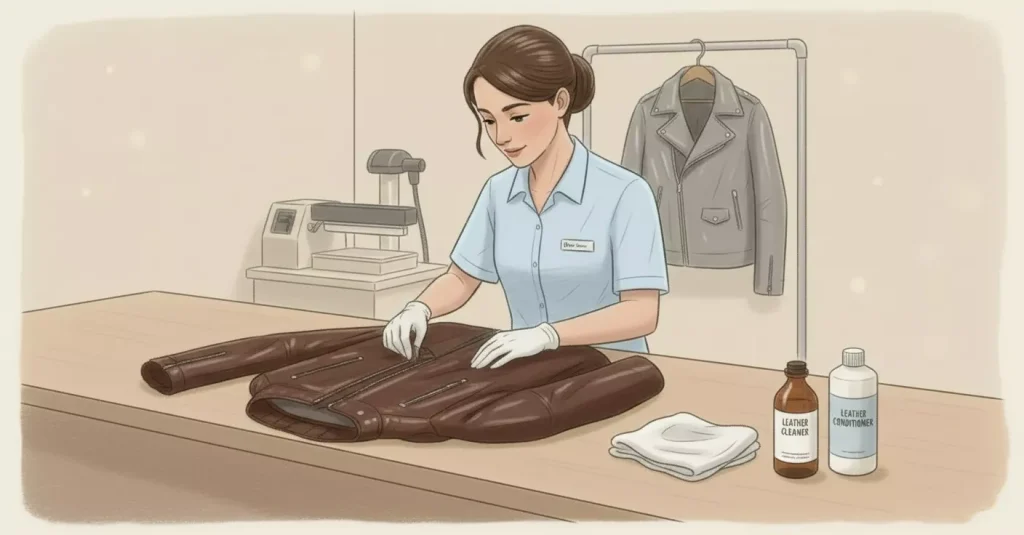
When you take a leather jacket to a proper specialist, they don’t just chuck it in a machine and hope for the best. The process is quite involved and requires expertise.
They’ll first assess the type of leather, the condition, and any problem areas. Different leathers need different cleaning methods. They’ll test cleaning products on hidden areas to make sure they won’t cause damage. The actual cleaning might use gentle solvents, specialised leather soaps, or a combination of methods depending on what’s needed.
Stain treatment happens separately, with specific products for different types of stains. They’ll work on spots individually rather than treating the whole jacket the same way. After cleaning, they’ll condition the leather to restore its oils and flexibility.
Finally, they’ll press or steam the jacket to restore its shape and smooth out any wrinkles. Proper pressing makes an enormous difference to how a leather jacket looks. It brings back the structure and makes it look sharp again.
When You Really Need Expert Help

If you’re anywhere in North London or West London and your leather jacket needs proper care, it’s worth talking to people who actually know what they’re doing. At Glint Express, we see leather jackets all the time in our North Finchley and Notting Hill branches, and we understand how stressful it is when something you value needs cleaning.
We’ll have an honest conversation with you about what your jacket needs. Sometimes it’s just a light clean and condition. Sometimes it needs more involved treatment. We’ll always tell you what we think and give you options. There’s never any pressure, just straightforward advice about how to keep your jacket in good shape.
Leather jackets are investments. They should last for years, even decades, if they’re treated properly. But they do need proper care, and sometimes that means getting professional help. Your jacket deserves it, and honestly, so do you. The confidence of wearing a jacket that looks brilliant and the knowledge that it’s being properly maintained is worth the cost.
Pop in and see us if you’re ever nearby. We’d be happy to have a look at your jacket and talk through what it needs. We’re here to make your life easier and keep your clothes looking their best, which is what good local service should be about.