Why Are My Towels Hard and Scratchy After Washing? (And How to Fix Them)
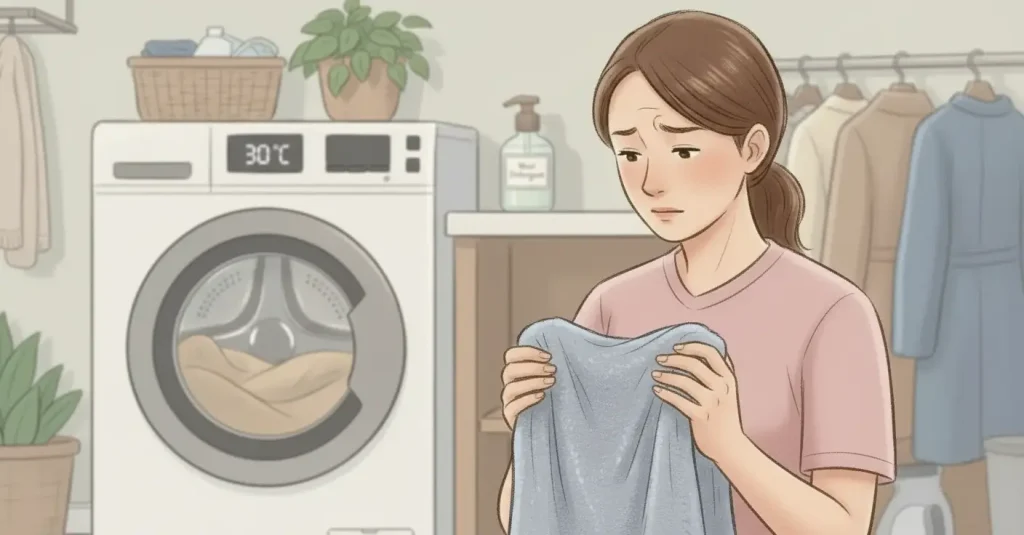
There’s something deeply disappointing about stepping out of a lovely hot shower, reaching for a towel, and being greeted by what feels like sandpaper. I know this feeling all too well. My towels used to come out of the wash stiff as cardboard, and I genuinely thought it was just what happened to towels over time. Turns out, I was completely wrong, and I’d been making the same mistakes for years.
If your bath towels feel rough and scratchy instead of soft and fluffy, I promise you’re not alone. Almost everyone I speak to has this problem, and the good news is it’s usually fixable. Let me walk you through what’s actually happening to your towels and how to bring them back to life.
The Real Culprits Behind Hard Towels
Most of us think we’re doing everything right. We wash our towels regularly, we use good detergent, we tumble dry them until they’re completely dry. So why do they feel so awful?
The main problem is something called residue buildup. Every time you wash your towels, tiny amounts of detergent, fabric softener, and minerals from your water get trapped in the fibres. Over weeks and months, this builds up into a coating that makes the towels stiff and reduces their ability to absorb water. Basically, your towels are clean but coated in a film that ruins them.
London’s water doesn’t help matters either. We’ve got hard water in most areas, which means it’s packed with calcium and magnesium. These minerals love attaching themselves to fabric fibres, and towels are particularly vulnerable because they’re so absorbent. The minerals bind to the cotton, making it rigid and scratchy.
I discovered this the hard way when I moved from a soft water area to London. My towels went from lovely and fluffy to rough and horrible within a few months, and I couldn’t figure out why. It was the water all along.
Why Too Much Detergent Makes Things Worse
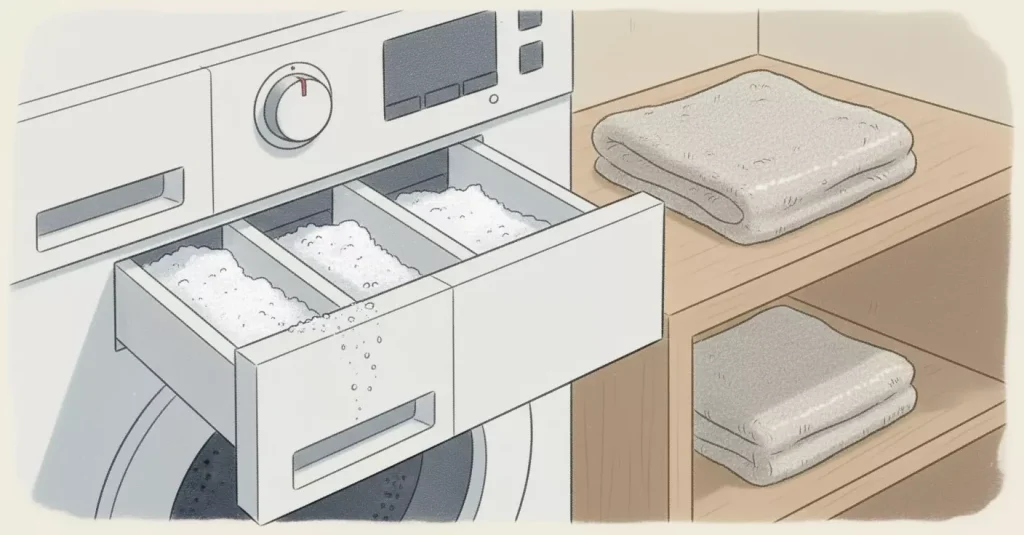
Here’s something that surprised me. Using more detergent doesn’t get your towels cleaner. In fact, it usually makes them dirtier in a weird way, because excess detergent doesn’t rinse out properly. It clings to the fibres and builds up over time.
I used to pour in a generous amount of detergent, thinking I was being thorough. Big mistake. Home washing machines, especially modern ones, are designed to work with very small amounts of detergent. The instructions on the bottle often recommend far more than you actually need, because manufacturers want you to use more product and buy more frequently.
For towels, you only need about half the recommended amount of detergent, sometimes even less. If you’ve got a high-efficiency machine, you need even less than that. The water and agitation do most of the cleaning work. The detergent just helps a bit.
The Fabric Softener Trap
This one nearly broke my heart when I learned about it. Fabric softener seems like exactly what you’d want for towels, right? It’s literally called softener. But fabric softener is actually terrible for towels.
Fabric softener works by coating fibres with a waxy substance that makes them feel smooth. On towels, this coating reduces absorbency dramatically. Your towels might feel slightly softer, but they won’t dry you properly anymore. They’ll just push water around your skin rather than soaking it up.
Plus, that waxy buildup attracts more dirt and makes your towels feel grimy faster. I stopped using fabric softener on towels about two years ago, and the difference was remarkable. They’re more absorbent, they feel cleaner, and they actually last longer.
If you’ve been using fabric softener on your towels for months or years, that coating is probably the main reason they feel wrong. The good news is you can strip it out, which I’ll explain in a moment.
Drying Mistakes That Ruin Towels
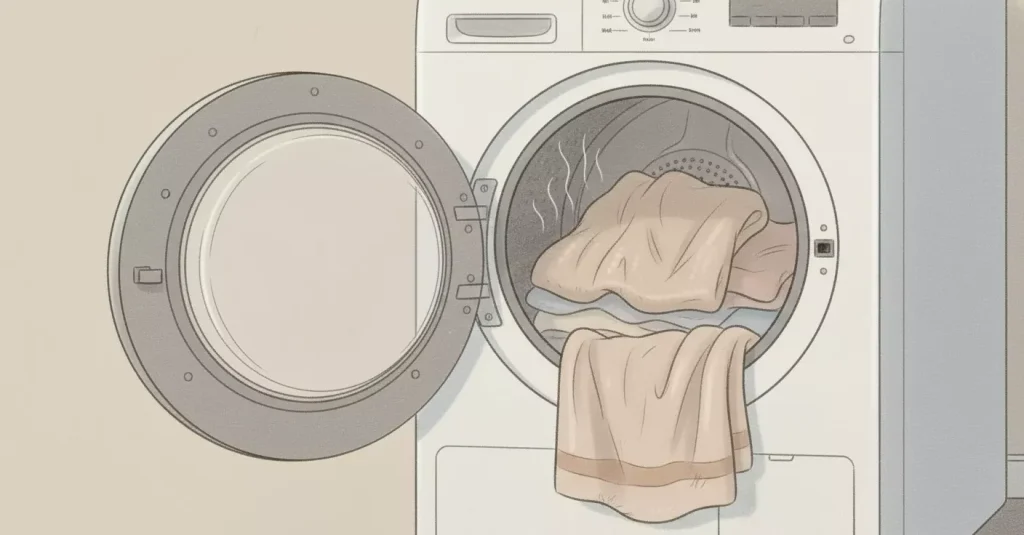
The way you dry your towels matters just as much as how you wash them. High heat in the tumble dryer damages cotton fibres, making them brittle and hard. It’s tempting to blast everything on the hottest setting to get it done quickly, but this destroys the soft texture of good towels.
I learned this lesson with an expensive set of Egyptian cotton towels that I absolutely ruined by drying them on high heat every single time. Within six months, they felt like cheap sandpaper. I was gutted because they weren’t cheap, and I’d done it to myself.
Low to medium heat is much better for towels. Yes, it takes longer, but the fibres stay intact and the towels keep their fluffiness. Take them out while they’re still slightly damp and give them a good shake. The remaining moisture will evaporate naturally, and the shaking helps restore the pile.
Overdrying is another common problem. If you leave towels tumbling in the dryer long after they’re actually dry, they become stiff and flat. The heat essentially bakes all the moisture out of the fibres, leaving them rigid. As soon as your towels are dry, get them out.
How to Rescue Hard, Scratchy Towels
If your towels have already gone hard and horrible, don’t throw them away just yet. You can usually bring them back with a proper deep clean that strips out all the buildup.
The method I use involves white vinegar and baking soda, which sounds a bit like a school science experiment but genuinely works. Run your towels through a hot wash with just one cup of white vinegar and no detergent. The vinegar breaks down mineral deposits and dissolves detergent residue.
Once that cycle finishes, run another hot wash with half a cup of baking soda, again with no detergent. The baking soda neutralises any remaining vinegar and softens the fibres further. After these two washes, your towels should feel noticeably better.
I tried this on towels I was about to bin, thinking they were beyond hope. After the vinegar and baking soda treatment, they felt about 70% better. Not brand new, but absolutely usable and comfortable again.
Preventing the Problem in Future Washes
Once you’ve rescued your towels, the trick is keeping them soft by changing your washing routine. Use half the amount of detergent you’ve been using. Seriously, cut it in half. Your towels will get just as clean, and they won’t build up residue.
Wash towels in warm water rather than very hot. Hot water can damage fibres over time and set stains, which seems counterintuitive but is actually true. Warm water cleans perfectly well for most towel loads. Save hot washes for towels that are genuinely dirty or need sanitising.
Don’t overcrowd your washing machine. Towels need room to move around in the water and get properly rinsed. If you stuff too many in, they don’t get clean and they don’t get rinsed properly. I usually do two or three bath towels maximum per load, along with some hand towels or flannels.
Give your towels a good shake before putting them in the dryer. This loosens the fibres and helps them dry more evenly. It only takes a few seconds but makes a real difference to how fluffy they come out.
The Tennis Ball Trick That Actually Works
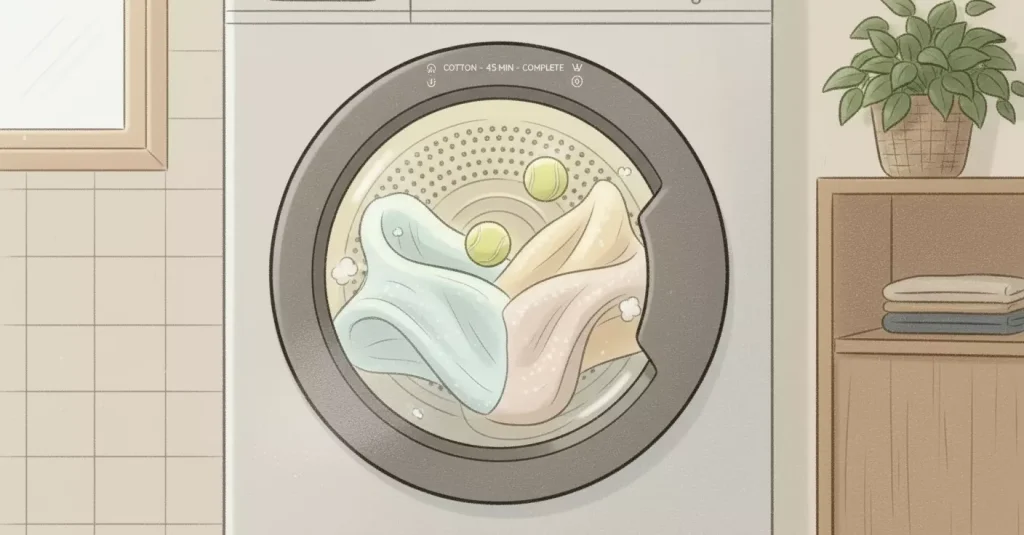
I was sceptical about this one, but it genuinely helps. Throw a couple of clean tennis balls or wool dryer balls into the tumble dryer with your towels. As they bounce around, they bash against the towels and fluff up the pile.
It sounds ridiculous, and the first time I tried it the noise made me think something was broken in my dryer. But the towels came out noticeably softer and fluffier. The balls prevent the towels from clumping together and help separate the fibres.
You can buy proper wool dryer balls from places like Lakeland or John Lewis, or just use tennis balls you’ve got lying around. Either works fine. Just make sure tennis balls are clean and won’t transfer any colour onto your towels.
When Hard Water is the Main Problem
If you live in a hard water area in London, and most of us do, you’re fighting an uphill battle with towel softness. The minerals in the water will keep building up no matter how carefully you wash.
Adding a water softener to your wash can help. You can get products like Calgon that bind to the minerals and stop them attaching to fabrics. I’m not usually one for extra products, but in hard water areas this actually makes a difference. You don’t need much, just a small amount in each wash.
Some people install whole-house water softeners, which is brilliant if you own your property and plan to stay long-term. It protects not just your towels but your washing machine, kettle, shower, and everything else from limescale buildup. If you’re renting, this obviously isn’t an option.
An alternative is washing towels with a splash of white vinegar in the fabric softener compartment every few washes. The vinegar breaks down mineral deposits as the wash happens, preventing them from building up. Your towels won’t smell of vinegar after they’re dry, I promise.
Line Drying vs Tumble Drying
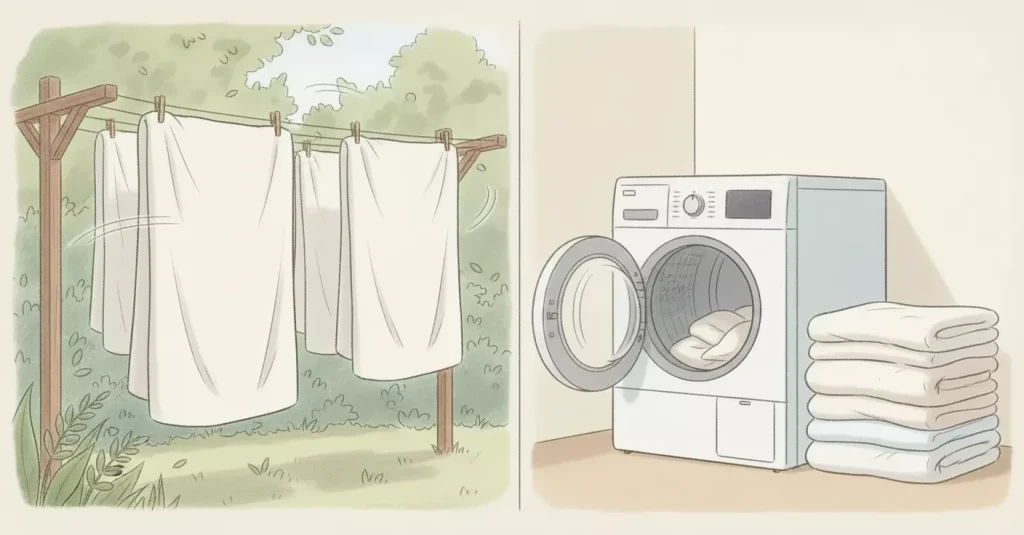
Some people swear by line drying towels, especially in summer. Fresh air and sunshine do make towels smell gorgeous, I won’t deny that. But line-dried towels often come in stiff, and you need to do a bit of work to soften them.
If you line dry your towels, shake them really vigorously before hanging them up and again when you bring them in. Give them a proper thrashing to fluff up the fibres. You can also throw them in the tumble dryer for just five or ten minutes on a low setting after they’ve line dried. This softens them up beautifully without using much energy.
Avoid hanging towels in direct bright sunlight for too long. UV rays can actually damage the cotton fibres and fade the colours. A shady spot with good airflow is better than full sun all day.
I mostly tumble dry my towels on low heat because it’s convenient and they come out soft. On nice days I’ll line dry them and finish them off in the dryer briefly. It’s a good compromise.
How Often Should You Actually Wash Towels?
This is a bit off-topic, but it affects towel longevity. You don’t need to wash your bath towels after every single use. That’s excessive and wears them out faster. If you’ve dried yourself after a shower when you’re already clean, that towel can be used several times before it needs washing.
I hang my towel to dry properly between uses and wash it every three or four uses. If it starts to smell musty or feels damp even when it should be dry, I wash it sooner. But generally, three to four uses is fine for bath towels.
Hand towels and face cloths are different. These need washing more frequently, every day or two, because they’re in contact with hands that might not be perfectly clean and faces that have skincare products on them.
When Professional Cleaning Makes Sense
Sometimes towels need professional attention, especially if they’re expensive or if you’ve let the problem get really bad. A good laundrette or dry cleaning service can deep clean towels and restore their texture far better than a home washing machine.
Professional machines are larger and more powerful, which means better agitation and more thorough rinsing. They can handle hot water washes that are genuinely hot, not the lukewarm version most home machines produce. And they can process towels in a way that removes stubborn buildup.
If you’ve got a whole collection of towels that have gone horrible, or if you’ve tried everything and they’re still not right, bringing them to professionals might be worth it. One proper deep clean can set them right, and then you can maintain them at home.
The London Advantage of Local Laundry Services
One thing I’ve come to appreciate about London is having proper local launderettes nearby. When you’re busy and overwhelmed, or when you’ve got a household’s worth of towels that need sorting out, being able to drop them off somewhere local is brilliant.
You don’t have to spend your weekend wrestling with vinegar treatments and multiple wash cycles. Someone else does the hard work, and you pick up towels that actually feel nice. It’s not something you’d do every week, but for occasional deep cleaning or when things have got out of hand, it’s a lifesaver.
Local places also understand London water and the specific challenges we face with hard water and mineral buildup. They know what works in this environment.
A Quick Word on Buying New Towels
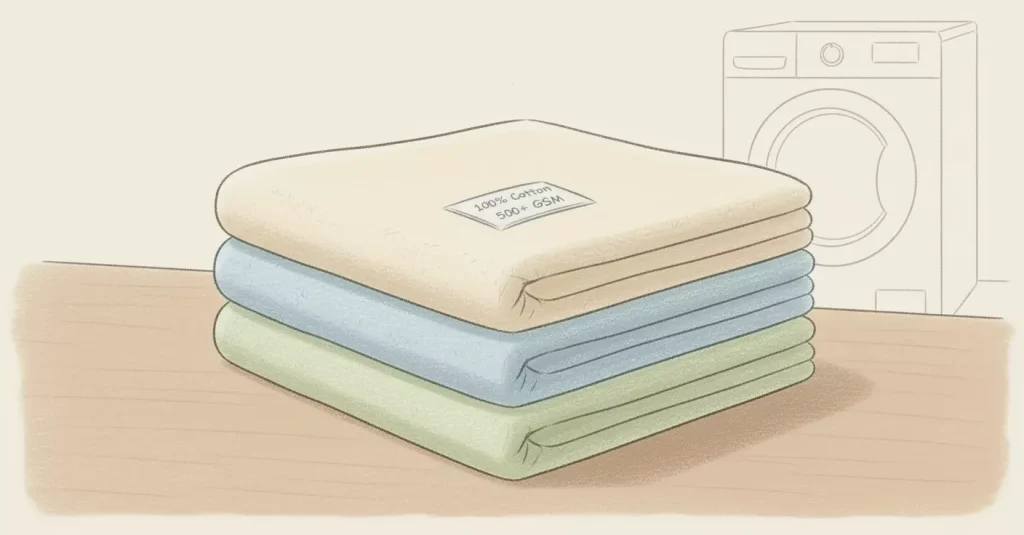
If you do need to replace towels, invest in decent quality from the start. Cheap towels never feel good and wear out quickly. You don’t need to spend a fortune, but medium to good quality towels from places like The White Company or M&S will last years if you treat them right.
Look for 100% cotton towels with a decent GSM (grams per square metre). Anything above 500 GSM is good for bath towels. Turkish and Egyptian cotton are both excellent. Avoid towels with synthetic fibres mixed in unless they’re specifically designed sports towels.
Wash new towels before using them. They often have manufacturing residue on them that affects absorbency. One wash before first use makes a huge difference.
Getting Expert Help When You Need It
Look, I completely understand wanting to solve this yourself. I spent ages trying different methods and products before I got it right. But sometimes you just need someone who knows what they’re doing to sort out a problem properly.
If you’re anywhere near North Finchley or Notting Hill and your towels have reached the point where nothing you do seems to help, we’d be happy to have a look at Glint Express. We deal with towel washing all the time, and we know how to handle the specific challenges of London water and tired fabrics.
Bring them in and we’ll advise you honestly about whether they’re salvageable and what they need. Sometimes it’s just a proper professional wash that resets everything. Sometimes towels really are beyond saving, and we’ll tell you that too. But there’s usually something we can do.
Your towels should feel lovely when you use them, not like punishment. A bit of knowledge about what causes problems and how to fix them makes all the difference. And when you need help, we’re here for you.