How to Store a Suit Properly: Why Plastic Covers Are Secretly Ruining Your Expensive Suits
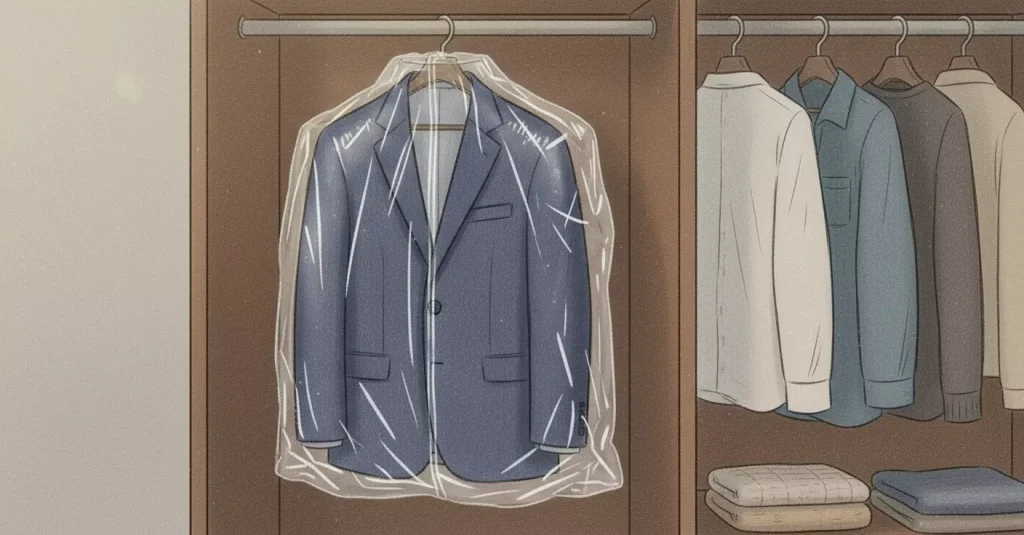
I still remember the day I pulled my favourite navy suit out of the wardrobe for a wedding, only to find it smelled musty and had developed weird shiny patches on the shoulders. The suit had been hanging in one of those plastic dry cleaning bags for about six months, and I genuinely thought I was protecting it. Turns out, I was slowly destroying it.
If you’ve got suits hanging in your wardrobe right now wrapped in plastic, you might want to hear this. Those covers that seem so protective are actually creating the perfect environment for mould, mildew, and fabric damage. Let me explain what’s really going on and how to store your suits properly so they last for years.
The Plastic Cover Problem Nobody Talks About
When your suit comes back from the dry cleaners, it’s wrapped in that thin plastic bag. Most of us just leave it on, thinking it’s keeping dust and dirt away. I did exactly the same thing for years. But here’s what’s actually happening inside that plastic.
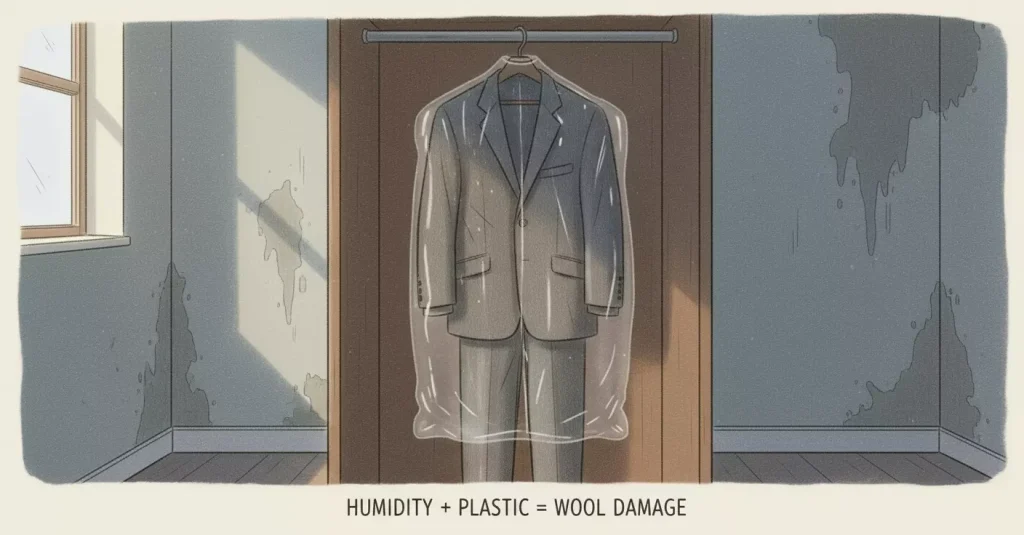
Suits need to breathe. Wool, the fabric most quality suits are made from, is a natural fibre that absorbs and releases moisture from the air. When you seal it in plastic, any moisture trapped inside (from the cleaning process, from humidity, even from your own body heat if you’ve worn it recently) has nowhere to go. It just sits there against the fabric.
Over time, this trapped moisture leads to mildew growth, that distinctive musty smell, and eventually permanent damage to the fibres. I’ve seen expensive suits with actual mould spots because they’d been stored in plastic for too long. Once mould sets into wool, it’s incredibly difficult to remove completely.
Why Dry Cleaners Use Plastic (And Why You Should Remove It)
The plastic bags dry cleaners use aren’t meant for long-term storage. They’re there to protect your suit during transport from the shop to your home. That’s it. They keep it clean while you’re walking down the street or sitting on the tube, but they were never designed to be a storage solution.
Professional dry cleaners will actually tell you to remove the plastic as soon as you get home, but somehow this message gets lost. We mention it to customers at our North Finchley and Notting Hill branches, but I know not everyone remembers in the rush of daily life.
The irony is that we all think we’re being careful by leaving the plastic on, when really we’re undoing all the good work the cleaning process just did.
What Happens to Wool in the Wrong Environment
Wool is remarkable stuff. It’s naturally resistant to wrinkles, it regulates temperature, and it can last decades if you treat it right. But it’s also surprisingly vulnerable to poor storage conditions.
When wool can’t breathe, the fibres start to break down. You’ll notice the fabric losing its structure and developing a tired, limp quality. Those sharp shoulders and clean lines that make a suit look good? They disappear. The fabric might also develop permanent creases in weird places, nothing like the intentional creases in the trousers.
Humidity is wool’s enemy. In London, we’ve got plenty of that, especially in older homes and flats. If your wardrobe is against an external wall or in a room that doesn’t get much air circulation, the problem gets worse. The combination of plastic covering and a damp environment is absolutely lethal to suit fabric.
The Right Way to Hang a Suit
First things first, you need proper wooden hangers. Not wire hangers from the dry cleaners, not thin plastic hangers, and definitely not those clip hangers that leave marks. Get wooden suit hangers with a wide, contoured shoulder shape.
The shape matters because it supports the jacket’s shoulders properly. Suits are constructed with padding and structure in the shoulders, and if you hang them on a thin hanger, that structure collapses. You end up with dimples or points where the hanger pokes through, and the jacket loses its shape.
For trousers, either use a hanger with a proper trouser bar or fold them carefully over the bar of the jacket hanger. Some people swear by hanging trousers separately by the cuffs using clip hangers, which works well if you’ve got the wardrobe space. The key is making sure the crease line stays sharp and the fabric doesn’t bunch up.
Creating the Right Storage Environment
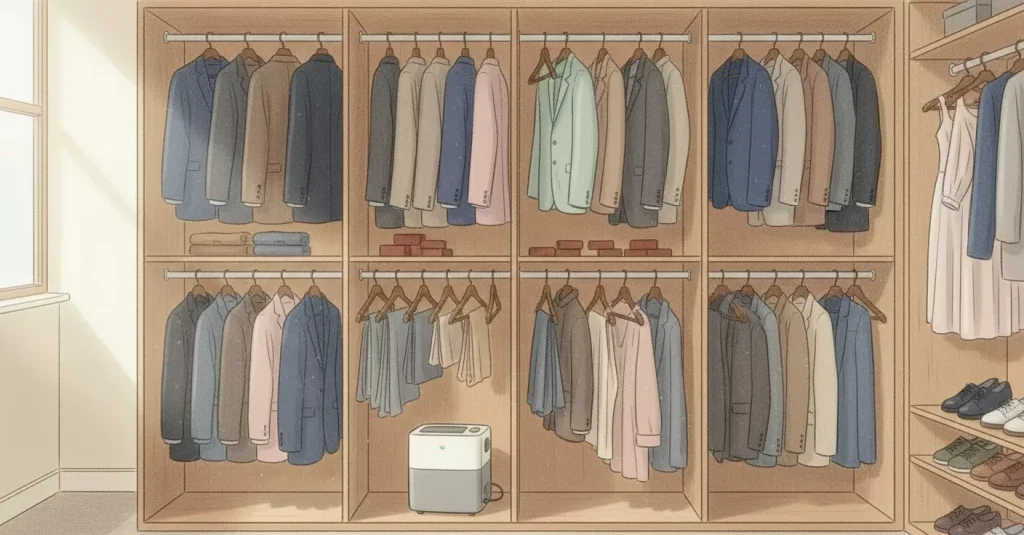
Your wardrobe needs air circulation. If you’ve got a packed wardrobe where suits are crammed together, they can’t breathe properly. Leave some space between garments. I know this is easier said than done in London flats where storage space is precious, but even a bit of breathing room makes a difference.
Consider using a dehumidifier in your bedroom if dampness is an issue. You can get small, affordable ones that work quietly in the background. They’re brilliant for protecting not just your suits but all your clothes and shoes from moisture damage.
Cedar is your friend. Cedar blocks or hangers naturally repel moths and absorb excess moisture. Plus they smell lovely, much better than mothballs. Just make sure you’re using real cedar, not scented wood, and sand it lightly once a year to refresh the natural oils.
When to Use Garment Bags (The Right Kind)
If you do want extra protection for your suits, use breathable cotton or canvas garment bags instead of plastic. These protect against dust while still allowing air circulation. They’re particularly good for suits you don’t wear often or if you’re storing seasonal suits.
You can find quality garment bags from retailers like John Lewis or even Muji, and they’re a worthwhile investment if you’ve got expensive suits. Some come with clear panels so you can see what’s inside without opening them, which is handy.
For long-term storage, say if you’re moving house or storing winter suits during summer, cotton garment bags are essential. Just make sure the suits are completely clean before storing them. Any stains or dirt left on the fabric can set permanently over time.
The Shoulder Brush Habit
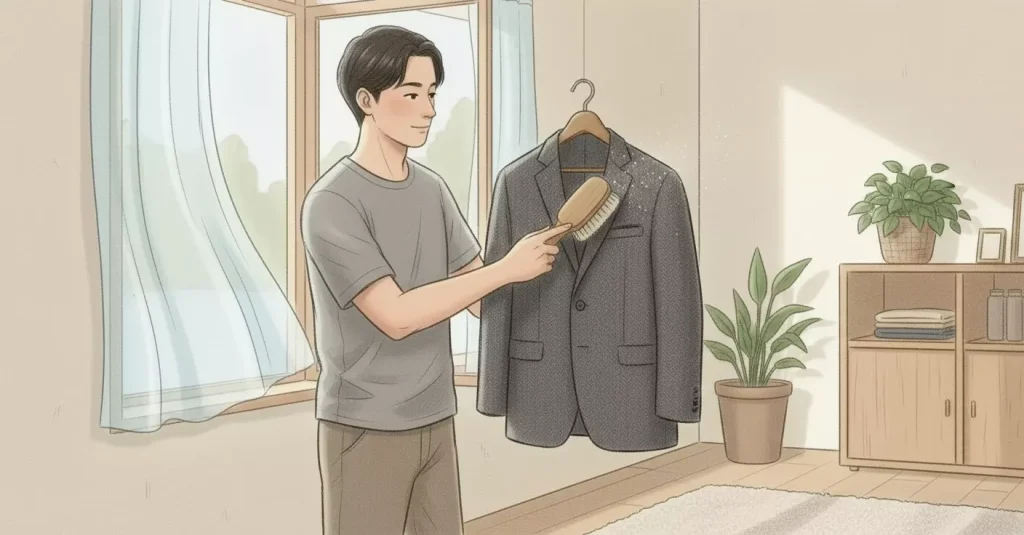
Here’s something my grandfather taught me that I still do. After wearing a suit, give it a gentle brush with a proper clothes brush before hanging it up. This removes surface dust, dirt, and any debris that’s settled on the fabric during the day.
It sounds old-fashioned, but it genuinely works. A good brush lifts the fibres and keeps the fabric looking fresh. It also means you don’t need to dry clean your suits as often, which is better for the fabric in the long run. Wool can only take so much chemical cleaning before it starts to deteriorate.
Let your suit air out for a few hours before putting it back in the wardrobe, too. Hang it somewhere with good air flow, ideally near an open window. This lets any moisture from your body evaporate and prevents odours from setting in.
How Often Should You Actually Clean a Suit?
This might surprise you, but you shouldn’t dry clean suits too frequently. Every three to four wears is plenty for most people, unless you’ve spilled something or got caught in heavy rain. Over-cleaning is almost as bad as under-cleaning when it comes to suit longevity.
Between proper cleans, spot-treat any marks carefully and air the suit out thoroughly. A handheld steamer is brilliant for refreshing suits and removing minor wrinkles without the harshness of dry cleaning chemicals. The Philips handheld steamers are reliable and not too expensive.
When you do need professional cleaning, choose a dry cleaner you trust who specialises in suits and understands proper fabric care. We see a lot of suits that have been damaged by cheap, rushed cleaning processes. Quality matters.
Seasonal Storage Considerations
If you’re rotating seasonal suits, clean them before storing them away. Even if they look clean, there might be invisible stains from food, drinks, or body oils. These stains oxidise over time and become much harder to remove. What looked fine in March might emerge in September with yellow marks that won’t shift.
Store seasonal suits in a cool, dry place. Avoid attics if possible, as temperature fluctuations aren’t great for wool. A spare wardrobe in a bedroom is ideal. Make sure moths can’t get in. Check stored suits every few months, give them an airing, and look for any signs of pest damage.
If you notice any small holes appearing, you’ve got moths. Act fast. Clean everything in that wardrobe, vacuum it thoroughly, and consider professional pest treatment if it’s serious. Moths can devastate a suit collection in months.
Travel and Suit Storage
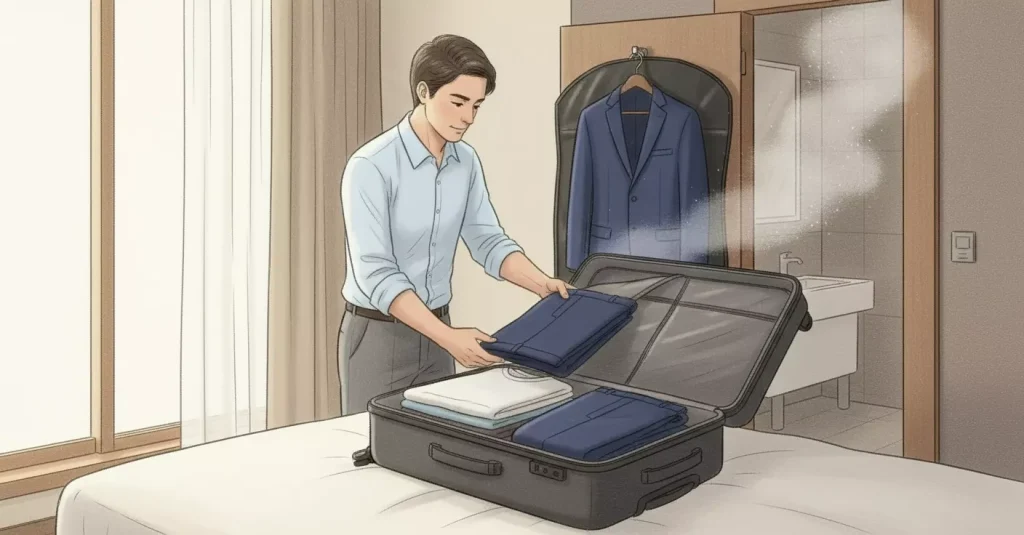
Travelling with suits requires its own strategy. A proper suit carrier is essential if you travel for work regularly. Look for ones with multiple layers and proper hanging mechanisms. Folding a suit into a regular suitcase is asking for creases that might not come out.
If you must fold a suit, do it carefully. Turn the jacket inside out, fold it in half lengthwise, then fold it once more. Pack it on top of other items so nothing heavy crushes it. Pack trousers separately, folded along the crease line. As soon as you arrive, hang everything up and steam it if possible.
Hotels usually have irons and ironing boards, but be careful. If you’re not confident ironing a suit, you’re better off using the shower steam method. Hang the suit in the bathroom while you run a hot shower, and the steam will help release wrinkles. Just don’t let it get wet.
Signs Your Suit Needs Professional Attention
Sometimes, despite your best efforts, suits need expert care. If you notice persistent odours that airing doesn’t fix, shiny patches developing on high-wear areas, or the fabric looking dull and tired, it’s time for professional cleaning.
Stains should always be dealt with professionally, especially on wool. DIY stain removal often makes things worse. Water stains on wool can spread and become permanent if you don’t know what you’re doing. Better to bring it straight to someone who does.
If your suit has lost its shape, a good dry cleaner can sometimes restore it through proper pressing and steaming. The structure might come back with professional treatment, though badly damaged suits sometimes can’t be fully rescued.
Why Local Expertise Matters in London
Living in London means dealing with the city’s particular challenges: rain, pollution, packed tubes where your suit gets crushed against other people. Your suits work hard here, and they need proper care to survive.
Having a trusted local dry cleaner makes everything easier. You can drop in quickly, discuss any concerns about specific garments, and build a relationship with people who understand your wardrobe needs. It’s the difference between generic service and genuinely personalised care.
Getting Professional Help When You Need It

Look, I get it. We all want to take care of our clothes ourselves and save money where we can. But suits are an investment, and proper storage and cleaning make them last years longer. The cost of replacing a damaged suit is far more than the cost of maintaining it properly.
If you’re in North Finchley or Notting Hill and you’re worried about suits that have been stored incorrectly, or you just want advice on proper care, we’re always happy to help at Glint Express. We’ve seen every suit storage disaster imaginable, and we know how to rescue most of them.
Bring your suits in and we’ll have a look. We’ll give you honest advice about their condition and what they need. Sometimes it’s just a good clean and press. Sometimes it’s more involved. But we’ll always tell you straight, because we want your suits to last as long as you do.
Your wardrobe deserves better than plastic bags and wire hangers. Give your suits the care they need, and they’ll serve you brilliantly for years to come.